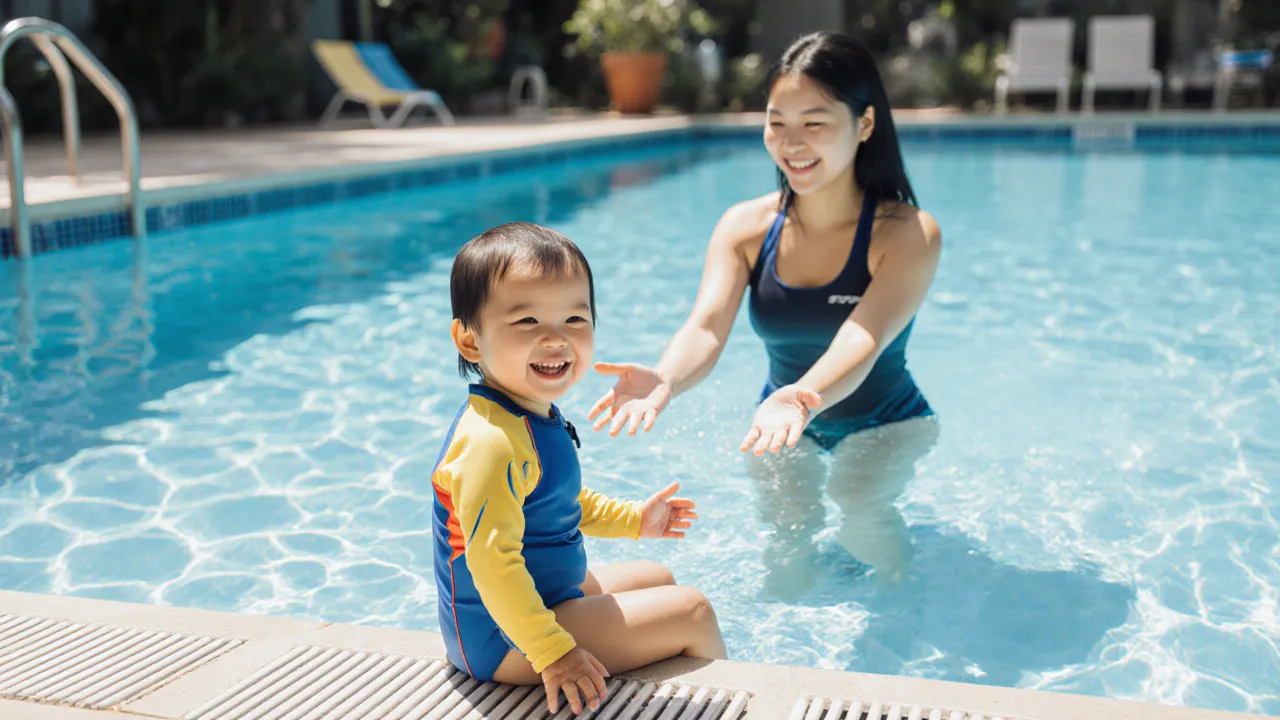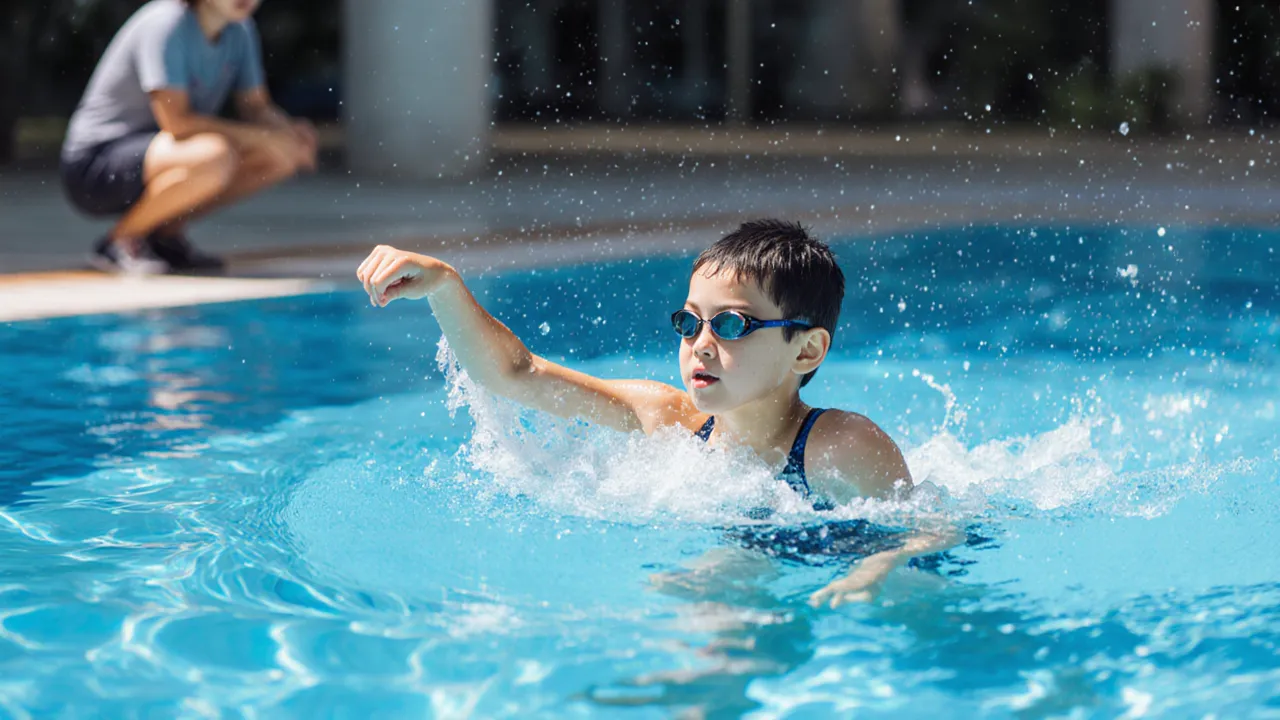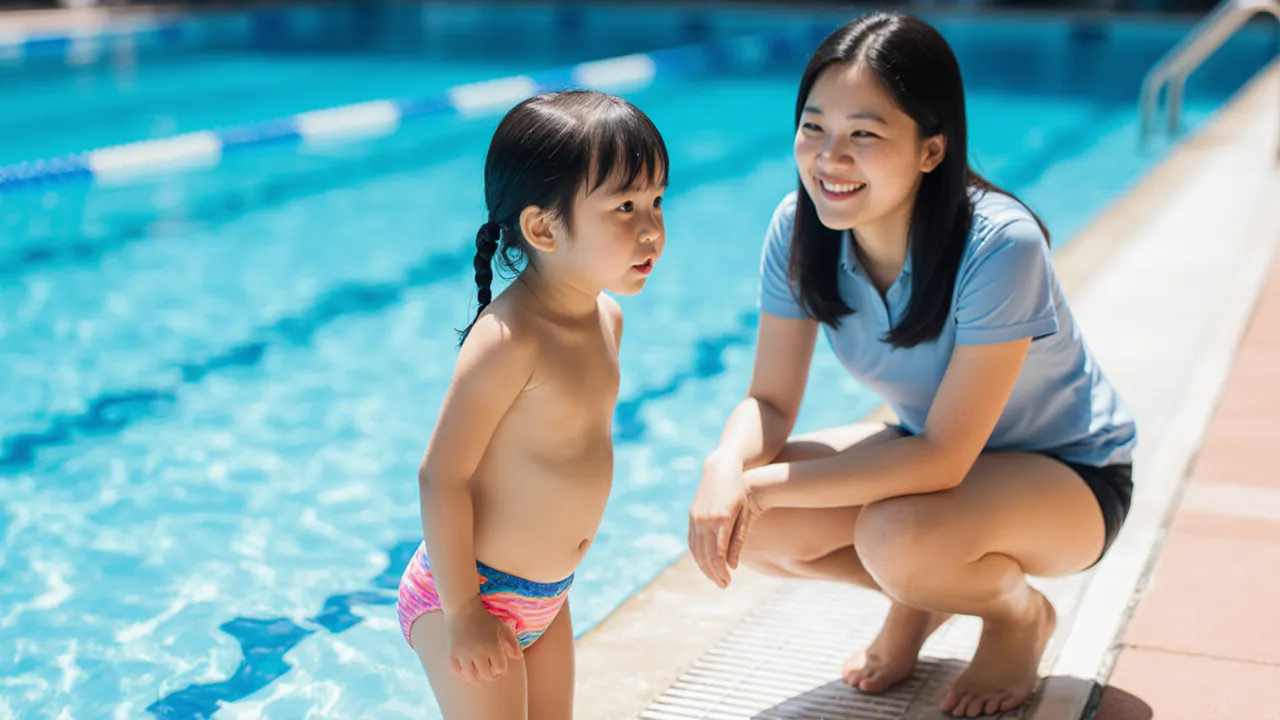
It is 9am on a Saturday at an ActiveSG pool. The sun is already hot, the water is a perfect blue, and your five-year-old has a death grip on your leg. Other kids are happily kicking along the lane. Yours is crying, and you are quietly wondering whether you have just paid for a term of lessons you will never use.
Take a breath. A child crying at swimming lessons is one of the most common things a coach sees, and it rarely means swimming is “not for your child”. In this guide, we explain why children cry at lessons, what you should and should not do poolside, and how to tell normal first-week tears from a sign that something needs to change.
Why Children Cry at Swimming Lessons
Tears at the pool are almost never about one single thing. Understanding which trigger is at play makes it much easier to respond well.
Fear of the water itself
Water is a strange environment for a small child. It pushes back, it changes how their body feels, and it gets in their eyes, nose and mouth. Children who have had one bad experience, such as a gulp of water at a condo pool or a wave at the beach, can carry that fear for years. If this sounds familiar, our guide on helping your child overcome fear of water goes deeper.
Separation anxiety
For many 3 to 5 year olds, the real issue is not the water at all. It is being handed to an adult they met five minutes ago while you stand at the side. These children are often perfectly happy in the pool with a parent and fall apart the moment a coach steps in.
Sensory overload and being cold
Echoing noise, bright glare, a chilly breeze after getting out, and the sting of chlorine can all push a sensitive child over the edge. Singapore pools are warm, but a wet child under a shaded roof or in a breeze can still shiver within minutes.
Tiredness, hunger and bad timing
A child who skipped a nap or came straight from school will have far fewer coping resources. Lesson timing matters more than most parents expect.
What to Do (and What Not to Do) When Your Child Cries
Your reaction at the poolside has a bigger effect than you might think. Children read your face constantly, and if you look worried, they conclude there is something to be worried about.
Do: stay calm and keep goodbyes short
Give a warm, confident send-off, then step back. Long, anxious goodbyes tell your child that the situation is dangerous. A simple, consistent phrase such as “I will be right here watching you” works better than repeated reassurance.
Do: let the coach lead
Good coaches have seen this hundreds of times. At Ace Dolphin, our coaches are known for their patience and rapport with children, and our “Calm & Chill” approach means there is no forced progression. A child who needs ten minutes just sitting on the pool step, watching, is still making progress. You can meet them on our coaches page.
Don’t: bribe, threaten or shame
“If you stop crying we will get ice cream” teaches a child that crying is something they control to get a reward, and “the other kids are not scared” simply adds embarrassment to fear. Neither builds genuine confidence.
Don’t: rescue immediately unless there is real distress
It is tempting to scoop your child out at the first wail. But if the crying is mild and the coach is engaging them, ending the lesson early can accidentally teach that crying makes the scary thing go away. Distinguish between upset and truly panicked: a child who is gasping, rigid, or cannot be comforted by the coach after several minutes needs a pause, and that is fine.
Don’t: hover in the child’s line of sight
If your child can see you, they will keep checking on you and calling for you. Sit where you can watch but they cannot easily make eye contact, and let the coach become the safe person for that half hour.
What Good Coaches Do in the First Few Lessons
Knowing what should be happening in the water helps you judge whether your child is in the right hands. In the early lessons of a well-run programme, the goal is comfort, not strokes.
A good coach starts with play: songs, splashing games, toys, and pouring water over arms and shoulders. Faces stay dry until the child chooses otherwise. Next come tiny, achievable steps such as sitting on the edge, kicking while holding the wall, then blowing bubbles at the surface. Each step is celebrated, and each one is optional until the child is ready.
Coaches also watch body language closely. A child who goes quiet and still, grips tightly, or turns their face away is saying “too much”. An experienced coach backs off a notch, then returns to the skill a minute later in a different, friendlier way. This is where Japanese precision tracking pays off: because progress is measured in small, visible stages, a coach can show a hesitant child, and their parent, exactly how far they have come, even when it looks like nothing happened.
If you are not sure what your child’s coach is aiming for, ask. A good coach will happily explain the plan for the next three lessons, and that transparency is itself a good sign.
Before the Lesson: Set Your Child Up to Succeed
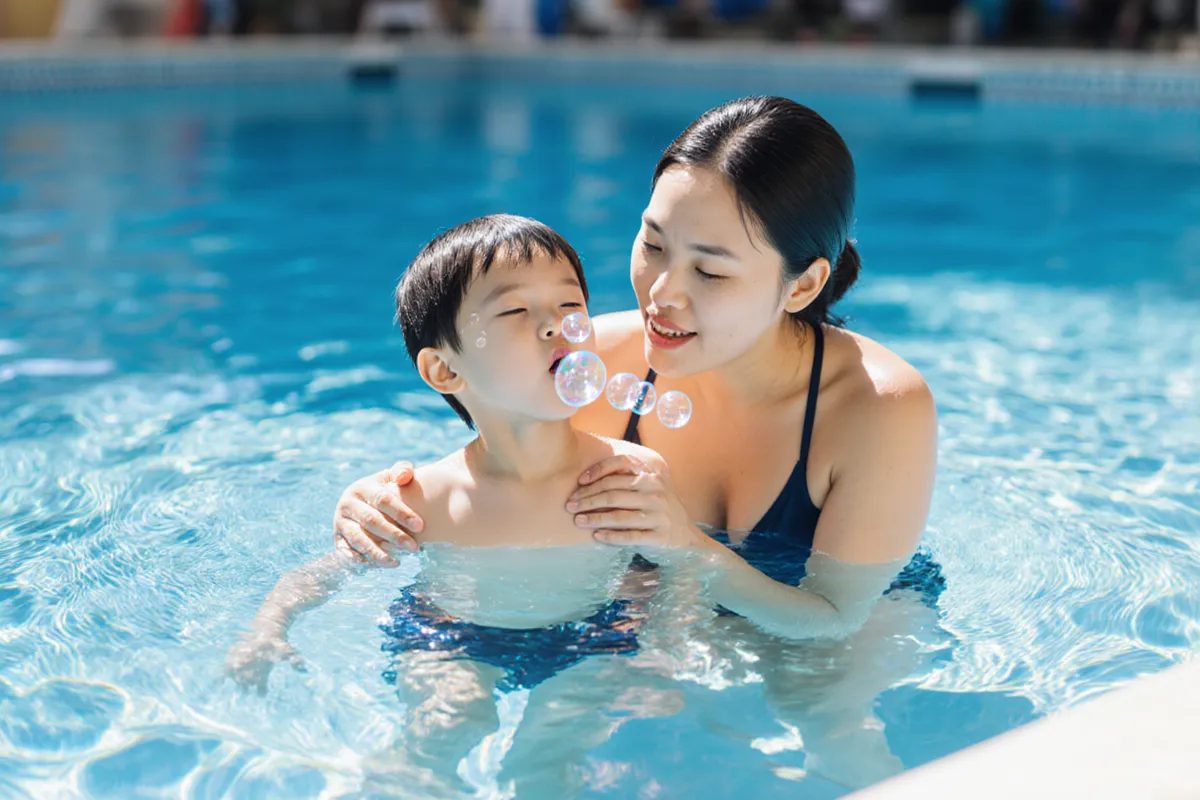
Most crying can be reduced before you even reach the pool. A few small habits make a real difference.
Visit the pool beforehand if you can, and let your child watch other lessons from the side. Familiarity lowers fear. Our first lesson guide shows exactly where to meet at each location, and our article on preparing your child for their first swimming lesson covers what to pack and say.
Practise at home too. Bath-time is the easiest training ground: blowing bubbles, pouring water over shoulders with a cup, and wearing goggles for fun. Keep it playful and never force their head under.
Feed them a light snack an hour beforehand, bring a warm towel and a dry change of clothes, and avoid slotting lessons into nap time. For location-specific timing, check the pages for Tampines, Punggol or Sengkang.
Group, Private, or Something In Between?
For a child who cries a lot, the lesson format matters. A busy group class with six or eight children can feel overwhelming, because the coach has to split attention. A one-to-one session lets the coach move at exactly your child’s pace, adjust to their signals and build trust quickly. Many parents of anxious children start with a few private lessons and move into a group once the child is settled. We lay out the trade-offs honestly in private vs group swimming lessons.
How Long Should You Wait Before Deciding It Is Not Working?
As a rough guide, give it three to four lessons. Most children show visible change in that window: shorter crying, a willingness to touch the water, or a smile at the coach. Progress is rarely a straight line. A child may breeze through lesson two and cry again in lesson three, and that is normal.
It is worth stepping back or changing approach if the crying is getting worse after four to six lessons, if your child shows distress before and after lessons (nightmares, refusing to wear swimwear, stomach aches), or if the coach is pushing your child to do things they clearly are not ready for. In those cases the problem is usually the method, not your child. A fresh start with a coach who works at the child’s pace can change everything.
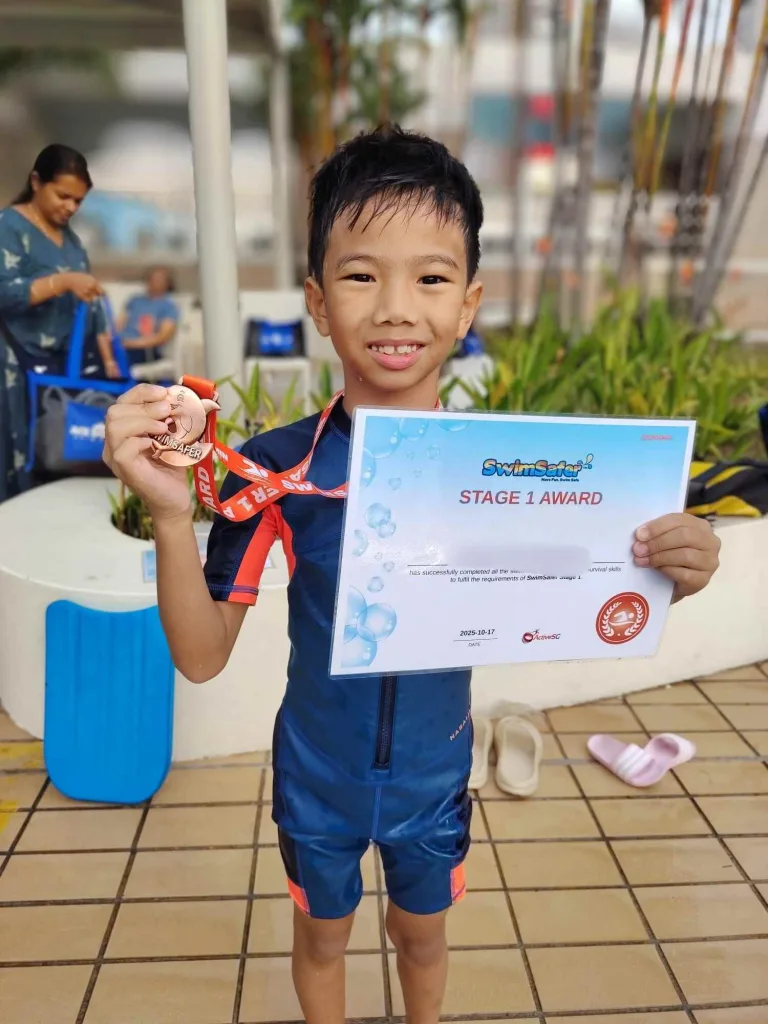
Swimming is also a life skill in Singapore, where water is everywhere, from condo pools to beaches. Taking the time to build comfort is worth it, because a child who feels safe in water learns faster and stays safer. Once confidence is there, the structured SwimSafer 2.0 stages become far easier to work through.
Seeing the Turnaround
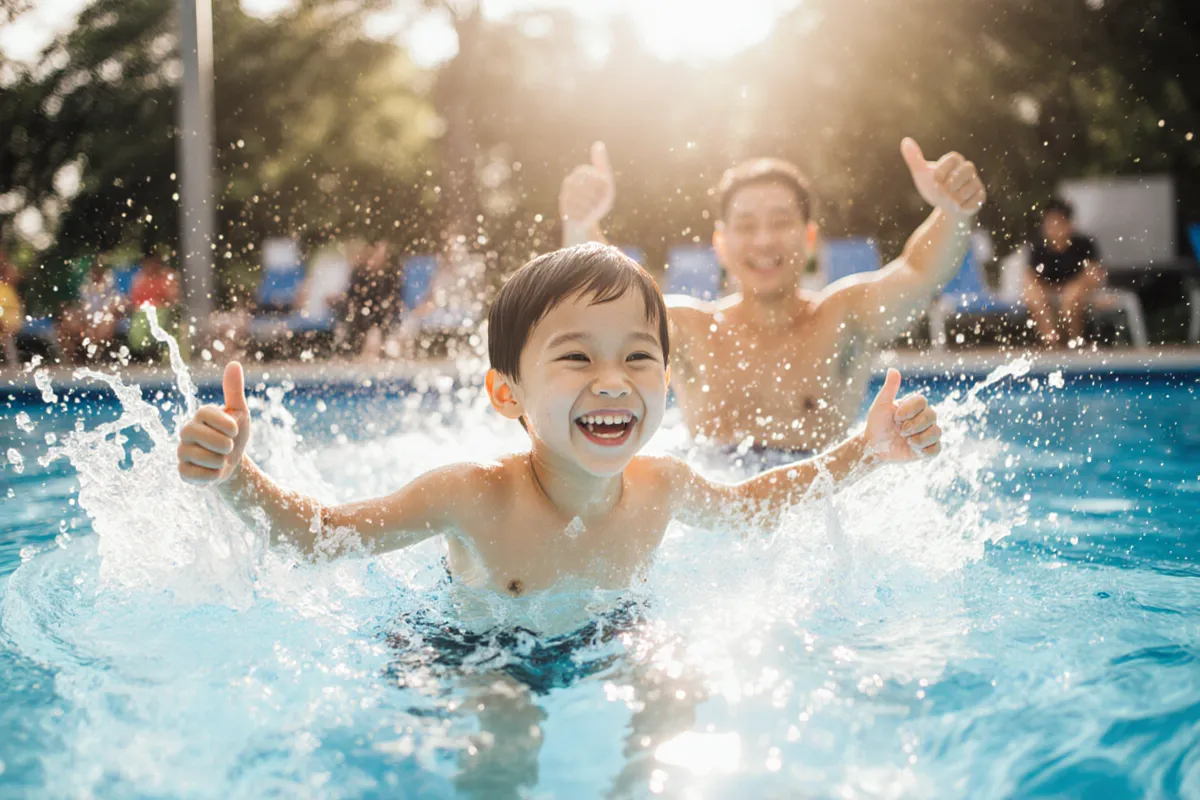
The best part of this work is the moment it clicks. Parents tell us about the child who screamed through week one and, by week six, was asking to stay in the pool longer. At Ace Dolphin we have taught over 8,000 children across our ActiveSG locations, including many who had made zero progress elsewhere, and the pattern is consistent: patience first, technique second. Our milestone swim bands and custom medals give children something tangible to be proud of along the way, and you can read what other families say on our testimonials page.
Conclusion
A crying child at the pool is not a failure, theirs or yours. It is information. Stay calm, keep goodbyes brief, choose a format that fits their temperament, and give them a few lessons to settle. If your child needs a gentler start, our coaches specialise in exactly that. Reach us at admin@acedolphin.com or +65 9105 5244, or explore our kids swimming lessons to find a pool near you.