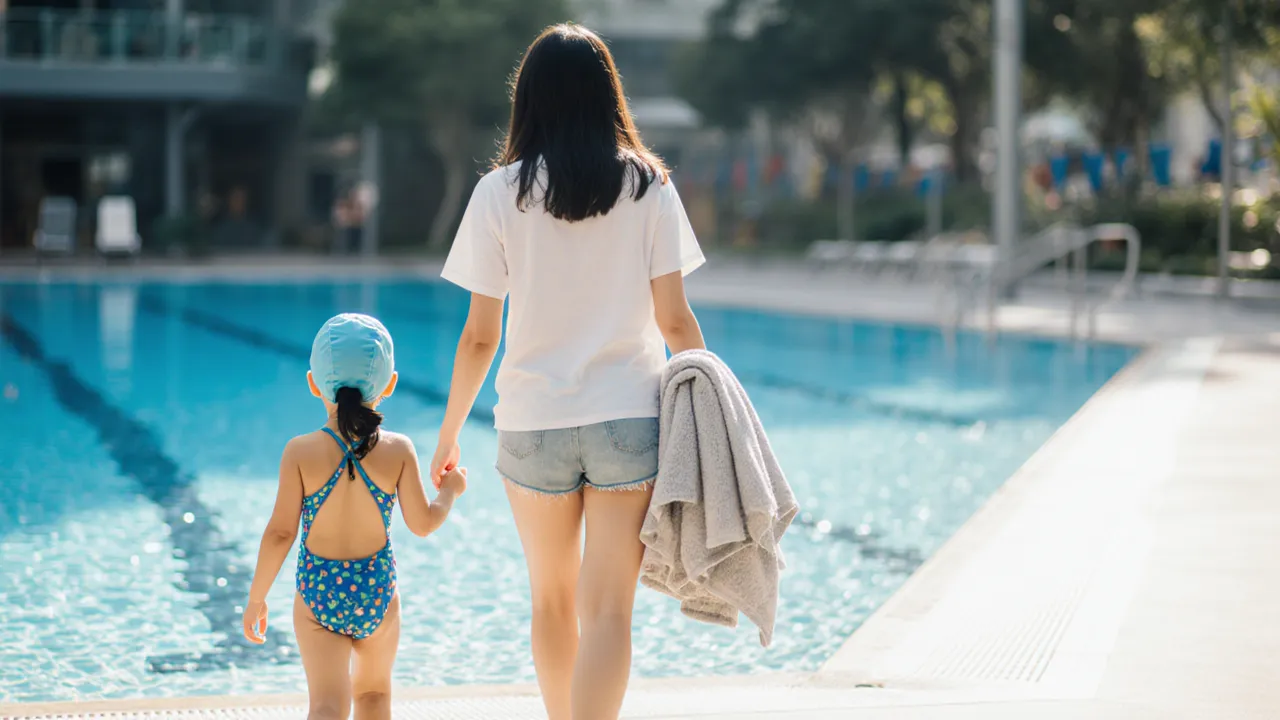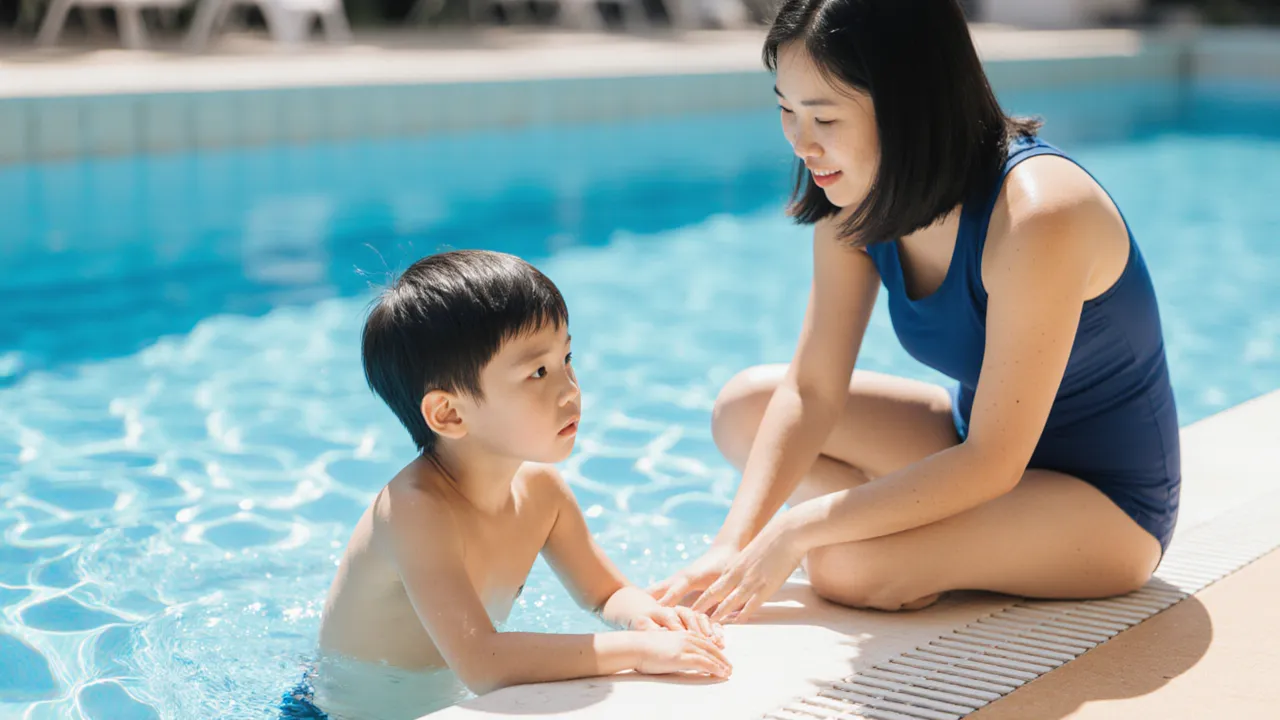
It’s the night before your child’s first swimming lesson, and you’re staring at a half-packed bag wondering if you’ve missed something. Do they need a swim cap? Will the goggles even fit? Should you feed them before or after? Most Singapore parents figure this out through trial and error, usually a slightly stressful first Saturday at the pool, a forgotten towel, or a child who arrives overtired and cranky right when the instructor needs their attention.
The good news is that preparing a child for swimming lessons isn’t complicated once you know what actually matters. After years of running kids’ classes across six ActiveSG pools in Singapore, we’ve seen exactly which small choices, made the night before, and in the ten minutes before a lesson starts, make the biggest difference to how a child performs and enjoys their time in the water. Here’s what to get right.
What to Pack: The Non-Negotiables
Singapore’s humidity means you can pack light, but a few items genuinely change the lesson experience. A well-fitted swimsuit matters more than parents expect. Baggy trunks or a swimsuit that keeps sliding off distracts a child and pulls their focus away from the instructor. For girls, a one-piece is easier to move in than a two-piece at this age.
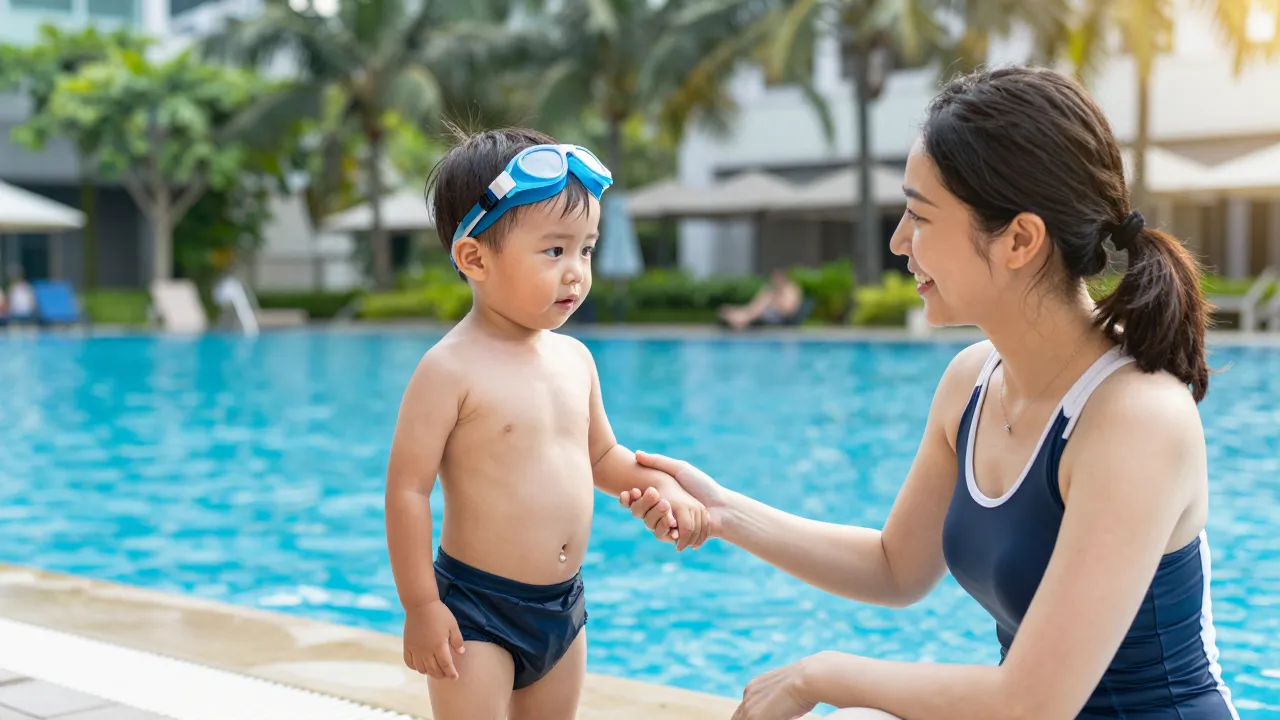
Goggles are worth getting right. Cheap, ill-fitting goggles that leak mid-lesson are one of the most common reasons a young child suddenly refuses to put their face in the water, not fear of the water itself, but frustration with stinging eyes. Test the seal at home in the bathroom sink before the first class: press the goggles to the face without the strap and check they hold suction for a few seconds.
A swim cap is required at most ActiveSG pools, including Our Tampines Hub, Bishan, Punggol, Sengkang, Pasir Ris, and Yio Chu Kang. Bring a spare, silicone caps tend to snap unexpectedly, usually at the worst moment.
- A large towel, plus a smaller one for drying hands and hair immediately after
- A dry change of clothes and underwear, packed in a separate bag from wet items
- Sunscreen suitable for outdoor pools, applied at least 20 minutes before entering the water
- A labelled water bottle. Singapore’s heat means kids dehydrate faster than parents expect, even in the pool
- Small ziplock bags for wet goggles, caps, and swimwear on the way home
For toddlers and children not yet toilet-trained, swim nappies are compulsory at every public pool in Singapore, check with the school in advance, as some venues require a double layer (a swim nappy plus a snug swim brief over it).
Timing: Arrive Early, But Not Too Early
Fifteen minutes before the lesson starts is the sweet spot. It gives enough time to change, use the toilet, and let your child watch the pool for a minute before jumping in. That brief observation window matters more than most parents realise. A child who sees the water, sees other kids swimming, and has a moment to acclimatise to the noise and chlorine smell walks in calmer than one who’s rushed straight from the car park to the pool edge.
Arriving too early, on the other hand, often backfires. Thirty or forty minutes of waiting around in swimwear tends to make young children restless, and restless energy at the start of a lesson is harder for an instructor to redirect than nervous energy.
Feeding Before a Lesson
A light snack about an hour before class, not immediately before, keeps energy levels steady without risking an upset stomach in the water. Avoid heavy or sugary meals right before a lesson; the combination of a full stomach and physical exertion is a common cause of mid-lesson nausea in younger kids.
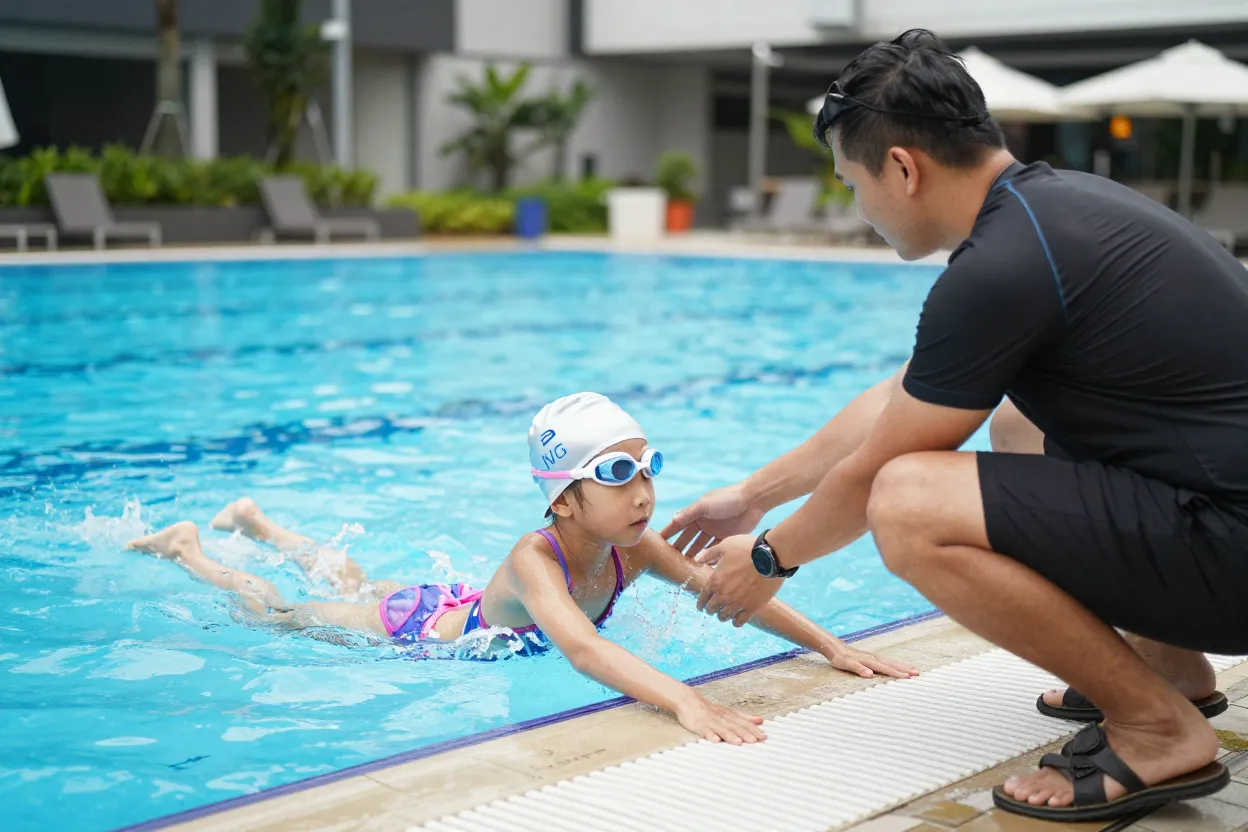
The Night Before: Sleep Matters More Than Practice
Parents sometimes try to “prep” a child by talking through swimming techniques the night before a lesson. It rarely helps, and can occasionally backfire by making an anxious child dwell on it. What actually moves the needle is sleep. A tired child has less patience for following instructions, less physical coordination, and a lower tolerance for the ordinary discomforts of learning to swim, water in the ears, the effort of kicking, the strangeness of floating. Aim for their normal bedtime, not a late night, even if the lesson is the next morning.
If this is your child’s very first lesson, it can help to talk about it in simple, matter-of-fact terms rather than building it up as a big event: “Tomorrow you’re going to the pool to play some water games with your coach.” Overselling it, or over-reassuring a child who wasn’t worried to begin with, can plant anxiety that wasn’t there.
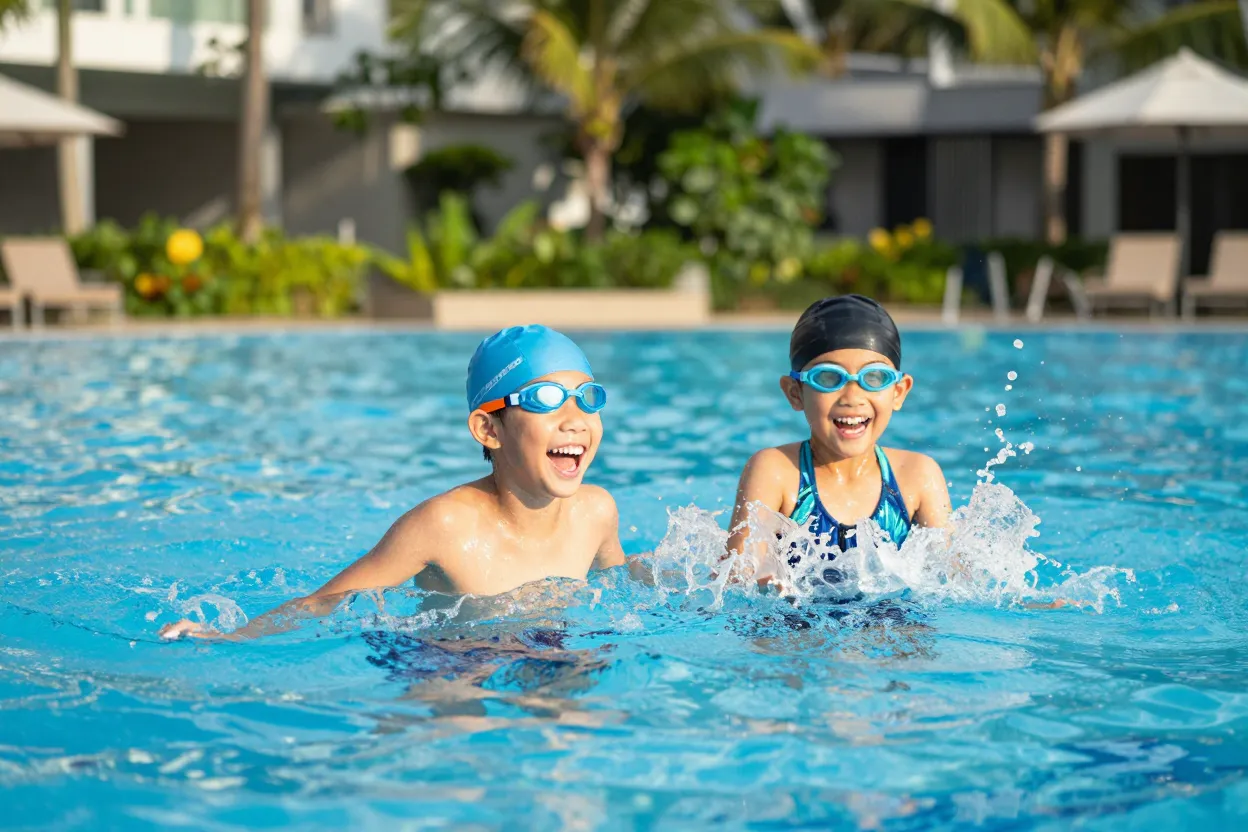
For Water-Anxious Children: A Slightly Different Checklist
If your child has shown any hesitation around water, clinging at the pool edge, refusing to put their face in the bath, crying at previous swim attempts. The preparation matters even more, but the goal shifts. It’s less about gear and more about giving them a sense of control before they arrive.
Let them choose their own goggles and swimsuit if possible. A small decision like this gives an anxious child a sense of agency going into a situation where they otherwise feel they have none. Avoid promising rewards for “being brave”. it inadvertently signals that there’s something to be brave about, which can increase apprehension rather than reduce it.
This is exactly where the right instructor makes the biggest difference. At Ace Dolphin, we built our “Calm & Chill” approach specifically around water-anxious children, coaches trained to read a child’s comfort level and adjust pace without ever forcing progression. We’ve taken children who wouldn’t put a toe in the water and had them swimming independently within weeks, simply by never rushing the process. If your child falls into this category, mention it to the school before the first lesson so the instructor can plan accordingly rather than discovering it poolside.
What to Expect Once the Lesson Starts
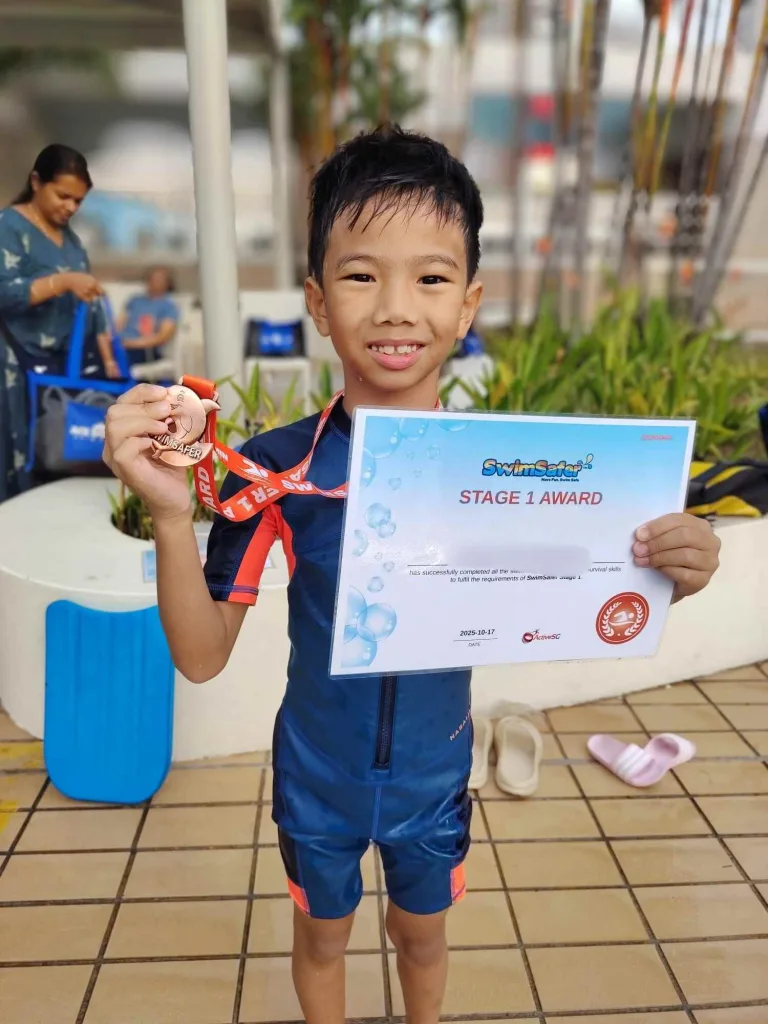
Most Singapore swim schools run structured lessons around the SwimSafer 2.0 framework, Singapore’s national swim safety curriculum. It’s worth knowing, roughly, what stage your child is working toward, since instructors will reference specific skills, water entry, floating, breath control, basic kicks, rather than teaching in a vague, unstructured way. Ace Dolphin layers the Japanese Tatsuki methodology on top of SwimSafer 2.0, which focuses heavily on precise stroke mechanics from the earliest lessons, so don’t be surprised if the coach corrects small details like hand position even in a beginner class.
Expect the first lesson or two to include a fair amount of observation from the coach, assessing comfort level, current ability, and confidence before building a lesson plan. Progress in the first two or three sessions is often less visible than parents expect; the real gains tend to show up from the fourth lesson onward, once the fundamentals are in place.
After the Lesson: Small Habits That Help
Rinse off chlorine as soon as possible. Most ActiveSG pools have shower facilities on site, and a quick rinse before the drive home reduces skin and eye irritation considerably in Singapore’s climate. Have a dry snack and water ready in the car; swimming burns more energy than parents often anticipate, and a hungry, dehydrated child after a lesson is a recipe for a rough afternoon.
If your child is preparing for a SwimSafer assessment, ask the instructor for a quick note on what to reinforce at home between lessons, even five minutes of float practice in a shallow pool or bath can consolidate a skill faster than waiting a full week for the next class.
Conclusion
None of this needs to be complicated. Well-fitted gear, a calm and unrushed arrival, a good night’s sleep, and, for anxious kids, a small sense of control go further than any amount of pre-lesson pep talk. Get those basics right and the rest is the instructor’s job.
At Ace Dolphin, our coaches are used to working with first-timers and water-anxious children alike, across all six of our ActiveSG locations in Tampines, Pasir Ris, Yio Chu Kang, Bishan, Punggol, and Sengkang. If you’d like advice on what to expect for your child’s specific age or comfort level before booking a first lesson, reach out at admin@acedolphin.com or +65 9105 5244, or visit acedolphin.com to see our parent testimonials from over 8,000 graduates.