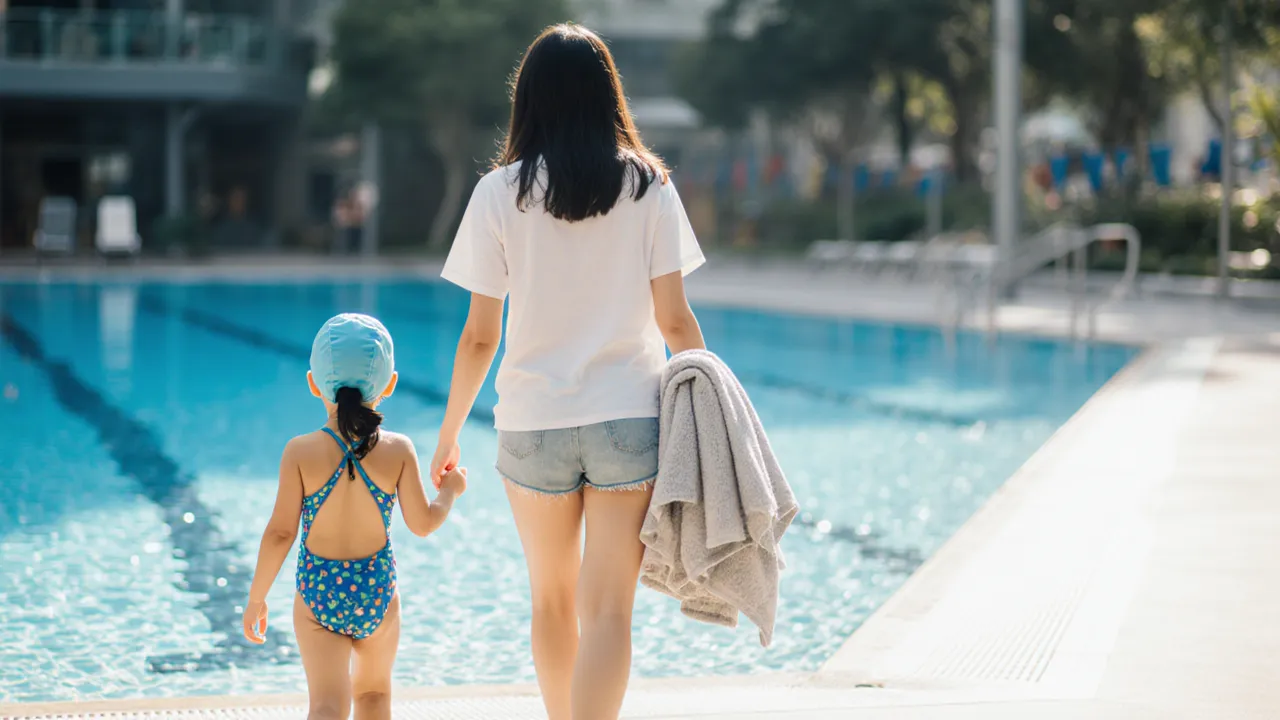
Your child screams the moment their feet touch the pool deck. Or maybe it’s quieter than that, a death grip on your arm, silent tears, a body that goes rigid the second water touches their face. You’ve tried the neighbourhood pool on weekends, maybe even a group class that didn’t work out. Nothing seems to help, and you’re starting to wonder if some kids are just never going to be swimmers.
They are. Fear of water in children is common, rarely permanent, and almost always responds to the right approach, patient, structured, and paced to the child rather than the clock. Here’s what actually works, and how Singapore parents can find the support their child needs.
Why Some Children Develop a Fear of Water
Aquaphobia in children isn’t usually about the water itself. It’s about a loss of control. Water covers the face, muffles sound, and removes solid ground underfoot, all things a young child’s brain reads as threat signals before it reads them as “swimming.” A single bad experience, a mouthful of water, a wave at the beach, even watching another child cry at a pool. Can imprint quickly.
Some children are simply more sensory-sensitive than others, reacting strongly to the temperature, the chlorine smell, or the sensation of water in their ears. Others have picked up anxiety from a parent who is themselves uneasy in water, even without a word being said. None of this reflects a character flaw or a “difficult” child. It’s a nervous system doing exactly what nervous systems are built to do when something feels unpredictable.
Understanding the root cause matters because it changes the fix. A child who is scared because of a bad memory needs rebuilding of trust. A child who is scared because of sensory overwhelm needs a slower ramp and more control over pacing. A generic class that treats every anxious child the same way often makes things worse, not better.
Signs Your Child’s Fear Needs a Different Approach
Most children go through a normal adjustment period in their first few lessons, some hesitation, some clinginess, occasional tears. This settles within two or three sessions for the majority of kids. It’s worth taking a different approach when the reaction doesn’t ease with time, when your child becomes distressed just entering the pool building, or when a coach responds to resistance by pushing through it rather than working with it.
Watch, too, for regression. a child who was fine in the water last year and has become fearful since. This is often tied to a specific incident (even one adults didn’t notice, like swallowing water or being briefly submerged) and responds well to going right back to basics rather than assuming the child should simply “remember” they used to be fine.
If your child’s swim class has become a source of dread rather than something they gradually warm up to, that’s the clearest signal the current approach isn’t matched to your child.
What Actually Helps: A Step-by-Step Approach
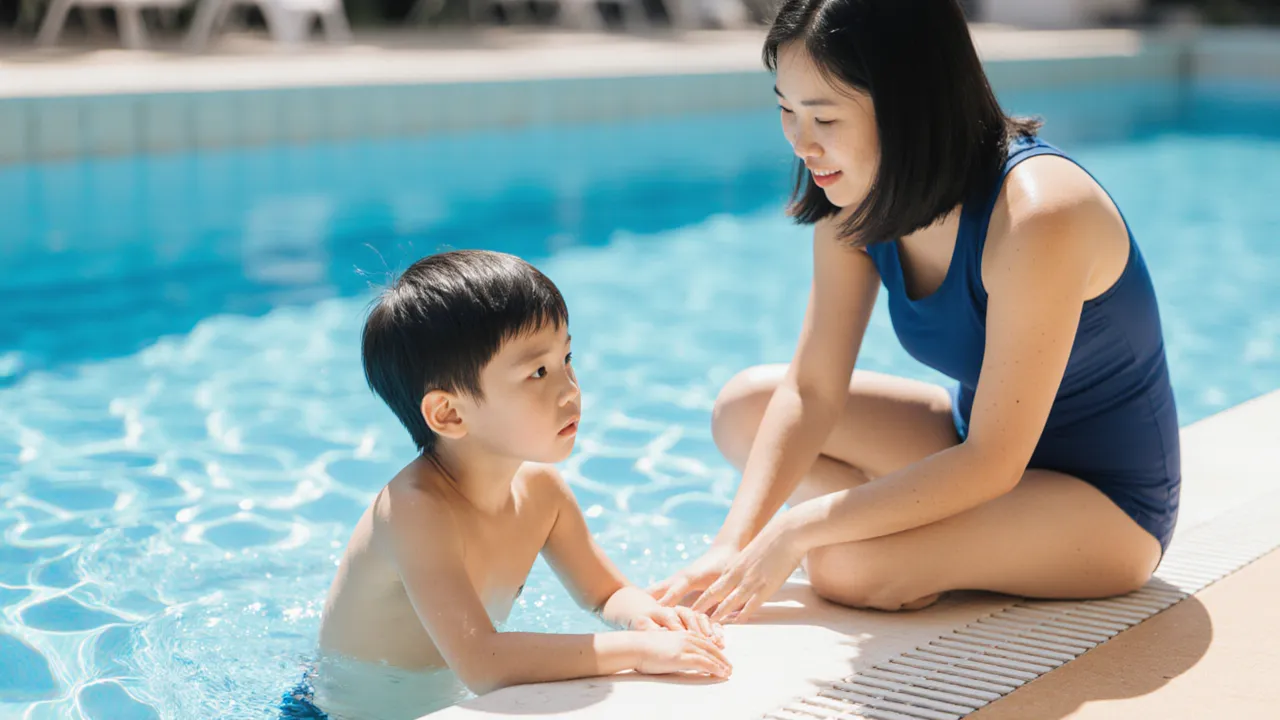
Start outside the water. Trust-building often needs to happen before a child’s feet ever get wet. Talking through what will happen, letting them hold a kickboard on dry land, letting them watch a sibling or peer enjoying the pool. This isn’t wasted time; it’s the foundation everything else sits on.
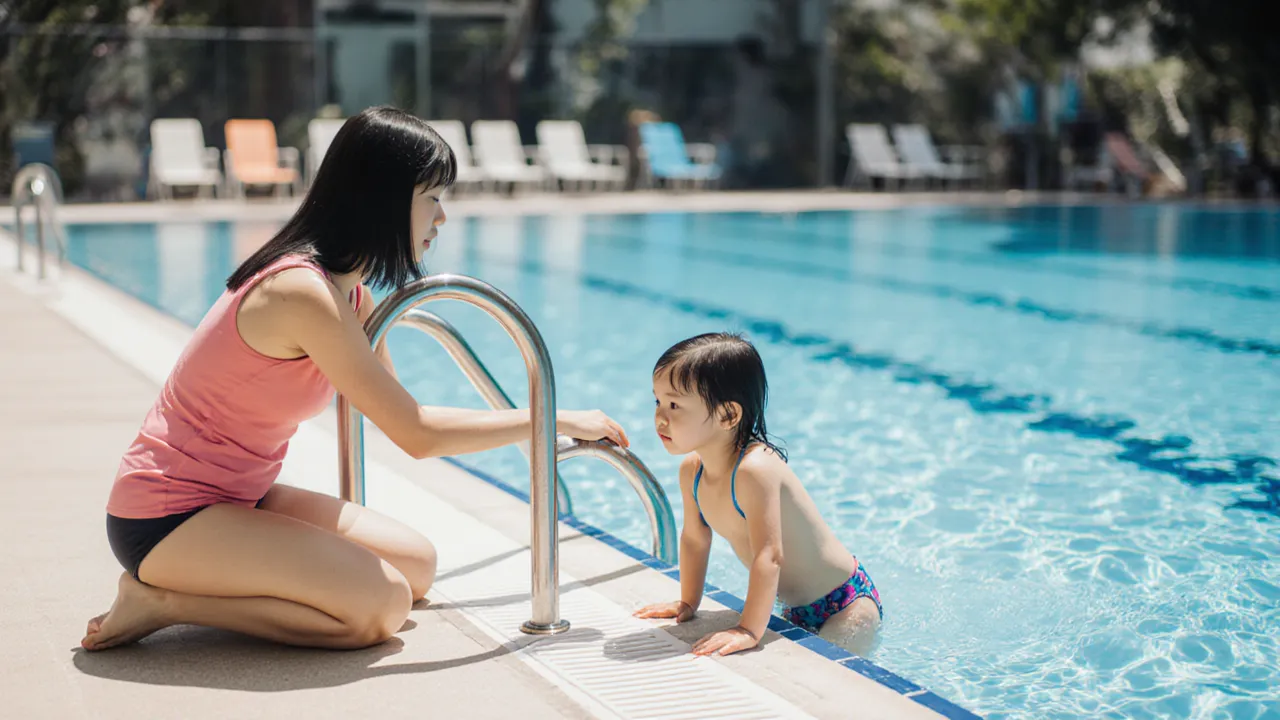
Control the variables the child can control. Letting a child choose when to put their face in, how deep to go, and how fast to move gives back a sense of agency that panic strips away. Coaches trained in this approach resist the urge to rush a nervous child toward a milestone, even when a parent is anxious to see progress.
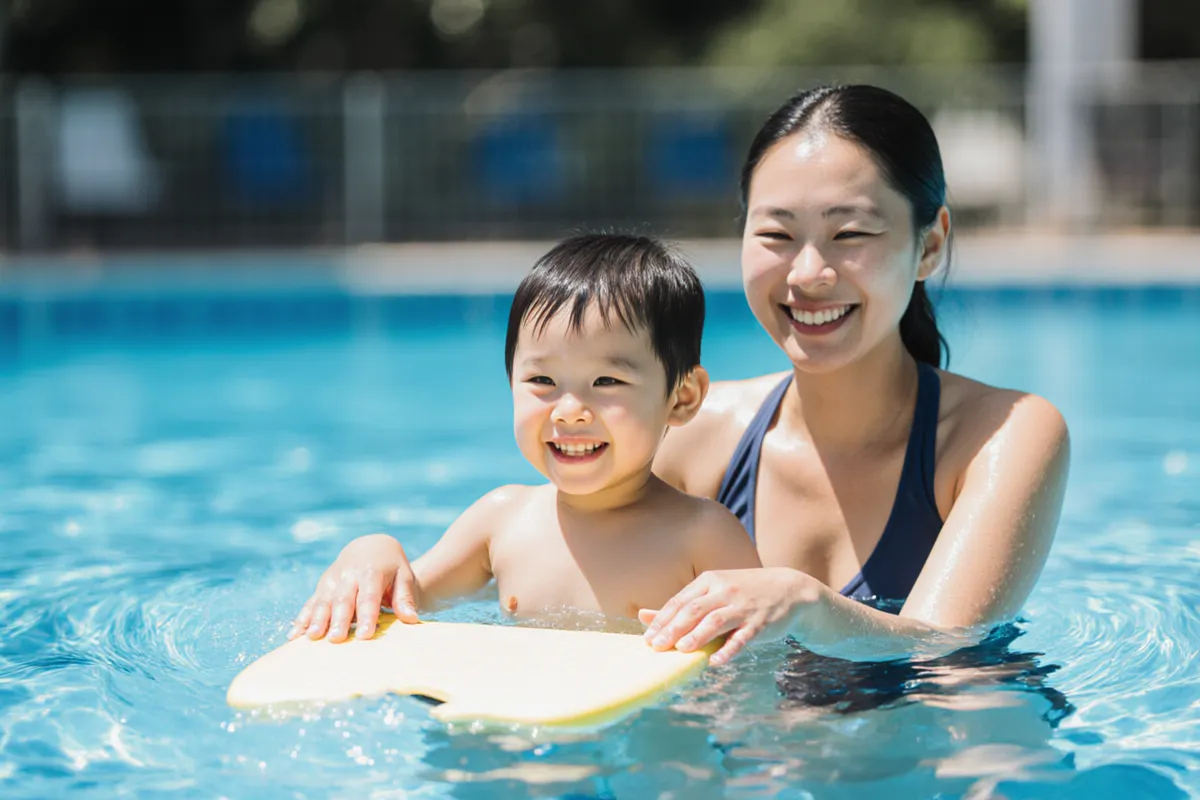
Break skills into smaller pieces than usual. Where a confident child might learn to blow bubbles and float in the same session, an anxious child may need blowing bubbles broken into “blow bubbles with your chin at the water,” then “with your mouth at the water,” then “with your nose at the water”. Each step held until it’s genuinely comfortable, not rushed.
Use consistency over intensity. Two shorter sessions a week, with the same coach and the same routine, tend to outperform one longer session for anxious kids. Familiarity is doing half the work of building confidence.
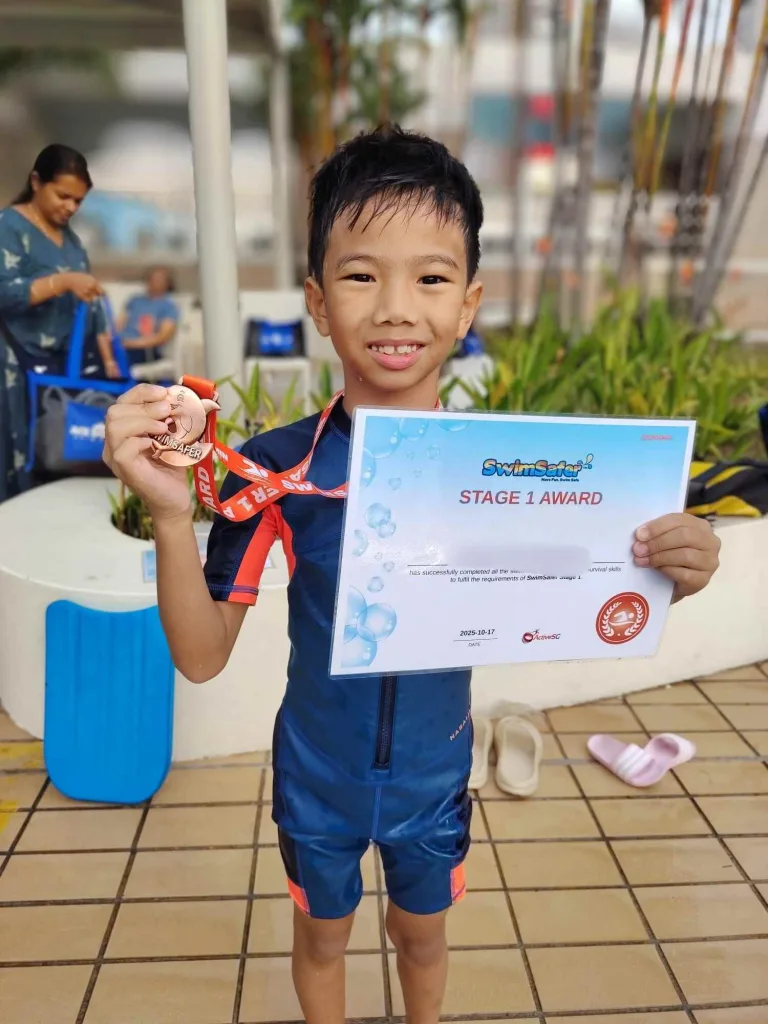
Celebrate visibly, not just verbally. Children, especially anxious ones, respond strongly to tangible markers of progress. A sticker, a small ritual, a physical token that says “you did it” gives the achievement weight in a way that praise alone sometimes doesn’t.
This is where Ace Dolphin‘s approach was built specifically around: a “Calm & Chill” philosophy where coaches never force progression, paired with a proprietary swim band and medal system, the only one of its kind among Singapore’s swim schools, that turns each small step into something a nervous child can see and hold onto. Parents consistently note that their child stops dreading the pool once there’s a next band to look forward to rather than a vague expectation to “get better.”
Private Coaching vs Group Classes for Anxious Kids
Group classes work well for children who are simply new to swimming, but a child with genuine water anxiety often needs something closer to one-to-one attention, at least initially. In a group of five or six, a coach cannot fully slow down for one anxious child without the rest of the class losing momentum. Which means the anxious child either gets rushed or gets sidelined.
Private coaching allows the pace to be set entirely by the child, with the coach reading micro-signals, a held breath, a stiffened shoulder, and adjusting in real time. Many parents start with private lessons to get through the initial fear, then move their child into a group setting once basic water comfort is established, since peer environments are genuinely valuable for motivation once the foundational anxiety has eased. For a fuller breakdown of when each format makes sense, this honest comparison of private versus group lessons is worth reading before you enrol.
How Long Does It Typically Take?
There’s no fixed timeline, and any coach who promises one is guessing. What experienced instructors do observe is a pattern: children with mild-to-moderate water hesitation typically show real, sustained comfort within four to eight sessions when the pacing is right. Children with a genuine phobia, a strong, distressed reaction rather than ordinary hesitation, may take longer, sometimes several months, but the trajectory is still consistently forward as long as the child isn’t repeatedly pushed past their comfort threshold.
What derails progress isn’t a slow start. It’s inconsistency, switching coaches or schools frequently, or a well-meaning adult pushing a child to “just get it over with” after a plateau. Water phobia responds to patience far better than it responds to pressure, even when the pressure comes from a place of wanting to help.
What to Look for in a Swim School If Your Child Is Anxious
Not every swim school is set up to work well with fearful children, and it’s worth asking a few pointed questions before enrolling: does the coach have specific experience with anxious or phobic children, not just young beginners? Is there flexibility to slow the pace or repeat a stage without pressure to “keep up” with a cohort? Is progress made visible to the child in a way that motivates rather than compares them to peers?
Singapore’s tropical climate and abundance of ActiveSG pools mean swimming is close to a life skill here rather than a nice-to-have, which raises the stakes for getting it right the first time rather than cycling a child through a string of bad experiences at different schools. A coach’s demeanour in the first five minutes with a nervous child, patient and unhurried, or subtly impatient, tells you almost everything you need to know.
Conclusion
A fearful child at the pool edge isn’t a lost cause, they’re a child whose nervous system needs a slower, more deliberate path to the same destination every other swimmer reaches. The right pacing, the right coach, and a way to make small wins visible are usually enough to turn things around, often faster than parents expect once the approach actually fits the child.
This is the exact problem Ace Dolphin’s coaches specialise in solving, having worked with thousands of once-anxious children across its six ActiveSG locations in Tampines, Pasir Ris, Yio Chu Kang, Bishan, Punggol, and Sengkang. If your child has struggled with water anxiety elsewhere, reach out at admin@acedolphin.com or +65 9105 5244, or visit acedolphin.com to find out more.