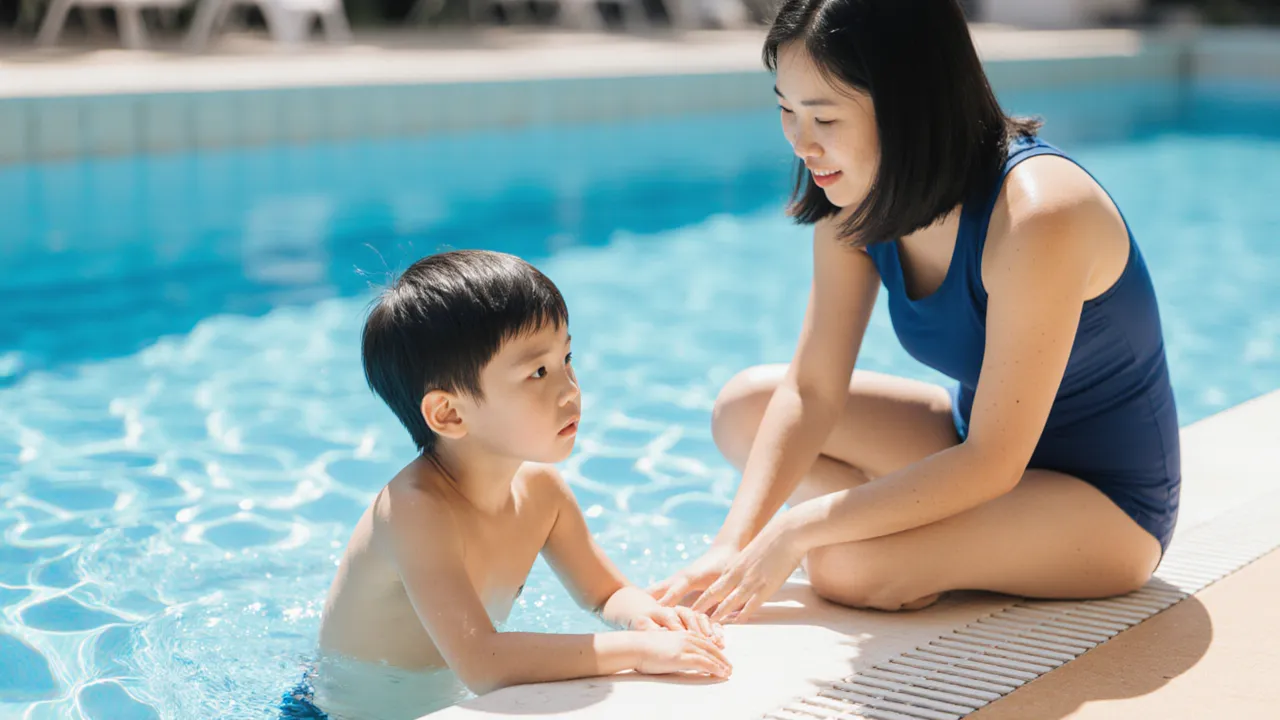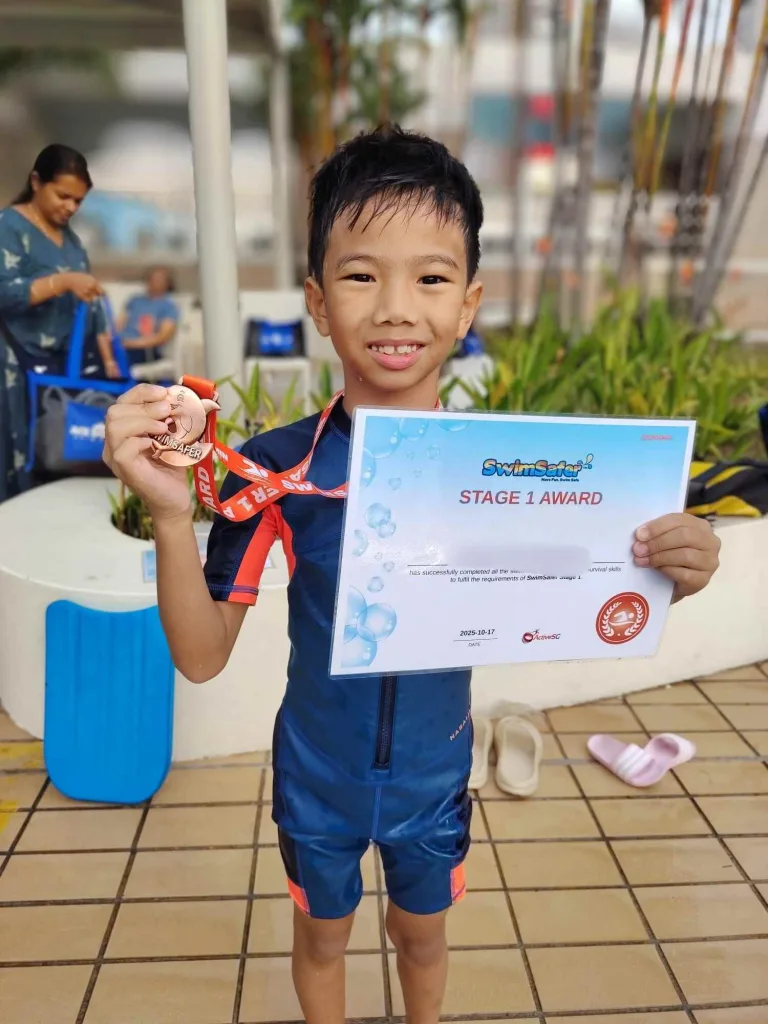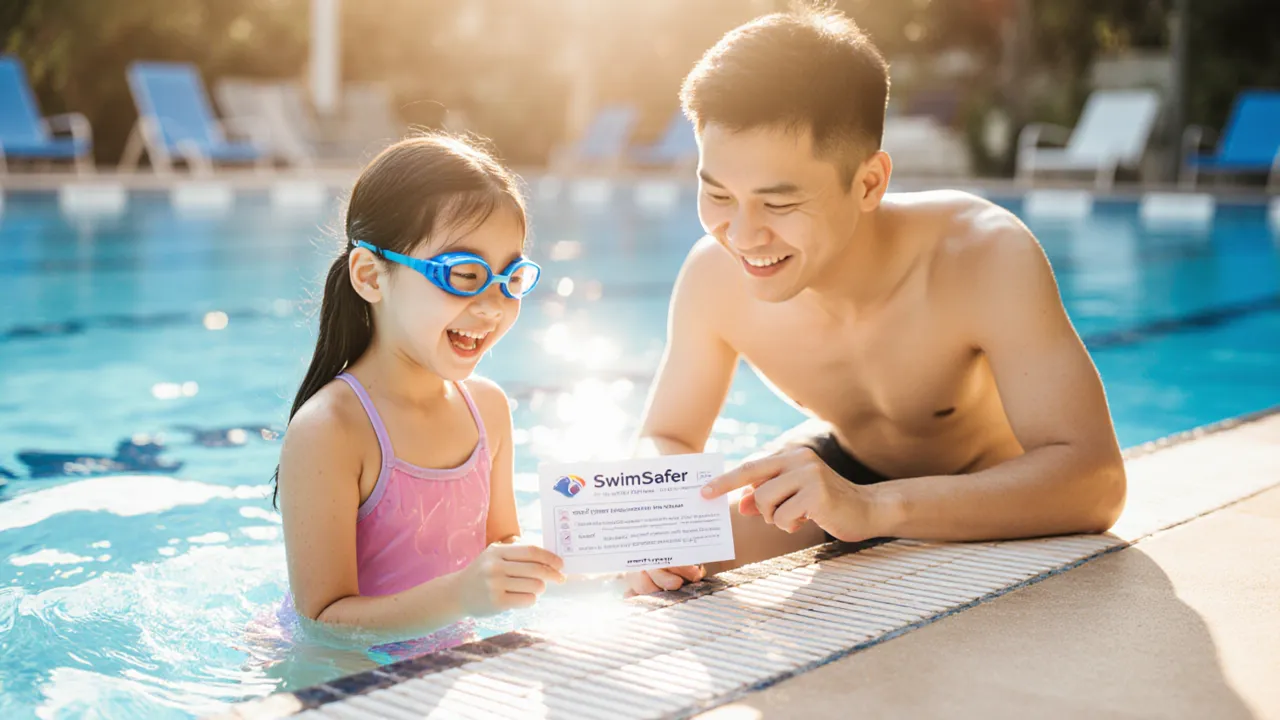
Your child has been going to the same weekly swimming lesson for months. The strokes look smoother, they don’t cling to the pool wall anymore, and last week they swam a full length without stopping. Naturally, you find yourself wondering: is it time to move up to the next SwimSafer stage, or should they stay put and keep practising?
It’s a fair question, and one Singapore parents ask often, especially once a child settles into a comfortable rhythm at their current level. The honest answer is that readiness isn’t just about how confident your child looks in the water. SwimSafer 2.0 progression is built around specific, assessable skills, and there are clear signals, some obvious, some easy to miss, that tell you a stage change is genuinely due. Here’s what to actually look for.
How SwimSafer 2.0 Progression Actually Works
Before spotting the signs, it helps to understand the system itself. SwimSafer 2.0 is Singapore’s national water safety framework, structured across six progressive stages from Stage 1 through to Gold. Each stage typically involves around 12 hours of lesson time and ends with a two-part assessment: a practical in-water test where your child must be assessed as fully competent in the required skills, and an online theory quiz with a 90% pass mark.
Since July 2025, every SwimSafer assessment runs through the Centralised Assessment Management System (CAMS), the official national platform operated by Singapore Aquatics. This means progression isn’t a subjective call by any one coach. It’s measured against a consistent national standard. That’s actually good news for parents: if your coach says your child is ready, it’s because specific, defined criteria have been met, not a vague impression.
At Ace Dolphin, we layer this national framework with the Tatsuki Japanese methodology, which brings a level of precision tracking to stroke mechanics that goes beyond what SwimSafer alone measures. This is part of why our coaches can often flag readiness, or a gap, earlier and more accurately than a general once-a-week assessment would catch.
Sign 1: They Complete Core Skills Without Coaching Cues
The clearest sign of readiness is independence. If your child still needs constant reminders, “kick harder,” “turn your head to breathe,” “keep your body flat”, for the core skills of their current stage, they’re not ready to move up yet, even if they can technically complete the movement when prompted.
What you want to see is the skill becoming automatic. A Stage 2 swimmer who submerges, glides, and kicks without a coach calling out each step is showing the kind of muscle memory that the next stage will build on. If every successful lap still needs verbal coaching, staying at the current stage a little longer usually pays off later, rushing ahead on shaky fundamentals tends to show up as struggle two stages down the line.
Sign 2: Stamina Matches the Distance, Not Just the Technique
Parents often focus on whether a child can perform a stroke correctly, but stage assessments also test whether they can sustain it. A child might have beautiful freestyle technique for five metres and then completely fall apart by fifteen. That’s a stamina gap, not a skill gap, and it’s one of the most common reasons a otherwise technically-ready swimmer doesn’t pass their CAMS assessment.
Watch how your child’s form holds up toward the end of a length, not just at the start. If their kick weakens, their breathing gets ragged, or they start swallowing water in the final few metres, that’s useful information, it tells you (and your coach) exactly what to work on before booking the test, rather than finding out mid-assessment.
Sign 3: They Can Explain the “Why,” Not Just Do the “What”
This one catches families off guard because it’s easy to overlook: every SwimSafer stage from 2.0 onward includes a theory component, and it requires a 90% pass mark. A child who swims well but has never absorbed the water safety concepts. Like recognising a rip current, knowing when it’s safe to enter open water, or understanding basic self-rescue. Can still fail to progress.
A good readiness check is simply asking your child questions about what they’ve learned in class. Can they explain, in their own words, why we never swim alone, or what to do if a friend is struggling in the water? If swimming skill has raced ahead of water safety knowledge, it’s worth asking the coach to spend a session or two reinforcing theory before the next assessment slot.
Sign 4: Your Coach Has Started Mentioning It Unprompted
This sounds obvious, but it’s the single most reliable signal, and many parents underweight it. Coaches who see your child weekly are tracking progress against the stage criteria far more precisely than a parent watching from the poolside can. If your child’s coach starts mentioning readiness, even in passing, like “she’s close to Stage 3 skills now”, that’s worth following up on directly rather than waiting for a formal review.
If you haven’t heard anything either way and you’re curious, just ask. A good coach will give you a specific, honest answer: exactly which skills are solid, which ones need another few weeks, and roughly when a CAMS test booking would make sense. Vague reassurance (“oh he’s doing great!”) without specifics is a sign to ask more pointed questions.
Sign 5: Confidence Doesn’t Drop Under Mild Pressure
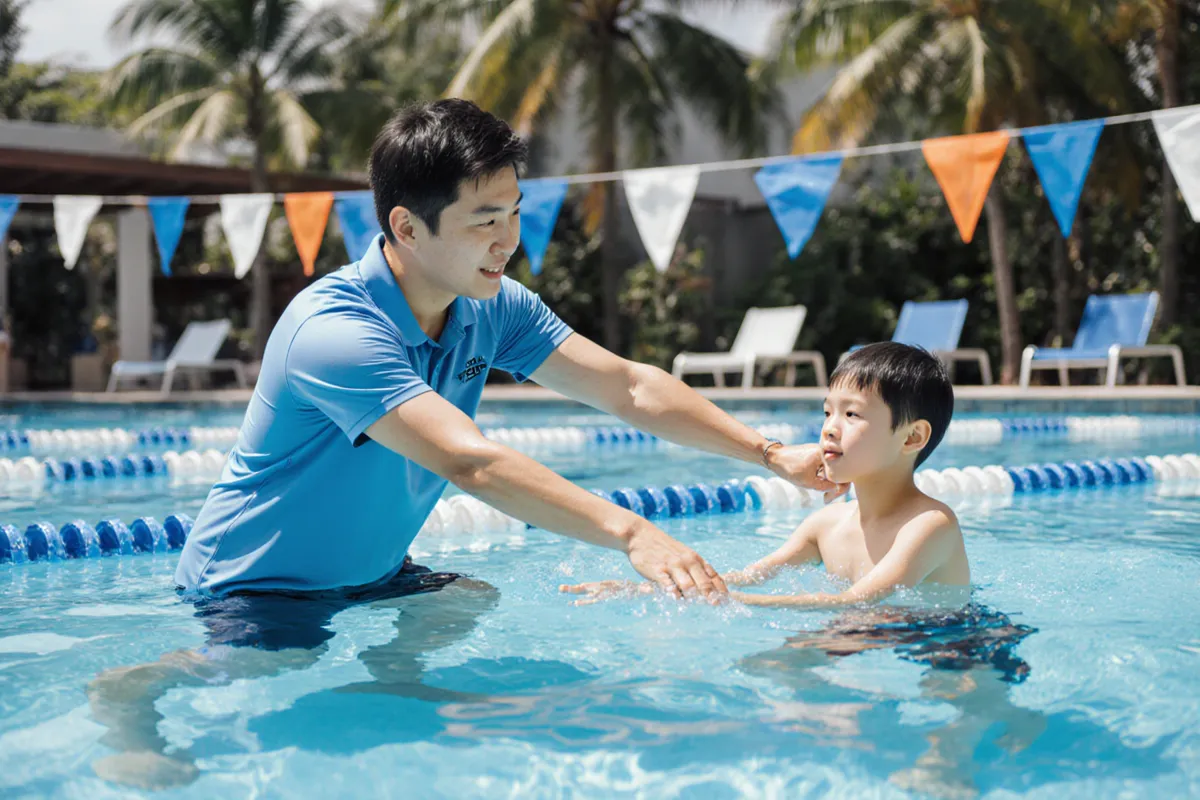
SwimSafer practical assessments aren’t identical to a normal lesson environment. There’s often an unfamiliar assessor, a slightly more formal setting, and the natural nervousness that comes with being “tested.” A child who performs a skill flawlessly in a relaxed weekly class but falls apart the moment the environment changes even slightly isn’t quite ready, regardless of how good their technique looks on a normal Tuesday afternoon.
This is where a calm, low-pressure coaching style matters. At Ace Dolphin, our “Calm & Chill” approach means we introduce mock assessment conditions gradually, so children build genuine composure rather than just rote skill. If your child tends to get flustered by anything unfamiliar, it’s worth flagging to your coach before booking a formal test, a session or two of gentle exposure to test-like conditions often makes a bigger difference than another few weeks of the same drills.
What to Do Once You Spot the Signs
If several of these signs are lining up, the next step is simple: talk to your coach and book a SwimSafer 2.0 assessment via CAMS. Coaches can usually tell you, within a lesson or two, whether it’s the right time or whether a short focused push on one specific skill would raise the odds of a first-time pass.
And if the signs aren’t there yet, that’s genuinely fine. Every child’s timeline through the six stages looks different, and holding a stage a little longer to solidify stamina or confidence almost always pays off compared to progressing on shaky fundamentals. Some families accelerate this process with private coaching for a few sessions to target the exact gap. Worth considering if your child is close but stuck on one specific skill.
Conclusion
Readiness for the next SwimSafer stage isn’t about one dramatic breakthrough. It’s a combination of automatic skills, sustained stamina, absorbed water safety knowledge, and a coach who’s actively tracking the specific criteria against the national CAMS standard. Watch for these signs, ask your coach directly, and you’ll book the assessment at exactly the right time rather than too early or too late.
At Ace Dolphin, our coaches combine the SwimSafer 2.0 framework with Japan’s Tatsuki methodology to track stroke precision closely, so families get an honest, specific answer on where their child stands, not vague encouragement. With 15+ years and 8,000+ graduates across our six ActiveSG locations, we’ve guided thousands of children through exactly this progression. If you’d like a readiness check for your child, reach out at admin@acedolphin.com or +65 9105 5244, or explore our kids swimming lessons.