Author name: Ace Dolphin Swim School

Child receiving a medal from swim coach at outdoor pool after reaching a SwimSafer milestone

Signs Your Child Is Ready to Move Up a SwimSafer Level

Your child has been in the same SwimSafer stage for what feels like forever. Other kids in the class seem to be moving up. You’re not sure if your child is stuck, if the coach is just being cautious, or if it’s time to ask for a re-assessment. If you’ve stood at the viewing gallery running these questions through your head, you’re not alone — it’s one of the most common things parents ask us at Ace Dolphin. The honest answer is that “readiness” isn’t about how many weeks your child has clocked in a stage, or how old they are compared to their pool-mates. It’s about a specific, observable set of skills. Here’s what those look like at each stage of SwimSafer 2.0, what genuine readiness signals to watch for, and why pushing a child up too early usually backfires. SwimSafer Isn’t Linear — And That’s the Point SwimSafer 2.0, Singapore’s national water safety framework under SportSG, is built around six stages: from a first independent float through to Gold-level 400m swims across six strokes. Each stage runs roughly 12 hours of instruction time and ends with a practical assessment plus an online theory quiz before a child receives their e-certificate via FileSG. That structure matters because it means progression is checkpoint-based, not calendar-based. A child doesn’t graduate a stage because a term ended — they graduate because they demonstrated the specific skills that stage requires, on an actual assessment day, in front of an assessor. This is why two children who started on the same day can be in different stages six months later, and why “my friend’s kid is already in Stage 4” isn’t a useful comparison. Different children build different skills at different rates, and that’s completely normal. At Ace Dolphin, we track this with a proprietary swim band and custom medal system — every time a child hits a genuine skill milestone, they receive a physical marker of it. Parents tell us this is one of the most reassuring parts of the programme, because progress stops being an abstract “how’s it going?” conversation and becomes something visible: a band on the wrist, a medal in a drawer, a clear signal of what’s actually been mastered. The Real Readiness Signs (Not Just “They Can Swim a Bit”) Coaches aren’t looking for a single good lap. They’re looking for consistency across multiple sessions, because a one-off good attempt often reflects a lucky day rather than a mastered skill. Here’s what genuine readiness looks like in practice: Skill consistency, not skill possibility. If your child can float unassisted once out of five tries, that’s not the same as being able to float reliably. Coaches want to see a skill land correctly on most attempts across at least two or three consecutive lessons before they’ll consider it “banked.” Independence from the wall and from hands. A child who edges toward the wall the moment a coach lets go, or who needs a hand under their back to stay afloat, isn’t yet ready to move on — even if their stroke technique looks fine when supported. Letting go, literally and figuratively, is often the last skill to click, and it’s frequently the one parents underestimate. Willingness over ability. Some children can technically perform a skill but freeze up when asked to do it away from the coach, in deeper water, or without a kickboard. Readiness includes the emotional piece — a child who attempts a skill without visible anxiety is showing you they’ve actually internalised it, not just memorised the motion. Independent kicking with real propulsion. For the early stages especially, coaches watch for a kick that’s actually moving the child forward, not just splashing. A strong kick is the engine for almost everything that follows, so it’s one of the first things assessed before stage progression is even discussed. Following multi-step instructions unprompted. As children move into the stroke-development stages (Stage 3 onward), the ability to follow a sequence — “breathe, glide, kick, reach” — without a coach breaking it into single steps each time is a strong signal that a child has the focus and body awareness the next stage demands. What This Looks Like Stage by Stage In the foundation stages (1–2), readiness mostly comes down to comfort and independence: entering the water safely without hesitation, floating unaided for a sustained period, and swimming a continuous 25m without stopping to stand. A child who still reaches for the wall reflexively, or who tenses up the moment their face goes under, usually needs more time here regardless of how well they perform the “dry” version of a skill on land. From Stage 3 onward, the bar shifts toward stroke mechanics and self-rescue: stride jump entries, underwater swimming, and — crucially — the coordination to combine breathing with stroke technique rather than doing each in isolation. This is where the Tatsuki Japanese methodology, which Ace Dolphin blends into every stage, becomes especially useful. Japanese swim coaching places heavy emphasis on precision metrics — stroke count, body position, breathing rhythm — rather than just “did they make it across the pool.” That precision tracking gives coaches (and parents) a much clearer, evidence-based answer to “are they ready?” instead of a gut feeling. By Stage 4 (Bronze) and beyond, readiness increasingly includes endurance and rescue skills — throwing techniques, personal survival in deeper water, and swimming 100m using varied strokes. Children at this level also need to handle feedback well and self-correct without becoming discouraged, which is as much a maturity marker as a physical one. By Stage 5 (Silver) and Stage 6 (Gold), the readiness picture shifts again toward endurance and independent problem-solving. A child heading into Silver should already be comfortable with basic diving entries and efficient stroke technique over distance, not just able to complete 200m eventually but able to pace themselves through it without panicking halfway. Gold-level readiness is less about any single skill and more about composure under harder conditions — swimming 400m with proper

Signs Your Child Is Ready to Move Up a SwimSafer Level Read More »

Swim coach demonstrating Tatsuki hand-entry technique to a child at an ActiveSG pool in Singapore

The Tatsuki Method: How Japanese Swim Technique Sharpens Your Child’s Stroke

You’ve probably noticed it at the pool: two children who joined swimming lessons around the same time, both technically “passed” the same SwimSafer stage — but one swims with a clean, efficient stroke while the other is still splashing hard just to stay afloat. The difference usually isn’t talent. It’s how precisely the technique was taught in the first place. This is where the Tatsuki method, a swimming curriculum with roots going back over 50 years in Japan, changes the picture for Singapore parents who want their child to swim well, not just pass a test. Where the Tatsuki Method Comes From The Tatsuki method originated with the Okazaki Tatsuki Swimming Club, founded in Aichi, Japan in 1973. Over decades, the club built a highly structured, level-based curriculum that has since spread internationally, including to Singapore through certified coaching partnerships like Ace Dolphin’s. The philosophy behind it draws on a broader Japanese instructional tradition sometimes described through the idea of kaizen — continuous, incremental improvement through repeated, precisely corrected practice, rather than large jumps in difficulty. In practice, this means a child isn’t handed a new skill and left to “figure it out” through repetition alone. Every drill is broken into smaller components, each one checked against a specific technical standard — hand entry angle, elbow position during the pull, hip rotation, head position during breathing — before the next component is introduced. It’s a slower, more deliberate process on paper, but it tends to produce faster real-world results because children aren’t practising and reinforcing bad habits along the way. Why “Passing a Level” Isn’t the Same as Swimming Well Singapore’s SwimSafer 2.0 framework is excellent at what it’s designed to do: certify water safety competence in six clearly defined stages, each requiring a specific skill and a water safety theory pass. But SwimSafer is a safety benchmark, not a stroke technique programme. A child can pass Stage 3 with a freestyle that gets them 25 metres, even if their stroke mechanics would slow them down significantly at Stage 5 or 6, where stroke timing benchmarks get considerably stricter. This is the gap the Tatsuki methodology is built to close. Rather than treating stroke technique as something that “comes later” or improves naturally with more laps, Tatsuki-trained coaches correct mechanics from the earliest lessons — teaching a child to enter the water with the hand at the correct angle from day one, rather than letting a splashy, inefficient entry become muscle memory that has to be unlearned two stages later. Parents sometimes assume a child needs to swim more to swim better. Often what they actually need is more precise correction on the same amount of practice. What This Looks Like in an Actual Lesson A Tatsuki-influenced lesson looks noticeably different from a “swim a few laps and get feedback at the end” class. Coaches break each stroke into isolated components and drill them individually before combining them — a child might spend several minutes purely on arm recovery position, floating in place, before ever combining it with a kick or breathing pattern. This isolation-then-integration approach is slower per-skill but compounds quickly: children retain corrected form because they never practised the wrong version at speed. Coaches also give specific, technical feedback rather than general encouragement. Instead of “good job, keep going,” a child might hear “lift your elbow a little higher on the recovery” or “point your fingers down a touch earlier on entry” — concrete, correctable instructions a 6- or 7-year-old can actually act on with a bit of coaching support. Over a 12-week grading cycle, these small corrections accumulate into visibly smoother, more efficient strokes — the kind that hold up under SwimSafer’s stricter Stage 5 and 6 timing benchmarks rather than needing to be relearned at that point. Turns and underwater transitions get the same treatment. Where many programmes leave turns as an afterthought until a child is already swimming full laps, Tatsuki-style instruction introduces wall approach and push-off mechanics early and revisits them at every stage, so turns become efficient habit rather than an awkward pause a child has to consciously think through mid-swim. How Ace Dolphin Combines This with SwimSafer 2.0 Ace Dolphin runs the Tatsuki methodology alongside — not instead of — SwimSafer 2.0, and this pairing is deliberate. SwimSafer 2.0 tells parents and coaches what a child needs to demonstrate to be certified safe in the water at each stage. The Tatsuki approach shapes how that skill gets taught, so that by the time a child reaches assessment, their technique is clean enough to pass comfortably rather than just barely. Our coaches hold both NROC certification (Singapore’s national coaching standard) and TJAP certification through Tatsuki Japan, which means every lesson is assessed against two standards simultaneously: is this child safe and progressing through SwimSafer’s national framework, and is their stroke technique actually correct by international competitive-swimming standards. Over 15 years and 8,000+ graduates, we’ve found this dual lens is exactly what separates children who “can swim” from children who swim well — efficiently, safely, and with technique that holds up as lessons get more demanding. This precision-first approach also connects to Ace Dolphin’s proprietary swim band and medal system, which rewards children for correctly mastering specific technical components — not just completing a stage. A child earns recognition for a properly corrected stroke element, which keeps motivation high during the slower, detail-focused phases of the Tatsuki approach that might otherwise feel less exciting than “swimming a whole lap.” What Parents Should Look For If you’re evaluating whether your child’s coaching is giving them genuine technique — not just lap count — there are a few things worth watching from the viewing gallery. Does the coach give specific corrections (“higher elbow,” “later breath”) rather than only general praise? Does your child’s stroke look different — cleaner, more streamlined — after a few weeks, even before they move up an official stage? Are turns and wall pushes being taught early, or left until much

The Tatsuki Method: How Japanese Swim Technique Sharpens Your Child’s Stroke Read More »

Swim coach observing young girl swimming during SwimSafer lesson at Singapore public pool

Signs Your Child Is Ready to Move Up a SwimSafer Stage: A Parent’s Guide

You’re sitting on the pool deck at Our Tampines Hub, watching your child’s lesson through the glass. She’s been in Stage 2 for a while now, and from where you sit, she looks fine — kicking happily, going under without fuss. So why hasn’t she moved up? Or the opposite worry: your son just got bumped to Stage 4 and you’re quietly wondering if he’s actually ready. Most Singapore parents can’t tell from the deck what coaches are looking for, because readiness isn’t about looking busy in the water — it’s about specific, observable skills. This guide breaks down exactly what those skills are at each SwimSafer stage, the signs you can spot yourself, and what to do if your child seems stuck. How SwimSafer 2.0 Progression Actually Works SwimSafer 2.0 is Singapore’s national water safety framework, and it’s built as six progressive stages: Stages 1 to 3, then Bronze, Silver, and Gold. Each stage ends with a practical assessment against a fixed checklist of criteria, plus an online water-safety theory quiz. The journey runs from a first assisted float all the way to Gold — roughly 400 metres of continuous swimming, multiple strokes, and survival skills performed in clothing. Here’s the part that surprises many parents: assessment is criteria-based, not effort-based. A child either demonstrates every required skill on test day or is marked “Not Yet Competent” for that stage. There’s no partial credit and no rounding up for a child who “almost” managed the 25-metre swim. This is a feature, not a flaw — the certificate is a safety credential, and Singapore’s framework is deliberately strict about it. It also means progression isn’t tied to age or how many terms your child has attended. A confident six-year-old can overtake a hesitant nine-year-old. At Ace Dolphin, lessons run in 12-week progressive grading cycles, so there’s a natural rhythm: skills are built and refined across the cycle, and children are graded when the criteria are consistently met — not just managed once on a lucky day. That word, consistently, is the single most useful lens for judging readiness, and it applies at every stage below. Early Stages (1 and 2): Watch for Water Confidence, Not Just Skills The first two stages are less about swimming and more about being genuinely comfortable in water. Stage 1 covers pool entries and exits, submerging, breath control, floating, and moving through the water with support. Stage 2 pushes towards unassisted entries, sculling, and a continuous 25-metre swim. Signs your child is ready to move up from Stage 1 or 2: They put their face in the water without being asked. Voluntary submersion — during play, not just on instruction — is the clearest sign the foundational fear is gone. They can float on their front and back calmly, and recover to standing on their own. Recovery is the skill assessors care about most; floating is only useful if a child can get out of it safely. They blow bubbles rhythmically rather than holding their breath. Breath control is the gateway skill to every stroke that follows. A child who exhales underwater in a relaxed rhythm is ready for more; a child who surfaces gasping is not — yet. They’re relaxed enough to be taught. If your child spends the first ten minutes of every lesson re-warming to the water, they’ll pass eventually, but they’re not ready to progress this cycle. For anxious children, this cluster is where progression most often stalls — and where pushing hardest backfires. Ace Dolphin’s coaches specialise in exactly this profile of child, using a calm, no-forced-progression approach that has converted thousands of water-fearful kids into independent swimmers. If your child is stuck here, the answer is almost never “more pressure”; it’s a coach who knows how to rebuild trust in the water. Middle Stages (3 and Bronze): Watch for Technique and Stamina From Stage 3 onwards, SwimSafer shifts from confidence to competence. Stage 3 introduces proper stroke work and a 50-metre continuous swim; Bronze demands coordinated technique across strokes, a 100-metre swim, and more advanced personal survival skills like treading water. Signs your child is ready to move up: Their strokes look smooth, not frantic. A ready child covers the distance with long, unhurried movements. A child who finishes 50 metres through sheer determination — legs sinking, head craning, arms windmilling — has the stamina but not yet the technique, and technique is what gets assessed. They breathe rhythmically to the side during freestyle. Lifting the whole head forward to gulp air is the most common habit that stalls children at this level. They can tread water calmly for the required time. Watch their face: a ready child treads water while chatting; a not-ready child treads water while panicking. Distance doesn’t intimidate them. If your child completes the required continuous swim in practice — not once, but most attempts — they’re genuinely close. This is the band where precision coaching pays off most, and it’s where the Japanese Tatsuki methodology that Ace Dolphin merges into its SwimSafer curriculum makes a visible difference. The Japanese approach tracks fine-grained technique metrics — body position, kick timing, breathing pattern — rather than just “can complete the distance”. Parents who’ve moved from other schools frequently say this is when progress became visible week to week instead of invisible term to term. Advanced Stages (Silver and Gold): Watch for Composure Under Load Silver and Gold are survival qualifications as much as swimming ones. Your child will swim 200 to 400 metres continuously, perform rescue and survival sequences, and complete swims in clothing — which feels dramatically harder than swimwear. Readiness signs at this level: They finish long swims with energy to spare. Gold’s 400 metres isn’t a sprint; it’s a test of pacing. A child who can hold a steady tempo across laps without their stroke falling apart is ready. Their technique survives fatigue. Anyone’s stroke looks good on lap one. Assessors watch what happens on the last lap. They stay composed in

Signs Your Child Is Ready to Move Up a SwimSafer Stage: A Parent’s Guide Read More »

Child receiving swim medal from coach at Ace Dolphin Swim School pool

Signs Your Child Is Ready to Move Up a SwimSafer Level

Every few weeks, a parent asks the same question at pool-side pickup: “Is he ready for the next stage yet?” It’s a fair thing to wonder — nobody wants their child stuck repeating the same stage out of caution, and nobody wants them pushed into water skills they can’t yet handle. The good news is that readiness isn’t a guess. SwimSafer 2.0 sets out clear, observable benchmarks for every stage, and an experienced coach can usually tell within a few sessions whether a child is coasting or genuinely ready to move on. Here’s what those signs actually look like. Age Doesn’t Decide Readiness — Skill Does It’s tempting to think of SwimSafer stages the way we think of school levels: complete a year, move up a grade. But SwimSafer doesn’t work on a calendar. A confident 5-year-old and a more cautious 8-year-old can both be sitting at Stage 2, and that’s entirely normal. Sport Singapore built the six-stage framework — Stage 1 through the Bronze, Silver, and Gold levels — around demonstrated competency, not birthdays. This matters because parents sometimes compare their child to a sibling or classmate and worry when the pace differs. A child who spends 16 lessons on Stage 2 instead of 8 isn’t behind — they may simply need more repetition before their body and confidence catch up to the skill. Pushing a child through on a timeline rather than a benchmark is exactly how kids end up with technically-passed certificates and genuinely shaky water safety. At Ace Dolphin, coaches trained under both NROC and Tatsuki Japan certification frameworks are taught to resist that shortcut — a child only tests for the next stage when the assessment criteria say they’re ready, never because a term is ending. The Technical Signs Coaches Actually Look For Each SwimSafer stage has specific, testable milestones, and readiness shows up long before the actual assessment day. If your child is in Stage 1, the signs are things like holding a 5-second front float (the “mushroom” or “jellyfish” position) and recovering to standing without panic, plus moving 5 metres on their back using alternating or simultaneous arm and leg movements — done calmly, not as a one-off fluke. By Stage 2, you’re looking for unassisted water entries, consistent sculling, and a real 25-metre continuous swim — not a stop-start effort with breaks at the wall. Stage 3 raises the bar further: your child should be managing a 50-metre continuous swim split between front crawl and backstroke, and starting to grasp the basic personal survival concepts that get introduced at this level, including fitting a personal flotation device (PFD) correctly while clothed. The pattern across every stage is the same: readiness means the skill is repeatable, not rare. A child who nails a float once in five tries isn’t ready. A child who does it calmly, four times out of five, on a day when they’re tired or distracted, almost certainly is. Confidence Is a Bigger Signal Than Strength Here’s what surprises a lot of parents: the biggest predictor of SwimSafer readiness usually isn’t muscle strength or stroke technique — it’s whether the child has stopped thinking about the skill and started just doing it. A child gripping the pool edge white-knuckled while performing a “correct” float is not the same as a child floating loosely because their body has learned to trust the water. This is where Ace Dolphin’s water-phobia experience shapes how progression decisions get made. Coaches watch for the moment a previously anxious child stops asking “do I have to?” before an exercise and instead just does it — that shift from compliance to genuine comfort is often the clearer readiness marker than the skill itself. Rushing a technically-capable but still-anxious child to the next stage tends to backfire: the new stage introduces harder water (often deeper, sometimes involving jumps or submersion), and an unresolved fear resurfaces at the worst possible time. Watch for These Behavioural Cues at Home and Poolside Alongside the technical benchmarks, a few everyday signs tend to show up when a child is genuinely ready to progress: They ask to go underwater or try something slightly harder, rather than needing to be coaxed into it Getting water on their face or in their ears no longer triggers a strong reaction They can hold a breath and blow bubbles rhythmically, without gasping when they surface They recover their own balance in the water after a stumble, rather than immediately reaching for the coach or the wall Lesson-to-lesson, their skills are consistent — not “good one week, back to square one the next” None of these alone confirms readiness, but seeing several together, alongside the stage’s technical criteria, is usually a strong indicator that a formal assessment is worth attempting. Why Objective Tracking Beats Guesswork Because SwimSafer stages get progressively more demanding — Stage 4 introduces timed strokes and dive entries, Stage 5 (Silver) layers in deep-water entries and simulated rescue sequences, and Stage 6 (Gold) caps things off with roughly 400 metres across six strokes plus clothed survival skills — the cost of misjudging readiness rises with every level. A child rushed into Silver-stage deep-water work before they’re truly ready isn’t just going to fail the assessment; they may develop a new fear that undoes months of progress. This is where a structured tracking system earns its keep. Ace Dolphin pairs the national SwimSafer curriculum with Japan’s Tatsuki methodology, which is built around precise, incremental skill-tracking rather than broad-strokes impressions of “doing well.” Every lesson is measured against specific technique markers, so a coach isn’t relying on memory or gut feel to decide if a child has genuinely locked in a skill — the data across 12 weeks makes the answer obvious. It’s also why Ace Dolphin uses its own proprietary swim bands and medals system: each milestone a child hits gets marked and celebrated in a tangible way, which gives both the child and the parent a visible, honest record of progress rather than a

Signs Your Child Is Ready to Move Up a SwimSafer Level Read More »

Young Asian child at pool edge with swim coach, Singapore ActiveSG pool

Singapore School Holidays and Swimming: Why This Is the Window Parents Shouldn’t Miss

The June school holidays: four weeks of opportunity for kids to build genuine water confidence. It’s the first Monday of the June break. The kids slept in, there’s no homework, and by 9am someone’s already asking what they’re doing today. Sound familiar? For thousands of Singapore parents, the school holidays — especially the four-week June window — are when the “we should really sort out swimming” thought finally becomes action. And it turns out, they’re right. Not because it’s convenient, but because the science (and the pool data) backs it up: kids who start or intensify swimming lessons during school holidays make faster, more lasting progress than almost any other time of year. Whether your child is a complete beginner, stuck at the same SwimSafer stage they’ve been at since last year, or a water-anxious kid who’s been resisting lessons, the June holidays offer a genuine window of opportunity. Here’s everything you need to know to make the most of it. Why School Holidays Are the Best Time to Learn to Swim There’s a physiological reason why intensive, high-frequency learning works — and swimming is one of the clearest demonstrations of it. When a child swims once a week during the school term, they spend six days forgetting the muscle memory they built in the lesson before. They arrive the following Saturday at roughly the same starting point. Progress happens, but slowly. During school holidays, something different occurs. With three, four, or even five sessions per week, the body doesn’t get the chance to forget. Stroke corrections stick. Breathing rhythm becomes automatic. A child who has been timidly floating with a kickboard in February can be swimming an independent freestyle lap by late June — not because the teaching changed, but because the repetition compounded. There’s also a safety dimension worth naming plainly. Singapore kids spend more time near water during the June and December holidays than at any other point in the year — trips to Sentosa, chalet stays with pools, family outings to the beach. The holidays are precisely when water safety matters most, and the best time to refresh or accelerate those skills is right before and during that period, not after. The June 2026 school holidays run from 30 May to 28 June — four full weeks. That’s 20 weekdays, and potentially 12–16 lessons if you’re running a structured holiday programme. That is transformative for most children. Intensive Holiday Programmes vs. Term-Time Lessons: What’s Actually Different? Most Singapore swim schools offer both term-time and holiday programmes, but parents often aren’t clear on what they’re actually signing up for. The distinction matters. Term-time lessons typically run once or twice a week over a 10–12 week school term. They’re designed for sustained, gradual progression — ideal for children who are advancing steadily and benefit from reflection time between sessions. Holiday intensive programmes run daily or near-daily over 1–4 weeks. They work differently. The skill-to-skill transfer happens faster because the child is returning to the water before the previous lesson fades. Instructors can also build on corrections in real time across consecutive days, rather than starting each class with a reminder of what was covered seven days ago. For parents whose children have plateaued — “she’s been on Stage 2 for months and I don’t know why” — an intensive programme often breaks through the stall. For beginners who’ve been nervous to start, a concentrated burst of calm, structured exposure can build water confidence far faster than a once-a-week term programme. That said, intensive doesn’t mean rushed. The best holiday programmes maintain the same structured curriculum as term-time lessons — they just deliver it more frequently. At Ace Dolphin, the SwimSafer 2.0 framework (merged with the Tatsuki Japanese methodology) underpins every class regardless of whether it’s a term programme or a holiday enrolment. The 12-week progressive grading cycle adapts to fit the holiday format without cutting corners on technique. In a well-run group class, children motivate each other — the peer energy is something private lessons can’t replicate. What to Look for in a Holiday Swim Programme Not all holiday swim programmes are equal, and the June holidays bring a surge of options — some genuinely excellent, some simply capitalising on parent demand. Here’s what to evaluate before you book. Coach continuity Holiday programmes sometimes use rotating coaches or temporary staff, which undermines the whole point of intensive learning. Ask whether your child will have the same coach across sessions. Continuity matters because coaches who track individual progress — who know that Rayan tends to hold his breath and tense up at the turn, or that Priya needs a beat of encouragement before she’ll try a new drill — get dramatically better results than coaches meeting a child for the first time each lesson. Class size Smaller groups mean more water time and faster correction. A class of eight children with one coach in a 45-minute session means each child gets under six minutes of direct coaching attention. Look for programmes capped at five or six per class, or consider private coaching if your child is a visual learner who loses confidence in group settings. A recognisable curriculum SwimSafer 2.0 is Singapore’s national learn-to-swim framework, administered through Sport Singapore. Any reputable school’s holiday programme should map onto the six-stage SwimSafer progression. If a school can’t tell you which SwimSafer stages their holiday classes cover, that’s a red flag. Make-up policy Kids get sick. Holiday plans change. A good programme gives you flexibility — not a policy that voids missed lessons with no recourse. Ace Dolphin’s long-term enrolment includes unlimited make-up lessons, which matters even more during holidays when one bout of the sniffles can disrupt an entire week. Practical Tips for the First Lesson First-time parents often underestimate how much the preparation around the lesson affects what happens in the water. A few things that make a material difference: Arrive early. Rushing to the pool, scrambling to change, and arriving at the pool deck frazzled gives a child

Singapore School Holidays and Swimming: Why This Is the Window Parents Shouldn’t Miss Read More »

Young child at pool edge with patient swim coach at ActiveSG pool Singapore

Private vs Group Swimming Lessons for Kids in Singapore: An Honest Guide

Every few months, a version of the same question appears in every Singapore parenting forum: private or group swimming lessons for my child? The replies are predictably split. Some parents swear by private coaching. Others say group classes built their child’s confidence in ways one-on-one never could. A few suggest semi-private as a middle ground, and then the thread descends into a price comparison. Here’s the thing: both camps are right — for different children, at different stages, with different goals. This guide breaks down the actual differences, the Singapore-specific factors that matter, and the questions that will help you make the right call for your child specifically. What You’re Actually Paying For In a typical group class in Singapore, you’ll find anywhere from 5 to 10 children per coach. At 45 minutes per lesson, that works out to roughly 4 to 9 minutes of direct coach attention per child. Group lessons at ActiveSG facilities typically run between $120 and $180 per month for 4 sessions. In a private lesson, your child has the coach entirely to themselves for the full 45 or 60 minutes. Private coaching in Singapore generally runs from $80 to $150 per session. Semi-private (1 coach to 2 children) and small group (1 coach to 3-4 children) options sit in between. Neither model is inherently better. What matters is whether the format matches your child’s learning style, temperament, and current stage of development. The Case for Group Lessons Group lessons work beautifully for a specific kind of learner: the child who is motivated by watching their peers, energised by a social setting, and needs a gentle push from a bit of friendly competition. Many children learn the wall-push technique better by watching a classmate do it than by listening to verbal instruction. This peer-driven motivation is one of group learning’s genuine superpowers — and it’s not replicated in private lessons. Group lessons also offer a natural social component that matters, particularly for younger children. Swimming alongside others normalises the experience and builds a sense of belonging that makes children look forward to coming back. For families focused on SwimSafer 2.0 progression, group classes structured around 12-week grading cycles provide a clear framework. Children are assessed alongside peers at the same stage, which gives parents a tangible benchmark. The Case for Private Lessons Private coaching makes the most sense in specific situations — and it’s worth being direct about what those situations are, because the generic answer (“private lessons are better for faster progress”) undersells the cases where they’re genuinely transformative. When Your Child Is Afraid of the Water Water phobia — from mild nervousness to full refusal to enter the pool — is far more common than parents expect. In a group setting, a frightened child is essentially invisible. They’ll stand near the edge, avoid the scary drills, and smile when the coach looks their way. Progress flatlines. After several months, parents often conclude their child “just isn’t a swimmer.” Private lessons change this entirely. The coach can spend unhurried time building trust before asking the child to do anything unfamiliar. There are no other children to fall behind. The pace is set by the child’s emotional readiness, not the group syllabus. For a water-anxious child, the return on private lessons is almost always worth the price difference. When Your Child Is at an Outlier Stage Group classes assume children of similar ages are at similar stages. In practice this is often not true. A child who has never had lessons may be in the same group as children who’ve been swimming for two years. Private or semi-private coaching removes this mismatch entirely. When a Specific Technical Goal Needs Rapid Correction Older children working to refine a stroke for SwimSafer assessments — breathing timing in freestyle, body rotation in backstroke, the breaststroke kick — benefit enormously from the sustained feedback that private coaching enables. A coach who can watch every single stroke and give immediate correction produces improvements in two weeks that a group class might achieve in two months. The Option Most Parents Overlook: Semi-Private Lessons If your budget does not stretch to weekly private sessions but your child needs more attention than a standard group provides, semi-private lessons (1 coach to 2 children) are worth serious consideration. Each child gets roughly 50% of the lesson with the coach, versus 10-15% in a standard group. For nervous children who are hesitant rather than distressed, semi-private often strikes the right balance. The Singapore Context: What Changes the Calculation Here ActiveSG pool facilities serve as the teaching environment for most reputable swim schools in Singapore — pool quality is consistent regardless of whether you choose group or private. What varies is the coach-to-child ratio. Year-round tropical weather means Singaporean children can develop skills consistently across the full year. There is no need to cram lessons into a seasonal window. A group class that achieves steady progress is often entirely sufficient. SwimSafer 2.0 operates across six stages. Most children working through Stage 1 and 2 benefit from a supportive group environment. Children targeting Stage 3 and above — where stroke technique becomes the differentiator — often progress faster with private or semi-private coaching. School term rhythms create gaps: illness, school events, CCA schedules. A swim school with flexible make-up lesson policies removes the sting from missed sessions — look for this regardless of format. How to Decide: A Practical Framework 1. How does your child respond to new physical challenges? Cautious and gradual — private or semi-private. Thrives on social energy — group. 2. Has your child expressed fear or reluctance about water? Yes — private lessons, at least to start. No — group is likely fine. 3. What is the coach-to-student ratio in the group class you are considering? 6 or fewer — acceptable. 8 or more — consider whether your child will get enough attention. 4. What is your specific goal? Building water confidence — group works. Fixing stroke mechanics quickly — private. Addressing water

Private vs Group Swimming Lessons for Kids in Singapore: An Honest Guide Read More »

Young Asian child at pool edge with swimming coach during Singapore school holidays

Swimming Lessons During Singapore School Holidays: What Every Parent Should Know

The June school holidays arrive and, suddenly, the question that’s been quietly sitting on your to-do list jumps to the front: Should I finally sign my child up for swimming lessons? For many Singapore parents, the answer is yes — and the school holidays are genuinely one of the best windows to do it. Six weeks free of homework pressure, school runs, and fixed routines means your child can actually focus on learning something new. But the holidays also bring packed pools, waitlists, and a dizzying number of programmes to choose from. This guide cuts through the noise. Whether your child has never been in a pool before or is already halfway through their SwimSafer stages, here’s what you need to know before booking lessons this holiday season. Why School Holidays Are Ideal for Learning to Swim There’s a reason swim schools see their highest enrolment during June and December — it’s not just marketing. From a learning science perspective, the school holidays offer something term time rarely does: frequency. Swimming is a motor skill, which means it improves fastest with repetition over a short period, not one hour a week spread across months. A child who attends lessons three or four times during a single holiday week will often progress more in those sessions than in an entire term of weekly classes. The body has time to build muscle memory while the mind is relaxed and receptive. Singapore’s year-round tropical heat also matters here. Pool time feels natural and enjoyable when it’s 32°C outside — and a child who genuinely enjoys their lessons learns faster than one who’s there reluctantly. There’s another practical advantage: no competing commitments. During term time, swimming lessons compete with homework, tuition, co-curriculars, and general exhaustion by Friday afternoon. During the holidays, swimming is the activity. That singular focus pays dividends in how quickly children progress. What to Expect From a Holiday Swimming Programme If you’ve never enrolled your child in a holiday swim programme before, the format is a little different from regular term classes. More sessions per week. Most holiday programmes run three to five sessions per week rather than the usual one. This intensity is the point — it’s designed to accelerate progress in a short window. A structured curriculum, not just splash time. Reputable swim schools follow a defined progression, not just free play in the water. For schools running Singapore’s national framework, each lesson maps to a specific SwimSafer 2.0 competency — water entry, floating, kicking technique, breathing, and so on. Parents should see clear learning objectives for each stage. Smaller class sizes. Good holiday programmes keep ratios tight. Aim for no more than six to eight children per instructor for group classes — smaller if your child is a beginner or has any anxiety around water. A mix of familiarity and challenge. The first session or two of any programme is really about settling in. Expect your child to test the environment, the coach, and the water before they begin to relax. This is completely normal. By the third or fourth session, most children find their rhythm. One thing to set realistic expectations on: significant progress takes more than one holiday. A child who starts from zero in June will likely be comfortable in the water and building basic strokes by end of term — but full independence and SwimSafer stage completion is usually a longer journey. Holidays are excellent accelerators, not magic shortcuts. Group Classes or Intensive Private Coaching — Which Is Right for Your Child? This is the question parents ask most often, and the answer depends on a few things: Your child’s starting point. If your child has never been in a pool, a small group class at beginner level is usually the gentler starting point. They’ll progress alongside peers, which normalises the experience and reduces the pressure any single child might feel. For children who are already swimming but want to accelerate through SwimSafer stages, group classes with peers at the same level work well. Your child’s temperament. Some children thrive on group energy — they watch what others do, pick it up faster, and enjoy the social element. Others are easily distracted or need one-to-one attention to feel safe and focused. Anxious or water-phobic children almost always do better in private or semi-private formats, where the coach can move entirely at the child’s pace. Your goals for the holiday. If you want to use the holiday as a foundation before committing to a full term programme, a group class is perfectly suited. If you want to see stage-level progress or prepare for a specific SwimSafer assessment, private coaching gives you more targeted results in less time. At Ace Dolphin Swim School, both formats are available across six ActiveSG locations — group classes run on a 12-week progressive grading cycle, while private coaching can be tailored to fit exactly where your child is and where you want them to be. For children who’ve previously plateaued elsewhere or who are coming in with water anxiety, the private track has produced some of the school’s most dramatic transformations. SwimSafer 2.0: Understanding How the Holidays Fit In If your child is school-age and you haven’t yet heard of SwimSafer 2.0, it’s worth a few minutes of your time. SwimSafer 2.0 is Singapore’s national water safety framework, administered by Sport Singapore. It covers six progressive stages — from basic water familiarisation all the way through to open-water survival skills — and it’s integrated into the national school curriculum. Children who complete SwimSafer as part of their school programme have a certification that follows them. The stages aren’t arbitrary. Each one builds genuine, real-world water safety skills: knowing how to enter the water safely, float without support, tread water, swim continuous strokes, and respond in an emergency. The framework is designed so that a child who reaches Stage 5 or 6 is functionally water-safe — not just able to swim laps. Here’s where the holidays become strategic: if your

Swimming Lessons During Singapore School Holidays: What Every Parent Should Know Read More »

Swimming Class For Adults In Singapore

Swimming Class For Adults In Singapore for Skill at Any Age

Swimming isn’t dependent on age. A lot of adults in Singapore are taking a dip for the first time or returning from a lengthy break. The Swimming Class For Adults In Singapore provides the opportunity to relax and learn to develop your skills with no pressure. It recognizes where you’re at and lets you progress according to your own speed. It’s not all about speed or competitiveness. For adults, it’s about safety, control and trust. If you have the proper guidance it’s easy to progress and is achievable. Why a Swimming Class For Adults In Singapore Fits Real Life Adults who learn in the classroom bring various goals for the swimming pool. Certain want to have confidence in the water. Some want to be fit. A lot of people need to feel secure while swimming. The Swimming Class For Adults In Singapore recognizes this need. Basics are the focus of lessons. Breathing. Floating. The body position. The smallest of movements matter. They decrease fear and build trust with the waters. Adults are more effective in a relaxed environment. The comfort of being comfortable builds skills. The classes also adhere to the busy agendas. Classes are organized. The time is effectively used. Every lesson is designed with a goal. Learning Without Pressure or Comparison Adults are often reluctant due to embarrassing themselves. This is a normal thing. The best adult classes eliminate any comparison. Every person learns on the level they are at. Teachers guide students, not push them. Clare explanations are helpful. The demonstrations are simple. Corrections appear to be supportive. Progress happens quietly. The confidence grows each session. This method helps swimmers remain consistent. The consistency is what will build lasting swimming skills. How a Best swim school Singapore Builds Core Skills A solid Best swim school Singapore is focused on the foundation prior to the technique. Adults must feel secure on the water before they can begin. The core areas of focus are: Security at the water’s entry point and exit Control of breathing and a relaxed flow Effective kick patterns for kicking Simple stroke coordination Every lesson builds one layer. The skills are connected naturally. This helps to avoid overwhelming and helps build trust with your personal movements. Safety Knowledge That Extends Beyond the Pool It’s not just about movement. It’s about consciousness. Adult classes will teach you how to remain calm and composed in a variety of situations. Students learn about water depth, the rules of the pool, as well as self-rescue principles. This information is beneficial to family life as well. A lot of adults would like to be able to swim with their children. Knowing how to swim safely makes it feasible. The best swimming school in Singapore: What Need to Look For Selecting the most reputable swimming school in Singapore is more than the location. Adults can benefit from schools that respect patience and clarity. Key qualities include: Professional instructors, who are experienced and communicate clearly The structured lessons are based on a gradual progression. An inviting environment for those who are new to the sport. Ample and convenient locations throughout the city When all these aspects are combined and learning is easy, it feels effortless. Adults are focused. They see results naturally. A Shared Space for Families and Learners A lot of adults start swimming due to the influence of their families. Children who learn at an early age parents are encouraged to study too. The progress of the youngest swimmers motivates adults to give it a go. Schools also provide Swimming Lessons For Kids to ensure a healthy and harmonious setting. Children and adults develop a mutual understanding of water safety. This builds confidence for families in the beach and pools. Confidence That Shows Outside the Pool Swimming skills affect daily life. Adults feel calmer around the water. The more they enjoy their vacations, the better. A few even use swimming as a way to relax. Physical improvements show up gradually. Better posture. Improved breathing. The gradual building of strength. This helps to improve overall health. The mental benefits are equally important. The ability to overcome fear helps build resilience. Every time you finish a lap, it can feel like an accomplishment for you personally. Progress That Respects Your Starting Point There is no way for adults to learn exactly the same way. The thoughtful Best swim school Singapore adjusts the instructions. It is attentive. It adapts. Certain learners are quick. Others need time. Both are viable. All that matters is constant growth and comfort with water. Swimming Classes For Adults In Singapore and Long-Term Confidence An expertly designed Swimming Class For Adults In Singapore can do more than simply teach strokes. It helps create independence. The students stop relying on floating aids. They rely on their own movement. Confidence can be transferred into other pursuits. Kayaking. Snorkelling. Pool fitness. It’s a part of your life and not something to stay clear of. This confidence can last for many decades. Conclusion The Ace Dolphin Swim School is a great place to learn. Ace Dolphin Swim School Adults benefit from more than 15 years’ teaching expertise and an established method that has helped thousands of swimmers in Singapore. They remain focused on safety, patience and learning based on skills. With numerous locations and teachers who are committed to steady progress, the institution helps adults through every step of their swim journey to help them gain confidence that lasts throughout their lives. FAQs Are adults who are afraid of water able to be enrolled in lessons?  Classes begin slowly and focus on the comfort aspect first. Do people who are adults require previous swimming experience?  Previous experience is necessary to get started. What is the time it takes to be comfortable in the water?  The confidence builds gradually as you train constantly. Are the lessons appropriate for hectic schedules?  The lessons are organized and efficient.

Swimming Class For Adults In Singapore for Skill at Any Age Read More »

Swimming Class Singapore

The Growing Demand for Swimming Class Singapore: A Complete Guide

The popularity of  Swimming Lessons Singapore is now among the choices of parents and adults in search of organised and individual water training. One-to-one teaching allows the student to learn at their own pace with a busy schedule. The comfort of learning is also an aspect that many people enjoy in the comfort of their condominium or their own pool, which helps them to be relaxed and focused. The safety and distraction-free environment are also facilitated by the use of private lessons. In the case of young children, such a personalised environment can help to reduce anxiety and increase confidence. In cases where adults might be shy to learn in a large group, a one-on-one session will give them privacy and professionalism without any form of pressure.   Benefits of Choosing a Swimming Class Singapore for All Ages A Swimming Class in Singapore offers students a good mix of knowledge, skills development and socialisation. Group lessons enable the learners to see others, do drills together and get motivated. Group classes are more preferred by most families since they are structured and consistent. Students in these classes also get exposed to various styles of swimming as well as group activities, which enhance stamina and coordination. It can be water safety regulations or stroke basics; whichever it is, group environments can assist students in attaining crucial life skills. Also, group lessons would be cheaper and would make a viable option in terms of long-term learning.   Why Swimming Classes Singapore Remain a Top Choice for Beginners The Swimming Classes Singapore will do well with the beginners who require continuous practice and appropriate advancement. Included in the curriculum are the floating, kicking, breathing, and simple strokes. Upon advancing to higher levels, the students are taught fine strokes, stamina and how to survive in the water. Discipline and routine are other things that these organised programmes provide the children with. Consistency and constant practice have a gradual improvement. In case of adults, group classes will provide support and experience, and the learning process will not be as intimidating.   Comparing Private Swimming Lessons Singapore and Group Classes The difference between the Private Swimming Lessons in Singapore and the group Swimming Classes Singapore will be based on the learning styles and individual objectives. One-on-one lessons provide a full focus and quicker outcomes. They are ideal when the students are training to pass the swim tests, competitive training, or just to get rid of the fear of water. Swimming Class Singapore is a team-based session that fosters teamwork and learning. It is also less expensive for families that have more than one child. Most students start with group classes and go on to individual ones, particularly in cases where specialised skills are required.   How to Choose the Right Swimming Class Singapore When choosing the appropriate Swimming Class in Singapore, there are a number of factors to be considered. To begin with, the coaches should be qualified and have experience in teaching various age groups. The coach must be an excellent teacher who is able to modify lessons regarding the progress of each student, who is patient and encouraging. The second step is to select a safe and convenient swimming place. The learning process is reinforced by pools that are well filtered, clean, and of the appropriate depths. A good programme that gives some flexibility in time is also good to select, particularly for busy parents or working adults. Lastly, find out whether the school has a clear plan of progression. This will assist you in knowing the time it will take you to become a beginner, intermediate or advanced.   Conclusion Regardless of whether you opt to go to Private Swimming Lessons Singapore or group Swimming Classes Singapore, the aim is to make sure that the learning process is safe, enjoyable and effective. The Swimming Class in Singapore has among the best teachers and coaches who offer well-structured instruction and a conducive learning atmosphere to students of all ages. ACE DOLPHIN SWIM SCHOOL can continue to be a good choice for families seeking trusted and professional coaching towards raising confident swimmers.   FAQs What is the distinction between individual and group swimming sessions? In private lessons, there is one-on-one attention, and in group lessons, teamwork and peer learning are encouraged. Both alternatives facilitate skill development. What is the duration of time taken to learn swimming? Newcomers tend to experience visible improvement in a matter of weeks; however, the ultimate achievement lies in the ability to be consistent and learn at a certain pace. Is Swimming Class among Singaporeans appropriate for adults? Yes. A significant number of adults take lessons due to fear, need better fitness or good techniques.

The Growing Demand for Swimming Class Singapore: A Complete Guide Read More »

Name
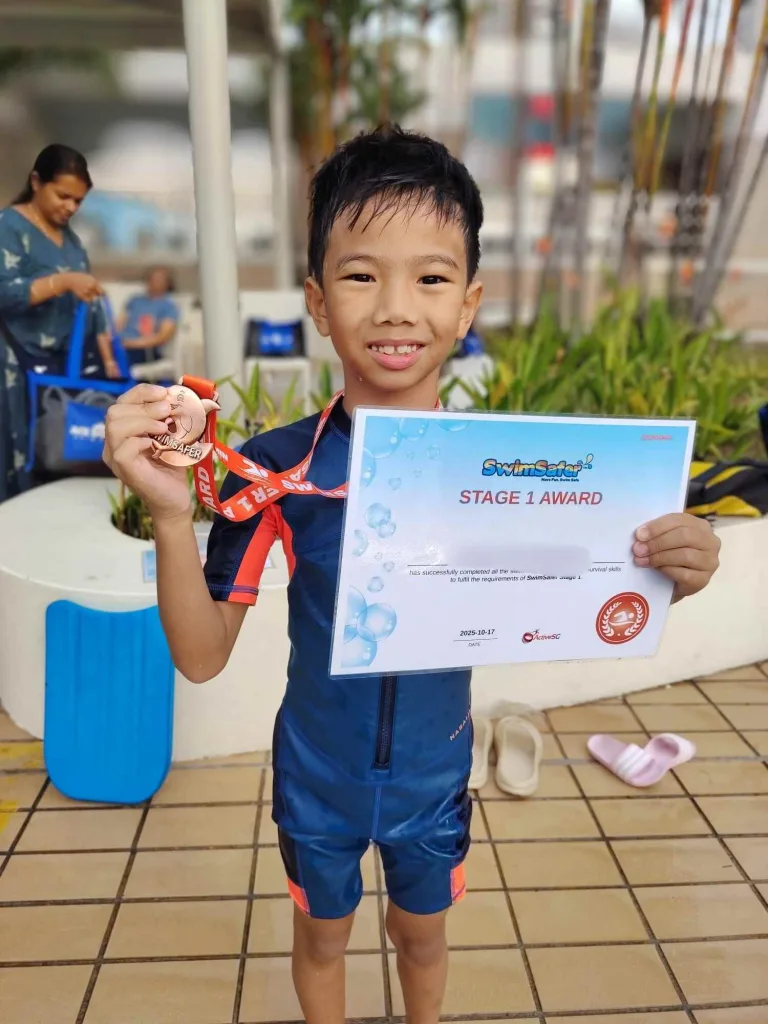
Child passing swimsafer 1 with medal and cert

Free Trial Swim Lesson 🎉

Try a trial lesson first—no pressure to commit. We’ll assess your child’s level and recommend the best class.

Private Swimming Lessons Singapore

testing

SENIOR COACH

test

Coach Fabian

Fabian Goh

SENIOR COACH

Coach Fabian is a dedicated swimming coach with over six years of experience working with children aged 4 to 12. A lifelong swimmer who began his journey at the age of 8, Fabian brings a deep understanding of the water and a strong foundation in all swimming strokes to his coaching.

His philosophy centers on developing efficient and correct stroke patterns through patient instruction and targeted drills, empowering young swimmers to reach their full potential. Passionate about nurturing young talent,

Coach Fabian is committed to fostering a love for swimming while helping each child achieve their best.

portrait of Coach Sunny

Coach Sunny

SENIOR COACH

With extensive experience in swim coaching, Coach Sunny is a certified SwimSafer Instructor and Assessor, dedicated to nurturing confident and skilled swimmers. His impressive qualifications include Life Savings 123, Standard First Aid, CPR, AED, Basic Sports Science, SG Coach Theory 1, NCAP Swimming Level 1, and NROC Swimming. A SafeSports-certified coach, he prioritizes safety and progress in every lesson. Known for his patient and engaging teaching approach, Coach Sunny has earned praise, including a complimentary letter from a club parent, highlighting his commitment to excellence and his ability to inspire swimmers of all levels.

Coach Ivan Holmberg

Ivan Holmberg

SENIOR COACH

Coach Ivan is a dedicated and passionate swim coach with 16 years of experience. Committed to teaching children the art and skills of swimming, he creates engaging and effective training programs tailored to each child’s abilities and goals.

Ivan fosters a positive and supportive environment, emphasizing confidence, safety, and proper technique while making swimming fun. As a Team Leader for MOE’s northern cluster CCA swimming program and a former coach of SAS’s competitive team, Fighting Fish, he has worked with swimmers of all ages and skill levels. Ivan understands the developmental stages of swimming and provides personalized guidance to help each child reach their full potential. Beyond coaching, he is deeply passionate about swimming, staying updated on training methods, and supporting his swimmers at competitions.

Ivan aims to teach swimming and instill life skills such as perseverance, discipline, and teamwork, empowering the next generation of confident and capable swimmers. With his guidance, children become proficient swimmers and develop a lifelong appreciation for the water.

Aw Wei Jie

LEAD COACH

Coach Wei jie was the Swim Team Captain for Nanyang Poly swim team in 2007 and an Ex-National Lifesaving member. He is currently serving as the Sport Lifesaver at SSTA club and is and an avid diver. Wei Jie is also a certified Diving instructor.

Wei Jie’s kind and passionate personality has won much respect amongst coaches and students alike.

He is certified under NROC, Swim Safer 2.0 and SSPA and has been coaching for more than 13 years.

Huang Han Rong

HEAD COACH

Being the Swim Team Captain of Nanyang Polytechnic for 3 years (2005 – 2007), Hanrong received the prestigious NYAA (National Youth Achievement Award) from then Singapore President SR Nathan in 2007.

He was also a member of SSA (Singapore Swimming Association) as a competitive swimming representative and has won numerous swimming competitions.

As his Swimming career progressed, he have been a swimming coach for 17 years, conducting courses for both beginners and competitive swimmers. More than 2000 students have since graduated under his guidance.

He is an NROC, NCAP, SSPA, Swim Safer accredited coach.