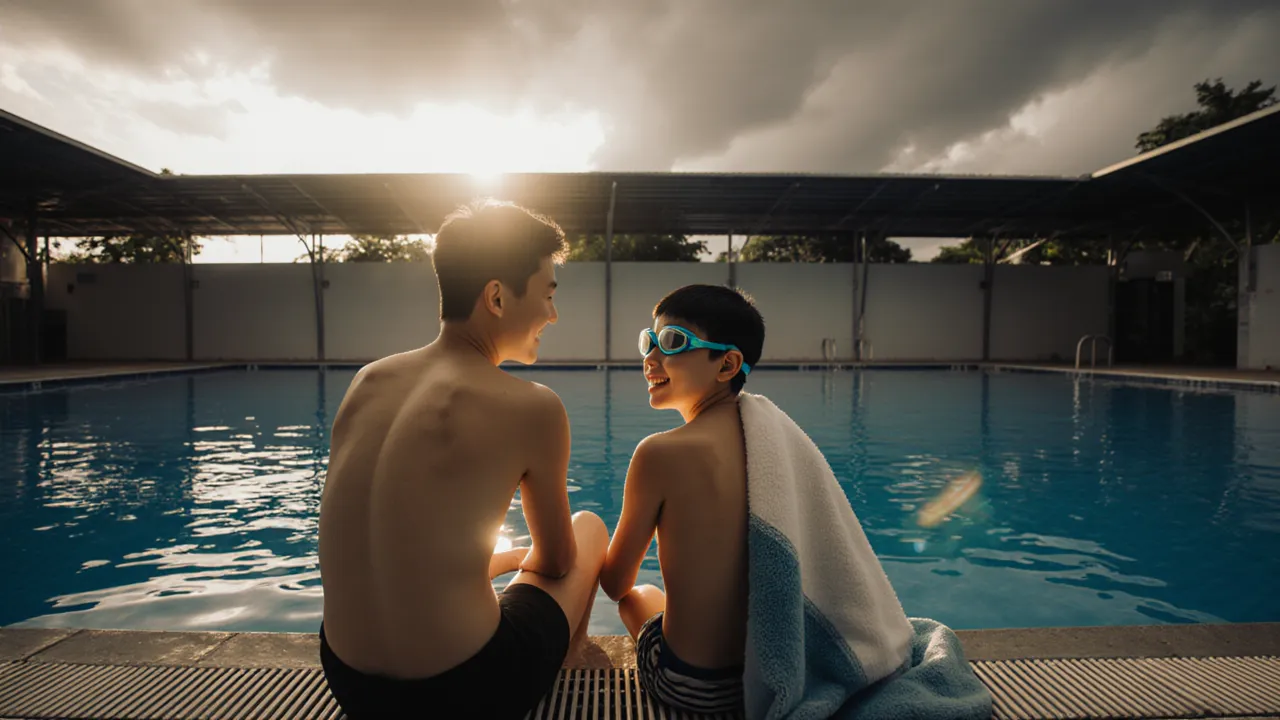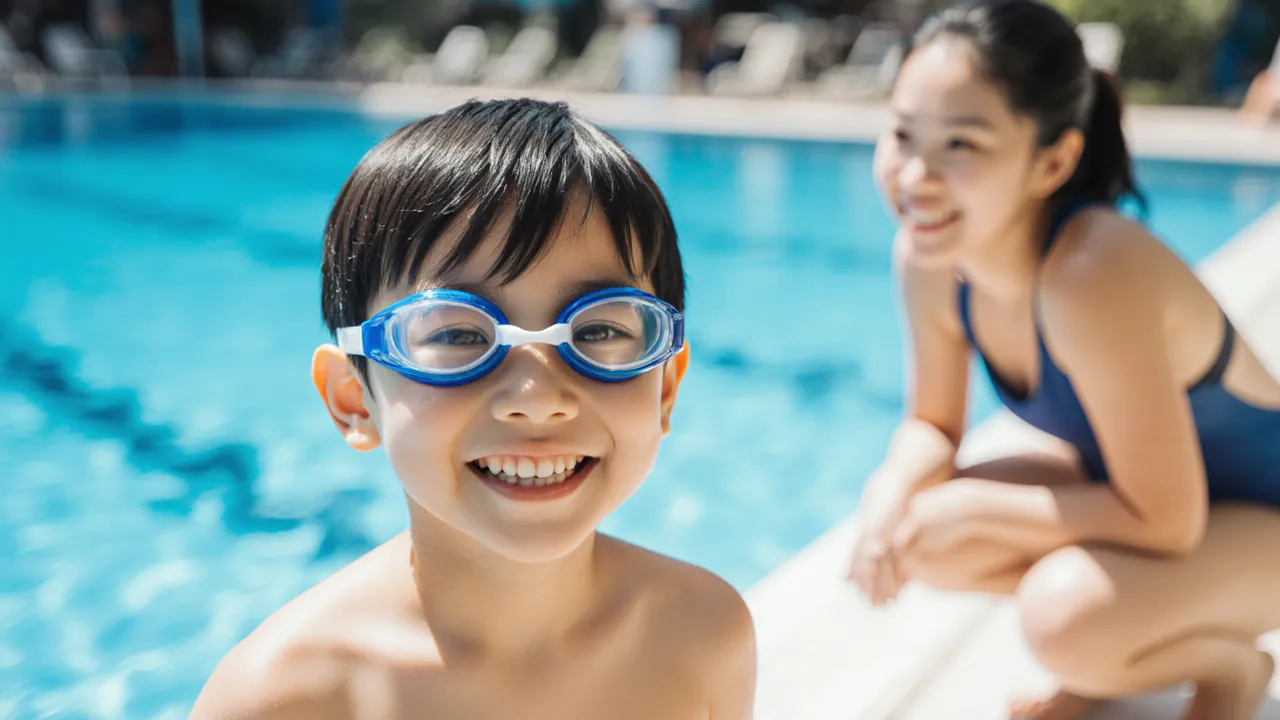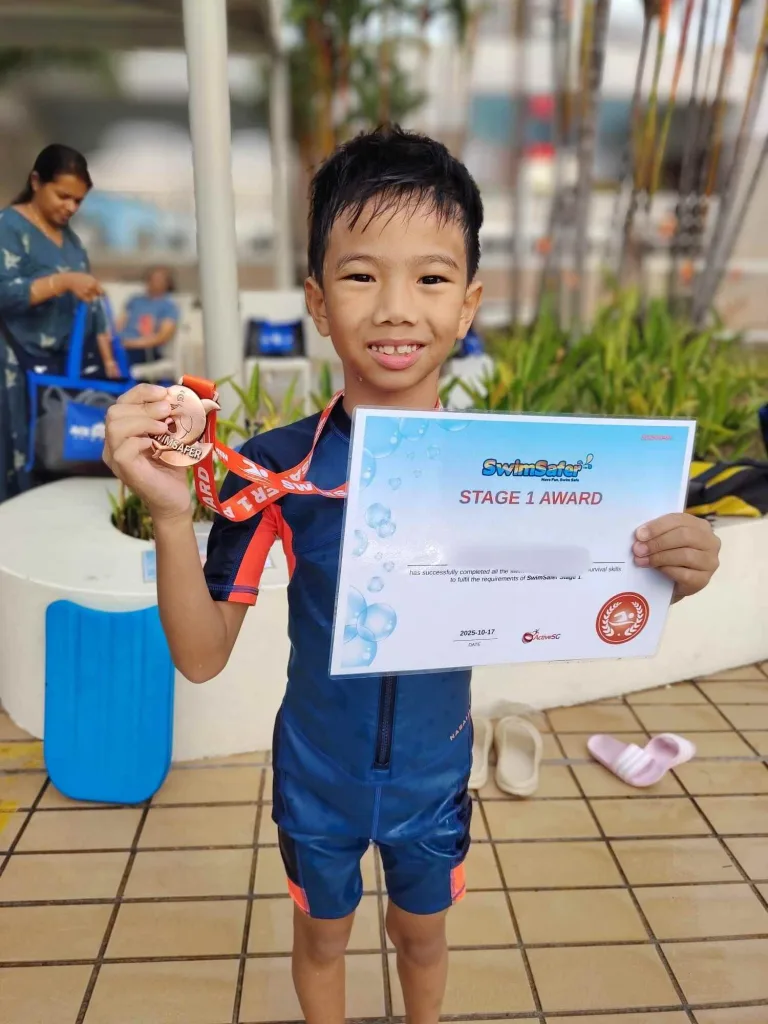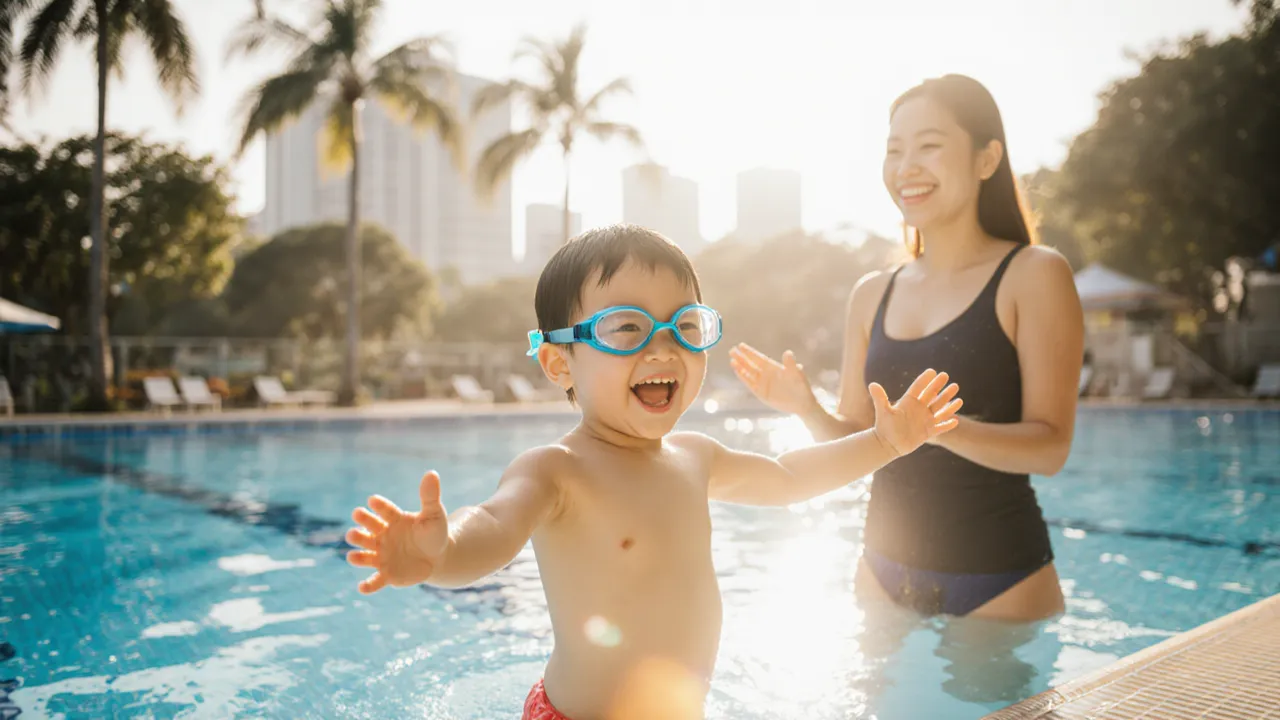
It is the third week of the year-end break. The worksheets are done, the iPad negotiations have worn thin, and your child has asked “can we go somewhere?” for the ninth time before lunch. Every Singapore parent knows this moment. With school out from 21 November to 31 December 2026, that is six weeks of heat, humidity and restless energy, and a swimming pool is the obvious answer.
But holiday swimming is not as simple as turning up with a pair of goggles. Do you book a lesson block or let them splash? Will a few weeks of lessons actually move the needle, or just undo themselves by January? This guide covers what school holiday swimming lessons can realistically achieve, how to choose between formats, and how to make six weeks count.
Why the year-end holidays are the best window for swimming progress
Term time is crowded. Between CCAs, tuition and homework, swimming often gets squeezed into a tired Saturday slot. The year-end break removes most of that pressure. Children are rested, schedules are flexible, and a child who attends two or three lessons a week will usually progress noticeably faster than one who swims once a week with long gaps in between.
Consistency matters more than intensity. Water skills such as breath control, floating and kicking are physical habits, and habits form through repetition close together. A six-week holiday block gives enough repetition for a beginner to move from hesitant to comfortable, or for an intermediate swimmer to finally fix a stubborn stroke fault.
There is also a practical safety angle. Singapore is surrounded by water: pools, beaches, reservoirs, and holiday trips abroad. The weeks before a family holiday are a sensible time to make sure your child can float, tread water and get to the edge on their own. The national SwimSafer 2.0 programme exists precisely to build these survival skills in clear stages.
Intensive blocks vs. regular weekly lessons: what actually works
Many swim schools advertise “intensive” holiday programmes, usually a few lessons packed into a short window. These can work well for specific goals, such as getting ready for a SwimSafer assessment. They work less well for children who are anxious, because skills that feel shaky on Monday need time to settle before they can be built on.
When an intensive block makes sense
If your child is already comfortable in the water and you are targeting a specific stage, a concentrated run of lessons keeps momentum high. Children who are one or two skills away from passing a stage often benefit most, since the gap is small and repetition closes it quickly.
When a steadier pace is better
If your child is a true beginner, or nervous about submerging, a steadier rhythm of two to three lessons a week over several weeks is usually kinder and more effective. Forcing the pace backfires with anxious children. Ace Dolphin’s coaches follow a calm, no-pressure approach, and the progression is built around 12-week grading cycles so that each skill is properly secured before the next one starts. A holiday period fits neatly into the first half of a cycle.
Whichever route you choose, ask the school how many children are in each class, how progress is tracked, and what happens if your child misses a lesson. Holidays are also when families travel, and rigid no-refund policies cause real frustration. Ace Dolphin’s long-term programmes include unlimited make-up lessons, and you can request a make-up lesson when plans change.
Group or private lessons for the holidays?
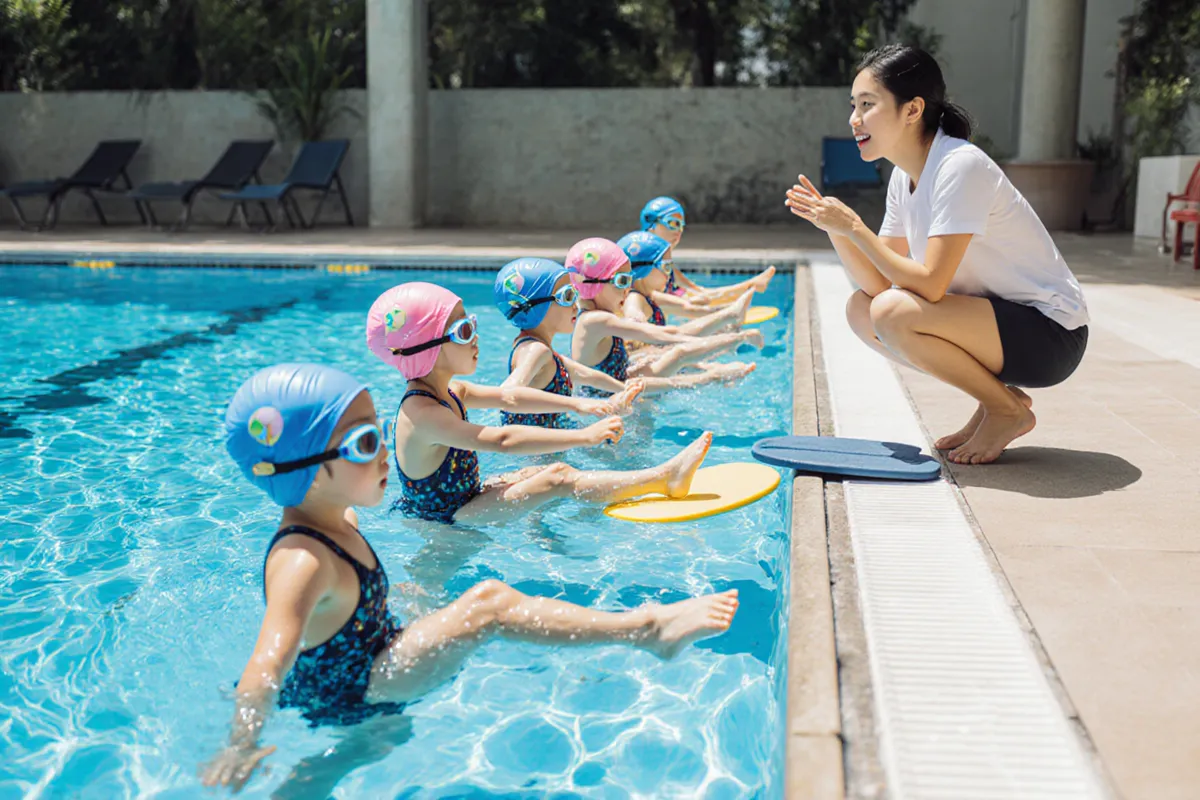
Holiday lessons tend to attract a mix of children: complete beginners, kids who have stalled, and confident swimmers chasing a stage. That mix is exactly why the group-versus-private question matters more in the holidays than in term time.
Group lessons suit children who are comfortable in water and motivated by peers. Seeing a classmate nail a kick or float unaided is a strong nudge. Private lessons suit children who need undivided attention: anxious swimmers, children who have been stuck on the same stage for months, or families with a tight deadline. If you are unsure, our honest guide to private vs group lessons walks through the trade-offs, and the private coaching page explains how one-to-one fast-tracking works.
A useful rule of thumb: if your child has had a poor experience before, start private for the first few weeks, then move into a group once they trust the water again.
Pick a pool that fits the holiday routine
During the holidays, the best pool is the one you will actually reach three times a week without a fight. All six Ace Dolphin venues are ActiveSG pools: Our Tampines Hub, Pasir Ris, Yio Chu Kang, Bishan, Punggol and Sengkang. Choose the one closest to home, or to the grandparents if they are doing the school run, since a short commute is what keeps attendance steady.
Midday sun is harsh in Singapore. Morning and late-afternoon slots are more comfortable for children, and for the parent standing at the poolside. Pack a towel, a change of clothes, a water bottle and sunscreen applied before the lesson.
Set a goal before the first lesson
The families who get the most out of holiday lessons are the ones who define “success” up front. Vague goals like “get better at swimming” produce vague results. Specific ones work: float on the back for ten seconds, swim 15 metres of freestyle with side breathing, or pass SwimSafer Stage 2.
Ask the coach for an honest read on where your child is on day one. A good swim school will tell you plainly whether a goal is realistic in six weeks. Ace Dolphin blends SwimSafer 2.0 with Japan’s Tatsuki methodology, which tracks technique in small, measurable steps. That is useful for parents because progress becomes visible rather than a vague sense that “she seems better”. When your child is ready to be assessed, here is how to book a SwimSafer 2.0 test.
Do not skip the fear conversation
If your child dislikes putting their face in water, say so at enrolment. Water-anxious children are not a problem for a good coach; they are a specialty. Ace Dolphin has a long record of turning children who refused to submerge into independent, float-free swimmers, but only because the pace was set by the child’s comfort, not the calendar. Calm and consistent beats fast and forced every time.
Keep the momentum between lessons
Lessons are only part of the picture. What happens in the other days of the week decides whether progress sticks.
Fit in one relaxed, no-pressure family swim between lessons. Let your child show you what they have learned instead of drilling them. Blowing bubbles in the bath, practising floats in a shallow pool and simple “touch the bottom” games all reinforce skills without feeling like homework. Praise effort and small wins, and avoid comparing them to cousins or classmates.
Rest matters as well. Swimming is tiring, and a child who is hungry or overtired will struggle to learn. Plan lessons for a time when they have eaten, and keep the rest of the day light.
Celebrate the milestones, and keep going after 31 December
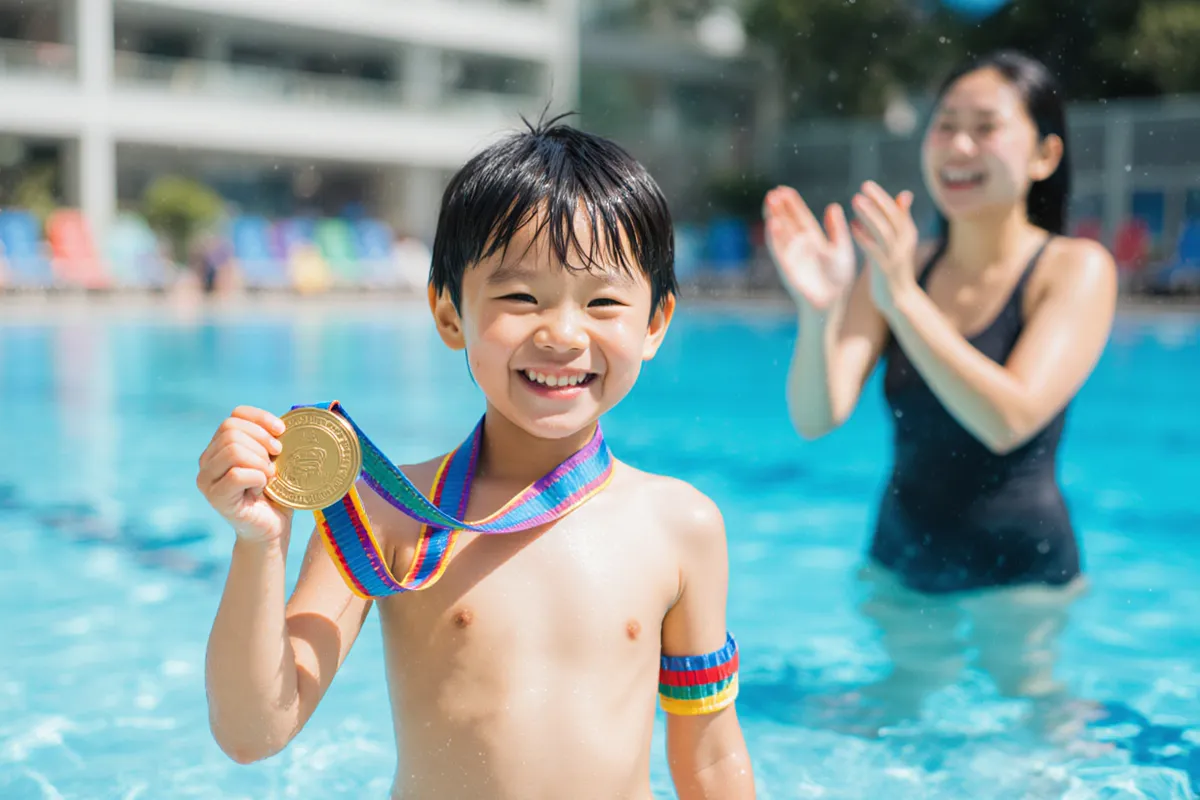
Children stay motivated when progress is visible. Ace Dolphin is the only swim school that uses its own swim bands and custom medals to mark each milestone, so a child walks out of the pool with something tangible to show for the week’s effort. That small moment of pride is often what makes a seven-year-old ask for “one more lesson”.
The biggest risk of holiday lessons is the cliff on 1 January. A child who swims three times a week in December and then stops entirely until March will lose some of what they gained. Plan ahead: slot a weekly lesson into the new term before the holidays end, so the skills you built over six weeks keep compounding. Our kids swimming lessons are structured for exactly that kind of continuity.
Conclusion
School holiday swimming works best when it is consistent, goal-led and paced to the child. Choose a pool that is easy to reach, match group or private lessons to your child’s temperament, and set a specific target for the six weeks. Above all, do not rush an anxious child; calm progress lasts longer than fast progress.
With more than 15 years of experience and 8,000+ graduates, Ace Dolphin helps children across six ActiveSG pools build real water confidence, and you can read what other parents say on our testimonials page or meet the coaches first. To plan your child’s holiday lessons, email admin@acedolphin.com or call +65 9105 5244.
Opening soon at Punggol: our new Punggol pool is opening soon, and pre-registration is now open. Find out more and pre-register on our Punggol page.