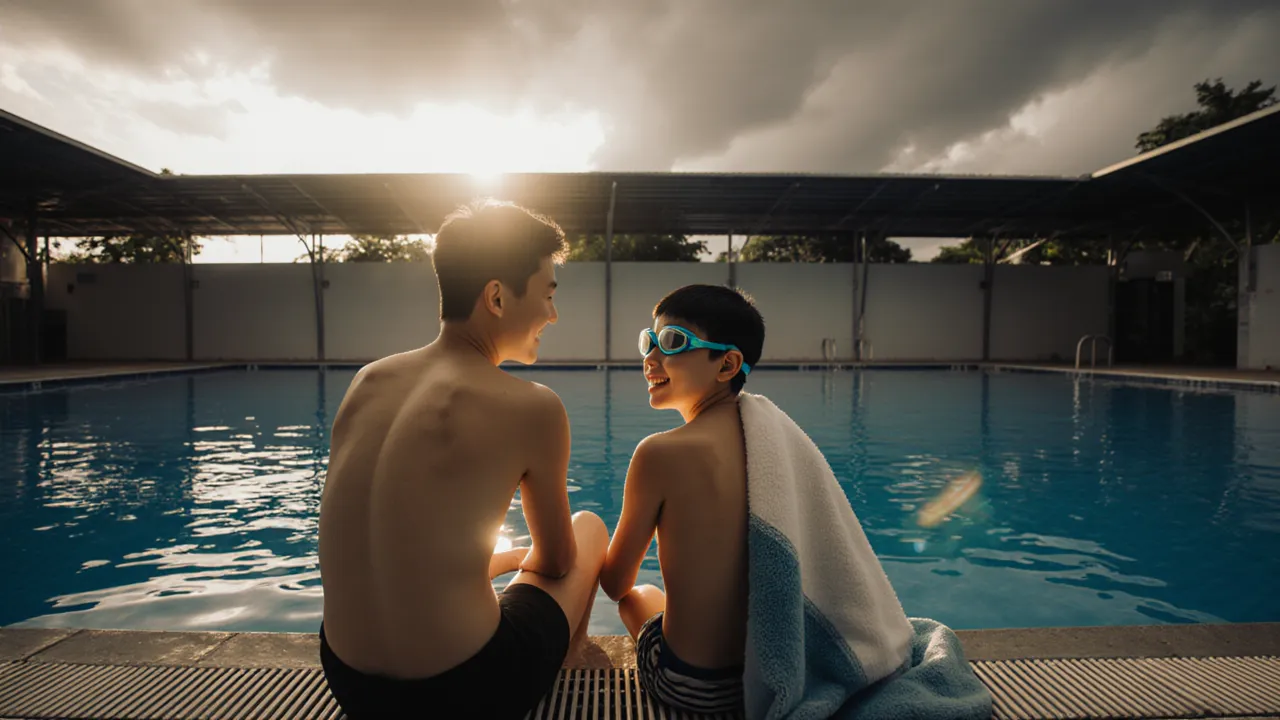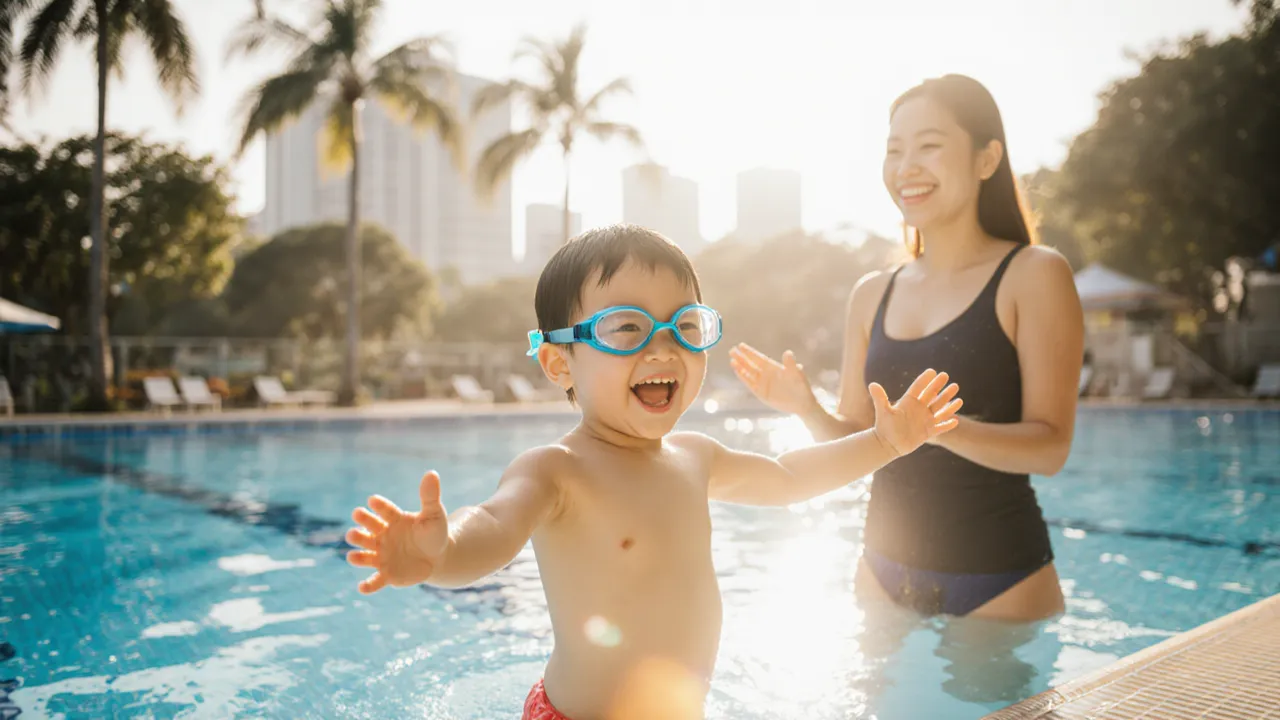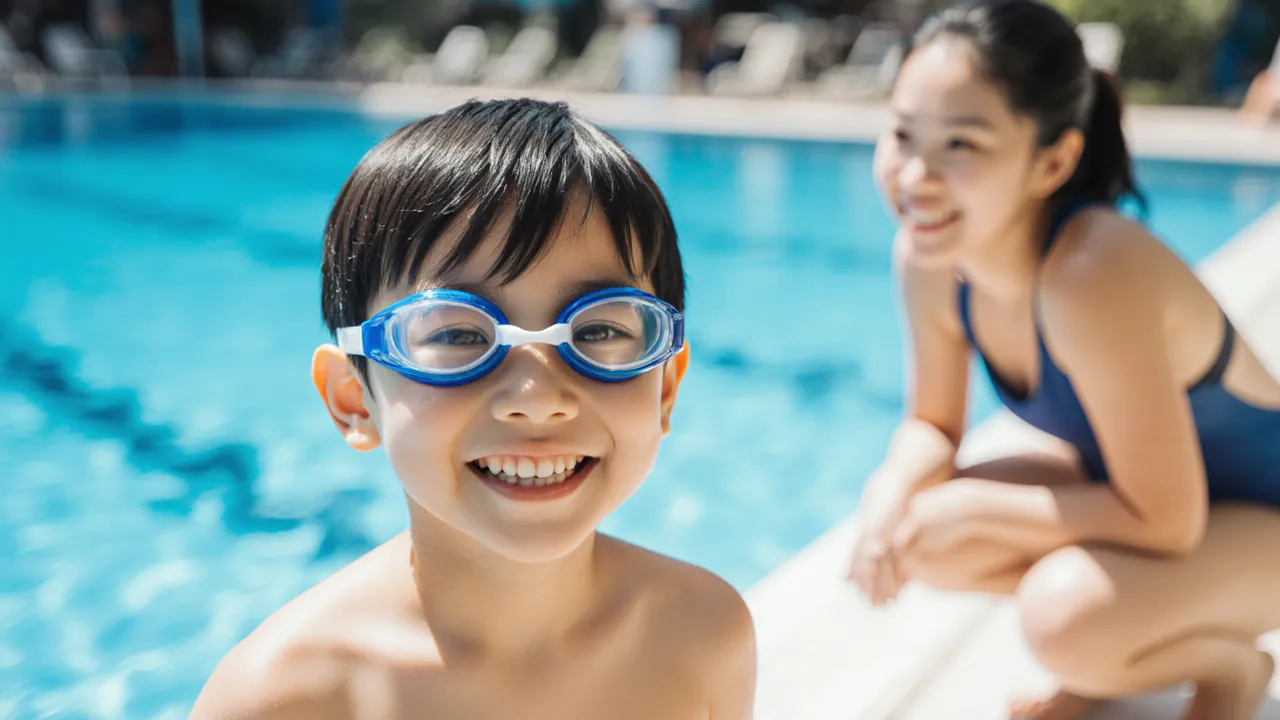
The last Friday of Term 4 is 20 November, and by Saturday morning the question has landed in every Singapore parent group chat: what are we doing with the kids for six weeks? The MOE year-end holidays run from 21 November to 31 December 2026, and between the playground, the iPad and the aircon-at-the-mall routine, it is easy for the weeks to disappear.
Here is the case for putting school holiday swimming lessons in Singapore at the top of the list. Six weeks without school is the longest uninterrupted stretch of the year, which makes it the best window for a child to actually make progress in the water. This guide covers how holiday lessons differ from term-time lessons, how to pick a format, and how to avoid the common mistakes parents make when booking.
Why the year-end holidays are the best time to learn
During term time, swimming competes with homework, CCAs, tuition and tired Tuesday evenings. Children arrive after a full school day, hungry and fried, and a tired child is a slower learner in the water. Holiday classes remove most of that friction. Kids turn up rested, mornings are free, and parents are not racing across the island at 5.30pm.
The bigger advantage is continuity. Swimming is a skill built on repetition, and the single biggest cause of stalled progress is long gaps between lessons. A child who swims twice a week for six weeks will usually move further than one who swims once a week over three months, because the muscle memory and the confidence from last lesson are still fresh at the next one. This is especially true for children who are nervous about water: if the fear has not been given time to fade, a week-long gap can undo what the last session built.
Singapore also helps here. With year-round warmth, there is no pool season to wait for, and ActiveSG pools stay open through the holidays. The practical catch is that popular timeslots fill quickly, and the best ones tend to go first.
Weekly lessons, intensive blocks or a mix?
Most holiday programmes fall into one of three shapes, and the right one depends on your child’s age and temperament more than on your calendar.
Intensive blocks (several lessons a week)
Intensive blocks work well for children aged six and above who are already comfortable getting their face wet, and for any child who is close to a SwimSafer 2.0 stage and just needs consistent practice to get there. Short, frequent sessions let a coach correct a habit on Monday and see whether it stuck on Wednesday.
Steady weekly lessons
For younger children, aged three to five, or for anyone who tires easily, one or two sessions a week is often the better call. Their bodies and attention spans are small, and more is not always better. A four-year-old doing five lessons a week can end up cold, cranky and resistant, which is the opposite of what you want.
A mix of both
Many families do a lighter schedule for the first two weeks while the child settles in, then step up as confidence builds. If your child has never had a formal lesson before, this gentle ramp is the safer approach.
Group or private: what holiday lessons look like in practice
Holiday group classes are the classic choice: a small group of similar-level children, a coach, and the motivation that comes from watching a friend get it first. Groups are good value and they teach kids to follow instructions around other children, which matters for SwimSafer assessments. We cover the trade-offs in detail in our honest guide to private vs group lessons.
Private lessons earn their place in the holidays for two kinds of children. The first is the anxious child who needs a coach’s full attention to get past a fear of water. The second is the child with a deadline: a SwimSafer test booked for January, a family trip with a beach or a pool, or a school swimming requirement. With one-to-one coaching, every minute of the lesson is spent on your child’s specific weak point rather than the group’s average.
What a holiday lesson should actually teach
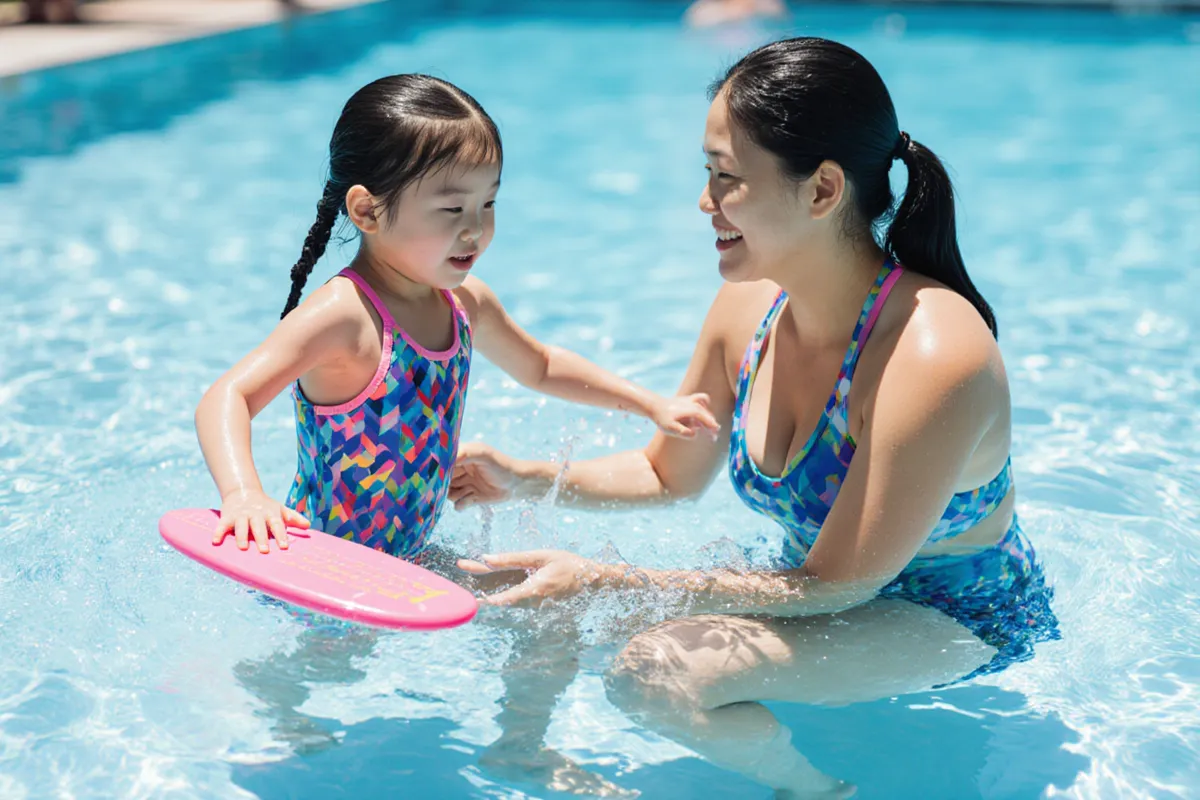
A good swimming programme does not change because the school calendar did. Whatever the format, you should be able to see a clear progression and ask a coach what your child is working on this week. At Ace Dolphin, lessons follow the SwimSafer 2.0 framework blended with the Tatsuki Japanese methodology, which breaks strokes into small, measurable technique checkpoints. The result is that a parent can see, in plain terms, whether a child has moved from kicking with support to floating unaided, or from a wobbly freestyle arm to a controlled stroke.
If your child is fresh to swimming, expect the first week to focus on comfort: blowing bubbles, floating with support, getting used to the pool. If they are further along, the holidays are the right time to tackle the stubborn technique faults that term-time lessons rarely have room to fix, such as breathing timing in freestyle or the kick in breaststroke.
Water-anxious children: do not skip the holidays
Parents of fearful children often assume that holidays are a break from anything stressful. In our experience, the opposite is true. A child who is scared of the water benefits from calm, frequent, low-pressure exposure, and the holidays are when there is time for it. The key is a coach who never forces progression. Our approach is deliberately “calm and chill”: children go at their own speed, and small wins, like putting their chin in the water, are celebrated before moving on. We have seen children who refused to submerge become float-free swimmers within weeks under this approach. If this sounds like your child, read our guide on swimming lessons for kids and bring up your child’s worries when you enquire.
Seven things to check before you book
Holiday slots are limited, so parents often book in a rush. Slow down for a few minutes and check the following.
- Coach credentials. Ask whether coaches are NROC-registered, and who will teach your child. You can see our team on the coaches page.
- Class size. Smaller groups mean more attention. Ask for the maximum number of children per coach.
- Level matching. A good school assesses your child before placing them, rather than putting a nervous beginner in with confident swimmers.
- Make-up policy. Illness is common in the December rains. Find out what happens if your child misses a lesson, and whether make-ups can run beyond the holiday period. Our make-up lesson process is simple to request.
- Location and timing. A pool near home is worth more than a famous pool across the island. A thirty-minute commute with a sleepy child erodes the benefit.
- Progress tracking. Ask how progress is reported. You want specifics, not “he is doing fine”.
- What happens after. Will your child continue with the same coach in Term 1, or start over with a new one?
Using the holidays to aim for a SwimSafer stage
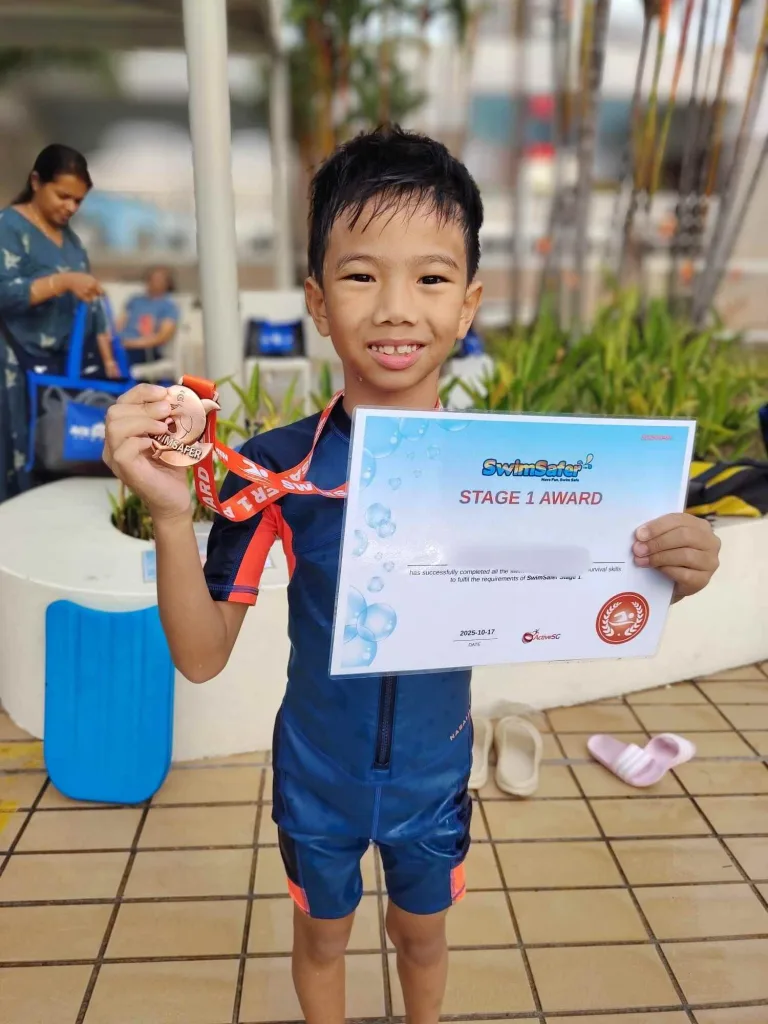
If your child is close to the next level, the year-end break is a natural time to prepare for assessment. Tests are booked through CAMS, and slots can be tight around holiday periods, so it helps to plan ahead. Our walkthrough on how to book a SwimSafer 2.0 test explains the steps. A realistic goal for six weeks is one stage, not three. Rushing a child past skills they have not truly mastered tends to show up later as a stroke that falls apart in deeper water.
A useful rule: if your child can do the required skill calmly and repeatedly, not just once on a good day, they are ready to be assessed. Ask the coach to tell you honestly. A good coach will say “not yet” when that is the truth, and that honesty is worth more than a quick pass.
Practical tips for Singapore holiday swimming
Beat the heat
Mid-morning and late-afternoon sessions are kinder than the noon sun. Whatever the time, apply sunscreen before the lesson, put a rash guard on young children, and bring a water bottle. Dehydration sneaks up on kids who are splashing around in the water, and a thirsty child is a grumpy one.
Plan for the monsoon
The year-end holidays overlap with the northeast monsoon, so thunder and lightning delays are a real possibility at outdoor pools. Pools are cleared when lightning is detected, which is the correct safety call, but it means a lesson can be cut short. This is why a clear make-up policy matters so much, and why we suggest booking more weeks than the bare minimum if you can.
Keep the habit going after the holidays
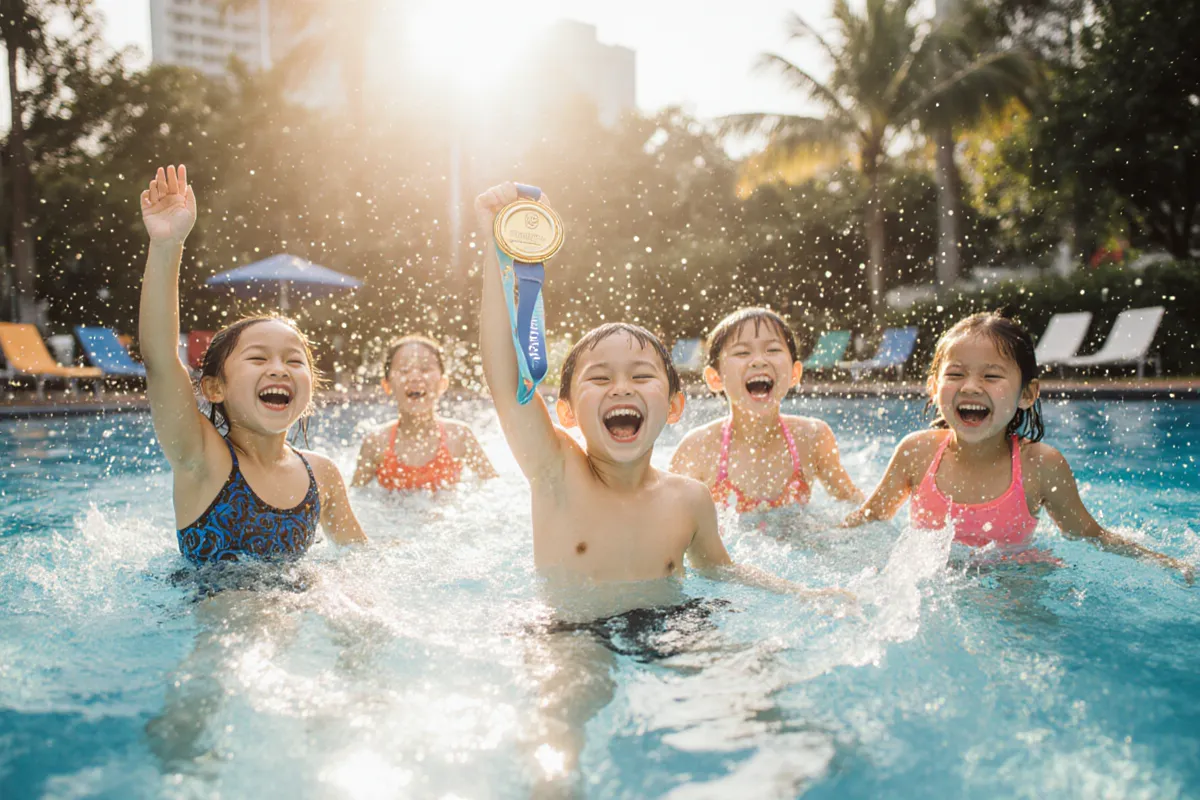
The biggest mistake we see is a strong holiday run followed by a three-month pause when Term 1 starts. Skills fade fast in young children. If a weekly lesson is not feasible, even a fortnightly one is far better than nothing. Our long-term programmes come with unlimited make-up lessons, which many parents find takes the guilt and stress out of a busy school term.
Find a pool near you
Ace Dolphin teaches at six ActiveSG locations across the east and north of Singapore: Our Tampines Hub, Pasir Ris, Yio Chu Kang, Bishan, Punggol and Sengkang. If you are not sure where to go for the first session, our first lesson guide shows you how to find the pool and where to meet your coach.
Conclusion
Six weeks is a rare gift of time. Used well, the year-end holidays can take a child from nervous at the pool edge to a confident swimmer, and from a stalled SwimSafer stage to the next medal. Choose a format that fits your child’s age and temperament, check the coach, class size and make-up policy before you pay, and plan what happens when school resumes.
With 15+ years of teaching and more than 8,000 graduates, Ace Dolphin has seen what a good holiday does for a child, and you can read what other families say on our testimonials page. To ask about holiday availability, email admin@acedolphin.com or call +65 9105 5244, or visit acedolphin.com.
Opening soon at Punggol: our new Punggol pool is opening soon, and pre-registration is now open. Find out more and pre-register on our Punggol page.