Your child comes home from swim class tugging at their ear, and by bedtime they’re wincing every time you touch it. If this sounds familiar, you’re not imagining a pattern — kids who swim regularly in Singapore’s heat and humidity are genuinely more prone to swimmer’s ear than swimmers almost anywhere else. The good news is that this isn’t a reason to pull your child out of lessons. It’s a routine problem with a routine fix, and once you know it, ear trouble stops being something you dread every term.
This guide covers what swimmer’s ear actually is, why Singapore’s climate makes it more common, and the specific habits that prevent it — the kind of practical detail that only comes from watching thousands of kids move through the pool week after week.
What Swimmer’s Ear Actually Is (And Why It’s Not the Same as a Regular Ear Infection)
Swimmer’s ear, medically known as otitis externa, is an infection of the outer ear canal — not the middle ear infections most parents already associate with colds and flu. It happens when water gets trapped in the ear canal after swimming, softening the skin there and washing away the natural wax that normally keeps bacteria out. Once that protective barrier is gone, bacteria that are already present on the skin multiply quickly in the warm, moist environment.
This distinction matters because the two conditions are treated differently and have different warning signs. A middle ear infection often comes with a cold, fever, or reduced hearing. Swimmer’s ear typically shows up as pain when the outer ear is touched or tugged, itchiness inside the canal, redness, and sometimes a clear or yellowish discharge. If your child flinches when you gently pull their earlobe, that’s one of the clearest tells.
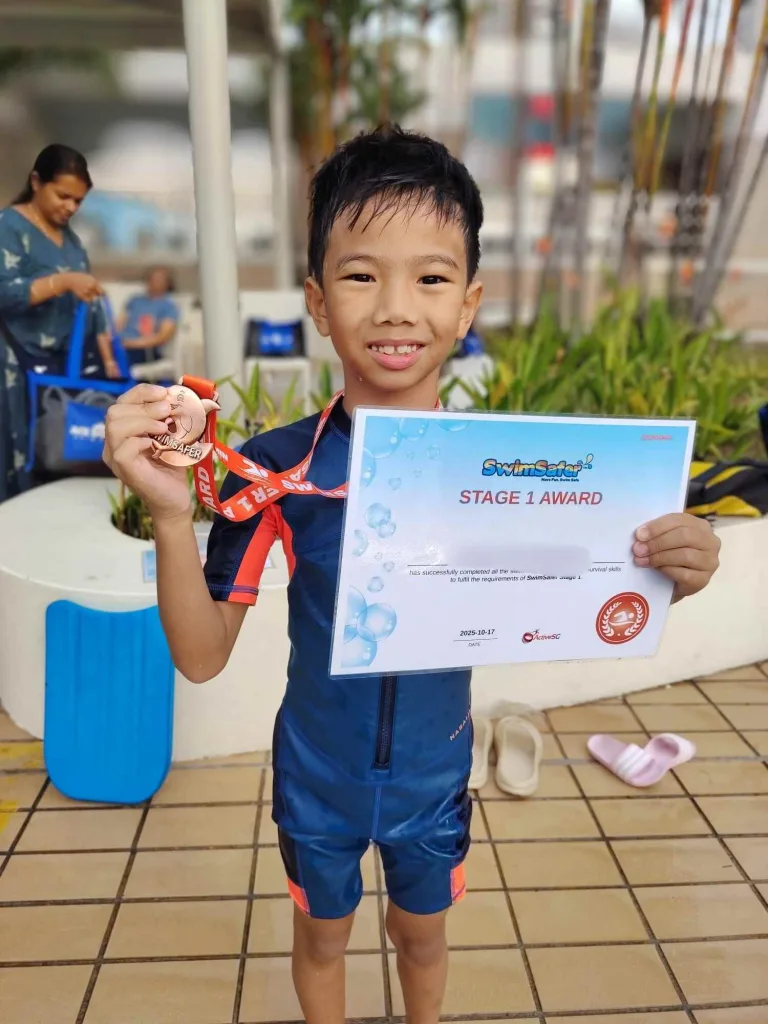
Singapore’s climate is a genuine risk multiplier here. Humidity above 80% for most of the year means ears that get wet at the pool rarely get the chance to fully dry out afterward, especially indoors with air conditioning that traps moisture rather than clearing it. Add a swim schedule of two to three sessions a week — which is exactly what most SwimSafer 2.0 progression plans call for — and the ear canal barely gets a dry day between dunks.
Who’s Most at Risk
Not every child who swims gets swimmer’s ear, and it’s worth understanding why some are more prone than others so you know whether extra precautions are worth building into your routine.
Children with naturally narrow ear canals trap water more easily and are more prone to recurring infections. Kids who already produce less earwax than average lose their natural barrier faster. And children in intensive programmes — the three-to-five-session-a-week holiday camps that accelerate SwimSafer progress during the June, September, and December school breaks — have less recovery time between swims than kids on a standard once-a-week schedule.
None of this means intensive lessons are a bad idea. The trade-off between faster progress and ear exposure is entirely manageable with the right habits, which is really the point of this article.
The Daily Routine That Actually Prevents It
Most swimmer’s ear cases come down to one simple gap: water goes in, and nobody makes sure it comes back out. Building a two-minute post-swim routine closes that gap almost entirely.
Tilt and drain immediately. As soon as your child gets out of the pool, have them tilt their head to each side for a few seconds, ear facing down, and gently pull the earlobe to straighten the canal so trapped water can drain. This alone resolves most of the water that would otherwise sit and cause problems.
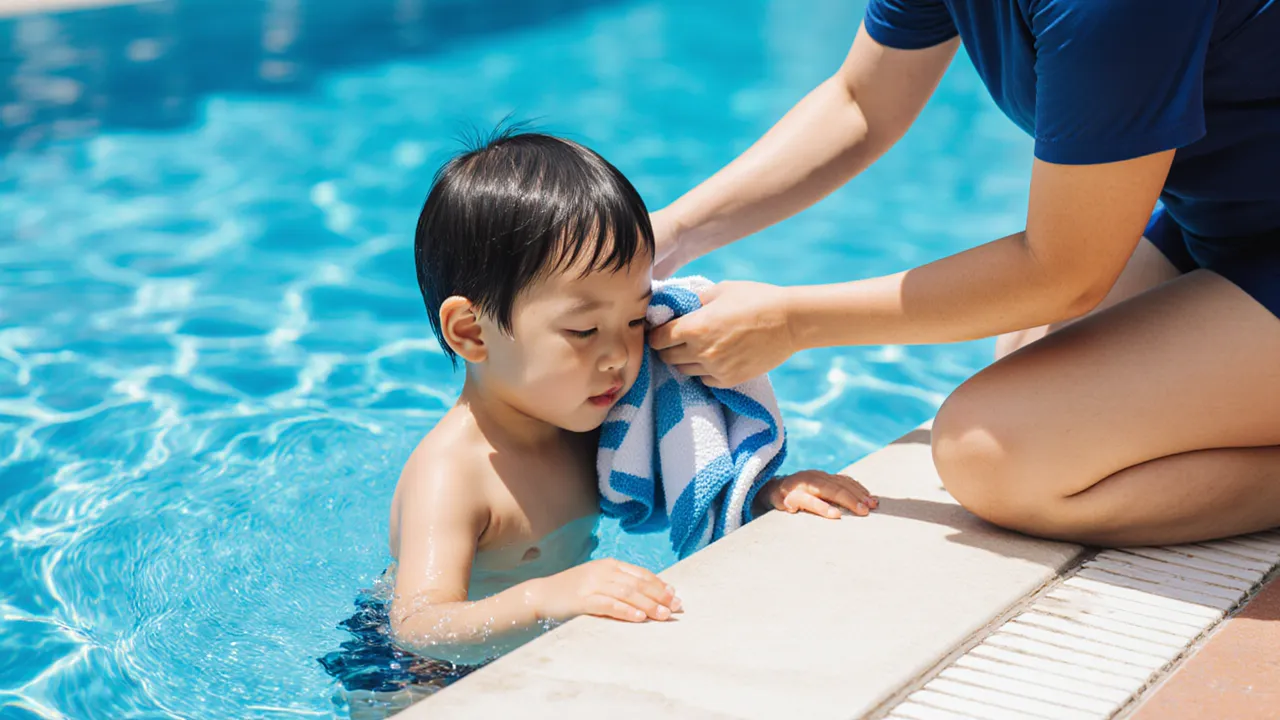
Dry with a towel corner, not a cotton bud. Use the corner of a towel to dab the outer ear dry. Cotton buds are worth avoiding entirely — they tend to push wax and moisture deeper into the canal rather than removing it, which is the opposite of what you want.
A hairdryer on the coolest, lowest setting held about 30cm from the ear for a few seconds can help evaporate any remaining moisture, particularly useful for kids with longer hair who spend more time with damp ears after a swim.
For children who get recurrent infections, some paediatricians recommend a homemade drying drop — a mix of equal parts white vinegar and rubbing alcohol, a few drops in each ear after swimming, which helps evaporate residual water and restores the ear canal’s normal acidity. This isn’t suitable for every child, particularly those with grommets or a perforated eardrum, so check with your child’s doctor before starting this at home.
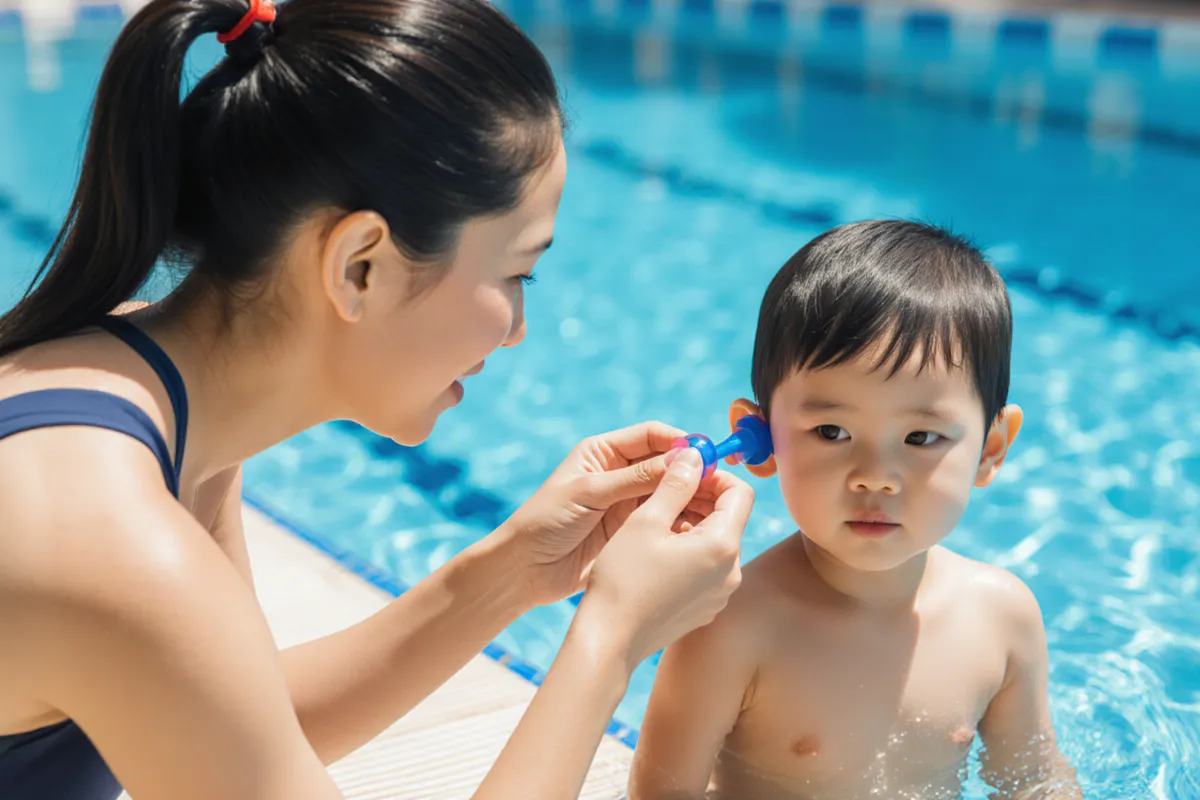
Should Your Child Wear Earplugs During Lessons?
This is the question we get most often from parents, and the honest answer is: it depends on the child, not a blanket recommendation.
For children who’ve had swimmer’s ear once or twice, well-fitted swim earplugs or a custom-moulded pair from an audiologist create a genuine physical barrier and are worth the investment. For children who’ve never had an issue, earplugs aren’t strictly necessary and can sometimes make it harder for coaches to communicate cues during lessons, particularly with younger kids still learning to follow verbal instruction in the water.
If your child does need earplugs, it’s worth mentioning it before the first lesson rather than mid-session. A coach who knows in advance can adjust how instructions are given and check the fit doesn’t interfere with float positions or breathing drills — small accommodations that matter more for water-anxious children, who already have enough new sensations to process without an unfamiliar earplug feeling wrong mid-lesson. This is where a patient, unhurried teaching style makes a real difference: a coach who rushes past the adjustment period will frustrate an anxious child far more than the earplug itself ever would.
When to See a Doctor Instead of Waiting It Out
Most mild irritation resolves with the drying routine above within a day or two. But there are clear signals that a home routine isn’t enough and a GP visit is needed: pain that gets worse rather than better after 24-48 hours, visible swelling or redness spreading beyond the ear opening, discharge that’s thick, cloudy, or foul-smelling, or any fever accompanying the ear pain. Swimmer’s ear that’s actually taken hold usually needs antibiotic ear drops prescribed by a doctor — home remedies won’t clear an established infection, only help prevent one.
One reassuring fact worth knowing: a confirmed swimmer’s ear infection doesn’t automatically mean weeks out of the pool. Most doctors clear children to return to swimming once the pain has settled and a course of prescribed drops is underway, sometimes with earplugs as a temporary precaution. A short pause to let things heal properly is far better than pushing through discomfort, but it’s rarely the term-long setback parents fear.
Building This Into Your Child’s Swim Routine
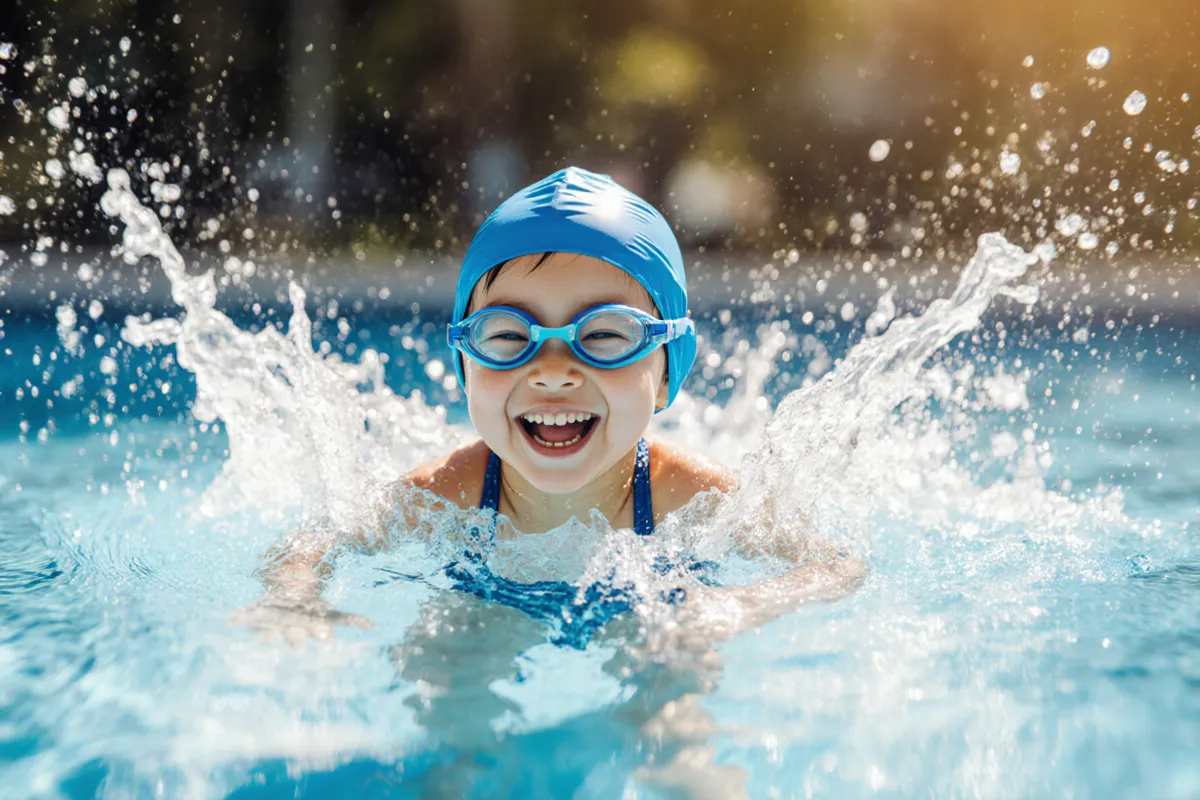
The parents who never think twice about swimmer’s ear are usually the ones who’ve simply made the tilt-and-dry routine as automatic as packing goggles. It takes less time than getting changed, and it removes almost all of the risk that comes with regular swimming in Singapore’s climate.
At Ace Dolphin, our coaches — all NROC-certified and trained in the Tatsuki Japanese methodology — keep an eye out for kids showing discomfort with their ears during swimming lessons, and we’re always happy to adjust pacing or accommodate earplugs where a parent flags a known sensitivity. Whether your child is working through SwimSafer 2.0 in a group class or progressing faster with private coaching, a couple of minutes of ear care after each session means the only thing standing between your child and their next stage is practice — not a preventable infection.
If you’d like to talk through your child’s specific situation, whether that’s an existing sensitivity, an upcoming holiday intensive, or just building good habits from the first lesson, reach out to us at admin@acedolphin.com or +65 9105 5244, or find out more at acedolphin.com.