You’ve probably noticed it at the pool: two children who joined swimming lessons around the same time, both technically “passed” the same SwimSafer stage, but one swims with a clean, efficient stroke while the other is still splashing hard just to stay afloat. The difference usually isn’t talent. It’s how precisely the technique was taught in the first place. This is where the Tatsuki method, a swimming curriculum with roots going back over 50 years in Japan, changes the picture for Singapore parents who want their child to swim well, not just pass a test.
Where the Tatsuki Method Comes From
The Tatsuki method originated with the Okazaki Tatsuki Swimming Club, founded in Aichi, Japan in 1973. Over decades, the club built a highly structured, level-based curriculum that has since spread internationally, including to Singapore through certified coaching partnerships like Ace Dolphin’s. The philosophy behind it draws on a broader Japanese instructional tradition sometimes described through the idea of kaizen, continuous, incremental improvement through repeated, precisely corrected practice, rather than large jumps in difficulty.
In practice, this means a child isn’t handed a new skill and left to “figure it out” through repetition alone. Every drill is broken into smaller components, each one checked against a specific technical standard, hand entry angle, elbow position during the pull, hip rotation, head position during breathing. Before the next component is introduced. It’s a slower, more deliberate process on paper, but it tends to produce faster real-world results because children aren’t practising and reinforcing bad habits along the way.
Why “Passing a Level” Isn’t the Same as Swimming Well
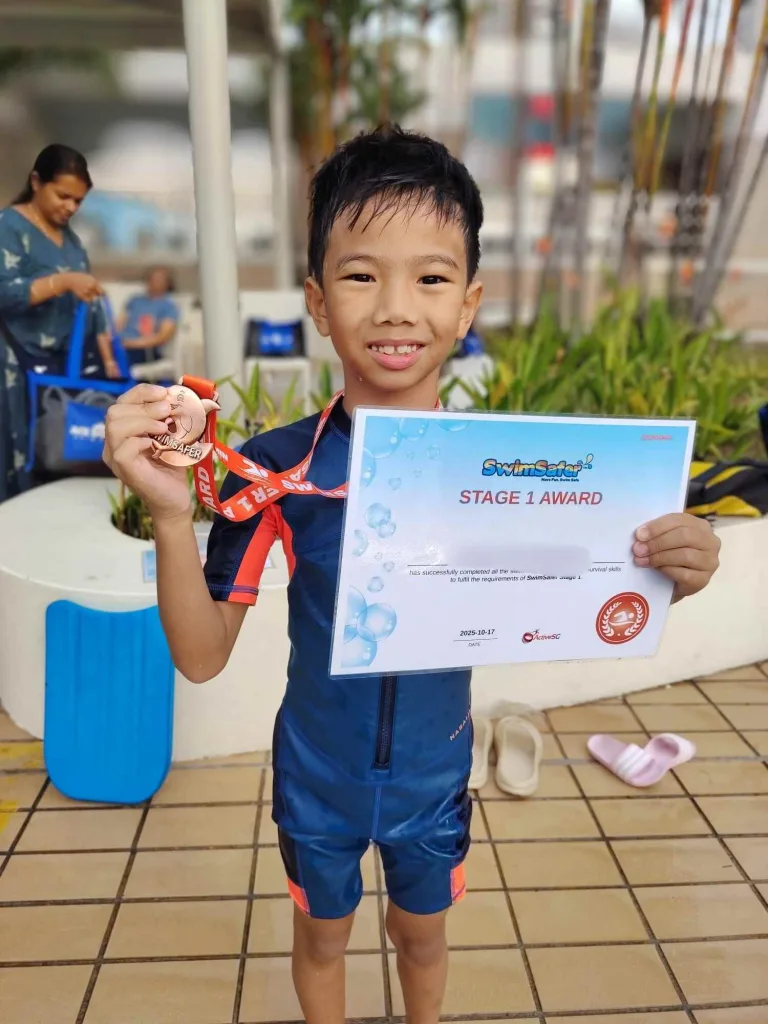
Singapore’s SwimSafer 2.0 framework is excellent at what it’s designed to do: certify water safety competence in six clearly defined stages, each requiring a specific skill and a water safety theory pass. But SwimSafer is a safety benchmark, not a stroke technique programme. A child can pass Stage 3 with a freestyle that gets them 25 metres, even if their stroke mechanics would slow them down significantly at Stage 5 or 6, where stroke timing benchmarks get considerably stricter.
This is the gap the Tatsuki methodology is built to close. Rather than treating stroke technique as something that “comes later” or improves naturally with more laps, Tatsuki-trained coaches correct mechanics from the earliest lessons, teaching a child to enter the water with the hand at the correct angle from day one, rather than letting a splashy, inefficient entry become muscle memory that has to be unlearned two stages later. Parents sometimes assume a child needs to swim more to swim better. Often what they actually need is more precise correction on the same amount of practice.
What This Looks Like in an Actual Lesson
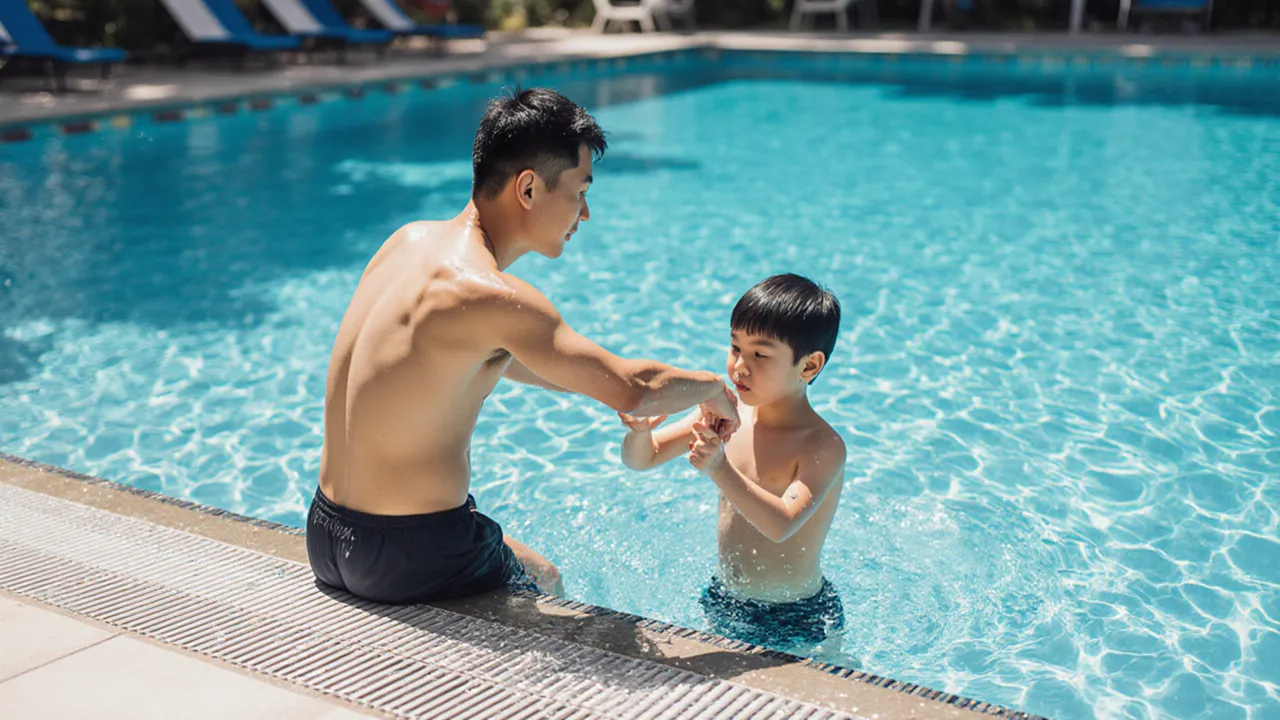
A Tatsuki-influenced lesson looks noticeably different from a “swim a few laps and get feedback at the end” class. Coaches break each stroke into isolated components and drill them individually before combining them, a child might spend several minutes purely on arm recovery position, floating in place, before ever combining it with a kick or breathing pattern. This isolation-then-integration approach is slower per-skill but compounds quickly: children retain corrected form because they never practised the wrong version at speed.
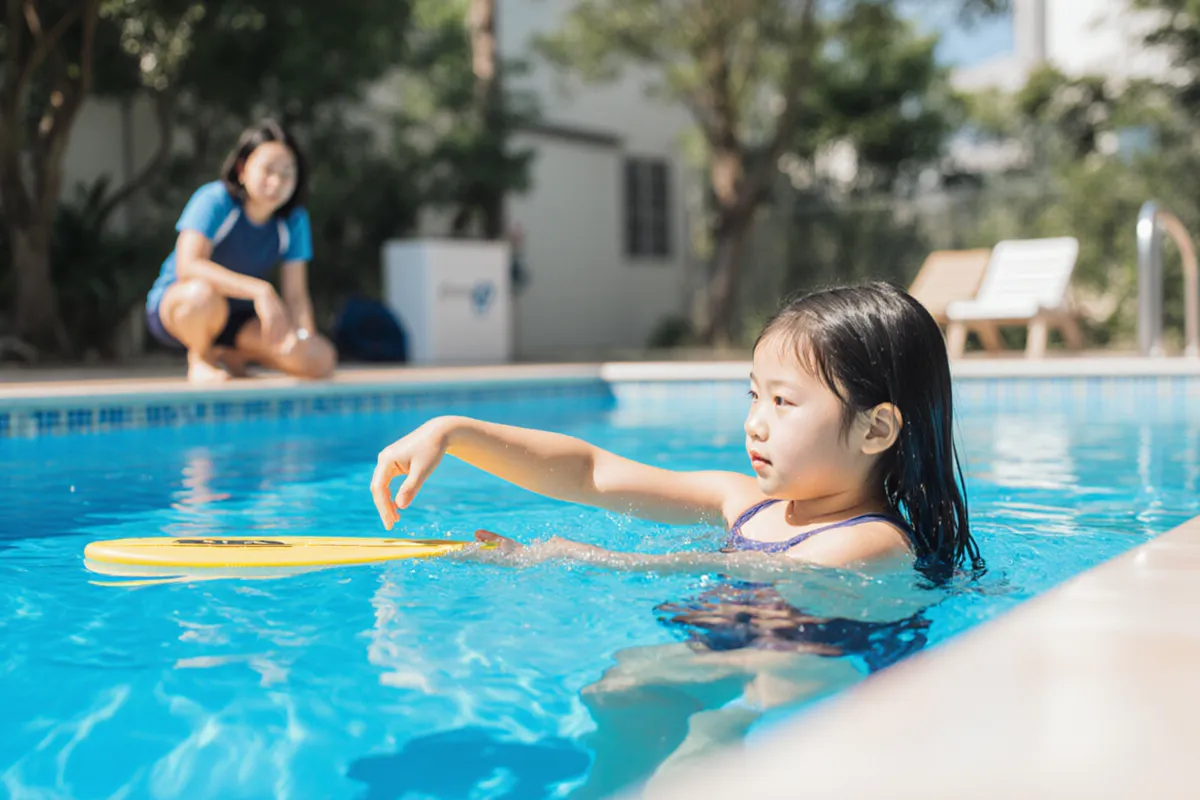
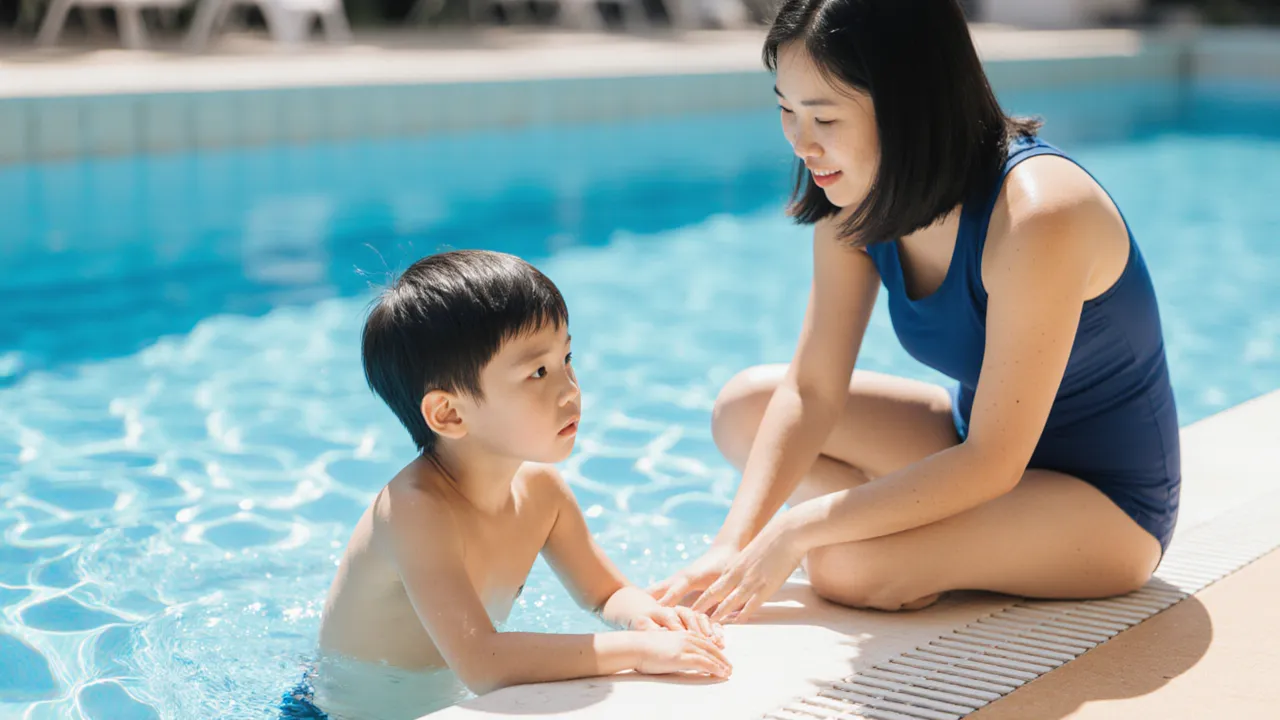
Coaches also give specific, technical feedback rather than general encouragement. Instead of “good job, keep going,” a child might hear “lift your elbow a little higher on the recovery” or “point your fingers down a touch earlier on entry”. Concrete, correctable instructions a 6- or 7-year-old can actually act on with a bit of coaching support. Over a 12-week grading cycle, these small corrections accumulate into visibly smoother, more efficient strokes, the kind that hold up under SwimSafer’s stricter Stage 5 and 6 timing benchmarks rather than needing to be relearned at that point.
Turns and underwater transitions get the same treatment. Where many programmes leave turns as an afterthought until a child is already swimming full laps, Tatsuki-style instruction introduces wall approach and push-off mechanics early and revisits them at every stage, so turns become efficient habit rather than an awkward pause a child has to consciously think through mid-swim.
How Ace Dolphin Combines This with SwimSafer 2.0
Ace Dolphin runs the Tatsuki methodology alongside, not instead of, SwimSafer 2.0, and this pairing is deliberate. SwimSafer 2.0 tells parents and coaches what a child needs to demonstrate to be certified safe in the water at each stage. The Tatsuki approach shapes how that skill gets taught, so that by the time a child reaches assessment, their technique is clean enough to pass comfortably rather than just barely.
Our coaches hold both NROC certification (Singapore’s national coaching standard) and TJAP certification through Tatsuki Japan, which means every lesson is assessed against two standards simultaneously: is this child safe and progressing through SwimSafer’s national framework, and is their stroke technique actually correct by international competitive-swimming standards. Over 15 years and 8,000+ graduates, we’ve found this dual lens is exactly what separates children who “can swim” from children who swim well, efficiently, safely, and with technique that holds up as lessons get more demanding.
This precision-first approach also connects to Ace Dolphin’s proprietary swim band and medal system, which rewards children for correctly mastering specific technical components, not just completing a stage. A child earns recognition for a properly corrected stroke element, which keeps motivation high during the slower, detail-focused phases of the Tatsuki approach that might otherwise feel less exciting than “swimming a whole lap.”
What Parents Should Look For
If you’re evaluating whether your child’s coaching is giving them genuine technique, not just lap count, there are a few things worth watching from the viewing gallery. Does the coach give specific corrections (“higher elbow,” “later breath”) rather than only general praise? Does your child’s stroke look different, cleaner, more streamlined, after a few weeks, even before they move up an official stage? Are turns and wall pushes being taught early, or left until much later?
It’s also worth asking your child’s coach directly whether lessons include isolated technique drills, or whether most of the session is continuous lap swimming. Both have their place, but a programme that’s entirely lap-based tends to reinforce whatever technique a child already has, good or bad, rather than actively refining it.
Conclusion
Passing a SwimSafer stage tells you your child is safe in the water. It doesn’t always tell you whether their stroke technique is efficient, sustainable, and ready for the tighter benchmarks further down the programme. The Tatsuki method, with its emphasis on isolated drills, precise technical correction, and incremental mastery. is built specifically to close that gap.
At Ace Dolphin, we combine SwimSafer 2.0’s national safety framework with TJAP-certified Tatsuki coaching, so your child isn’t just passing stages, they’re building a stroke that holds up as the standards get stricter. If you’d like to see this approach in action, reach out at admin@acedolphin.com or +65 9105 5244, or visit acedolphin.com to find a class at one of our six ActiveSG locations.