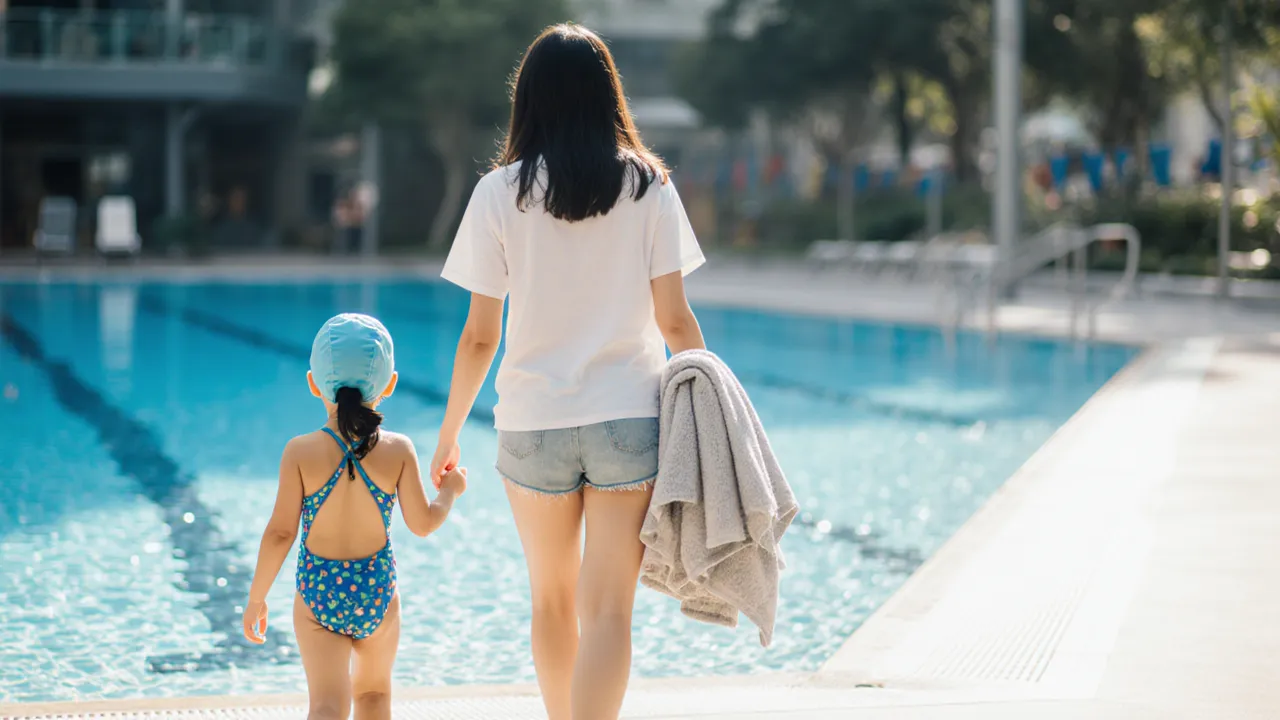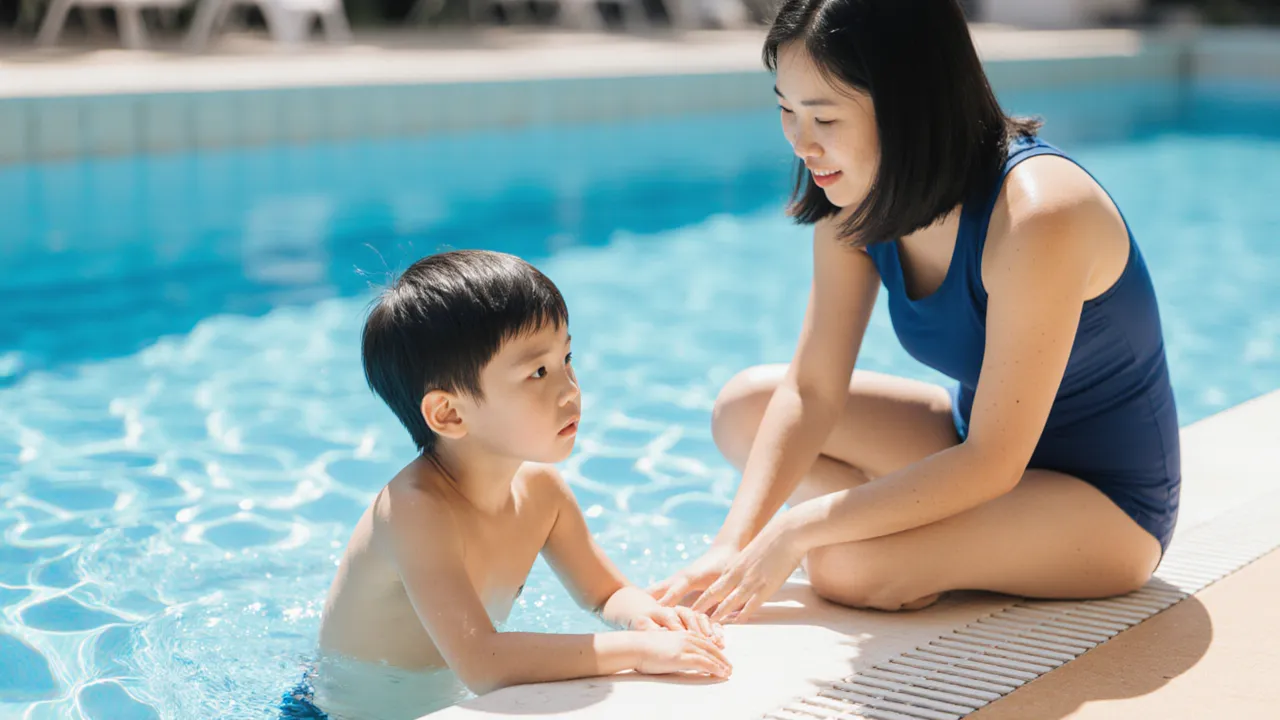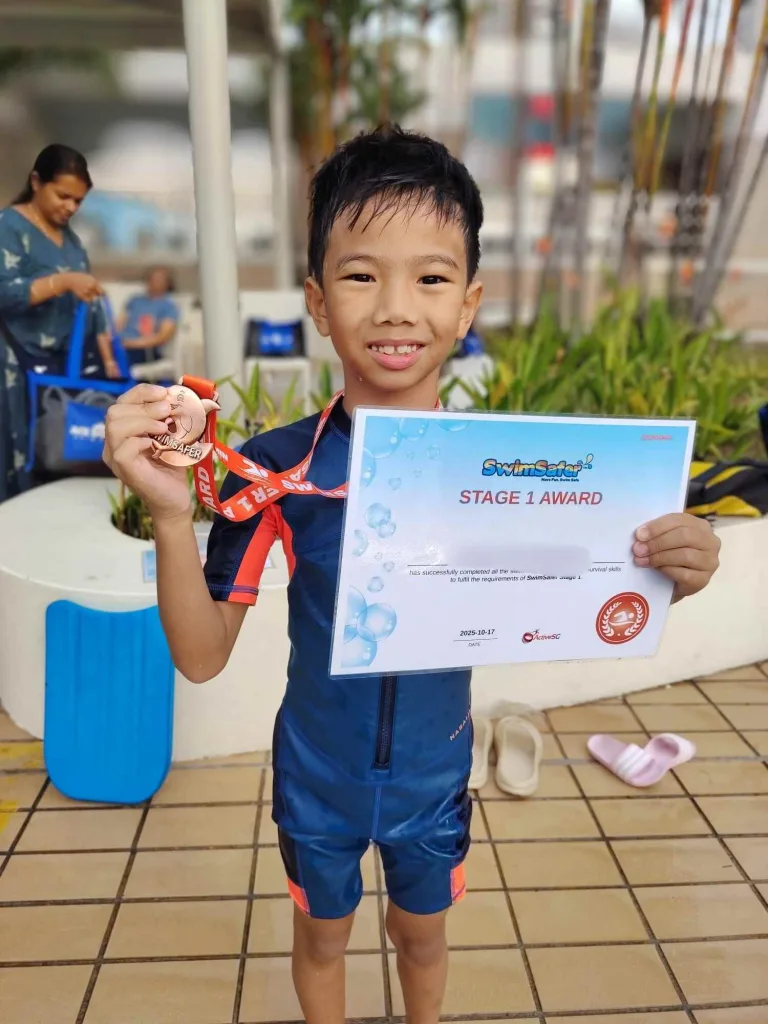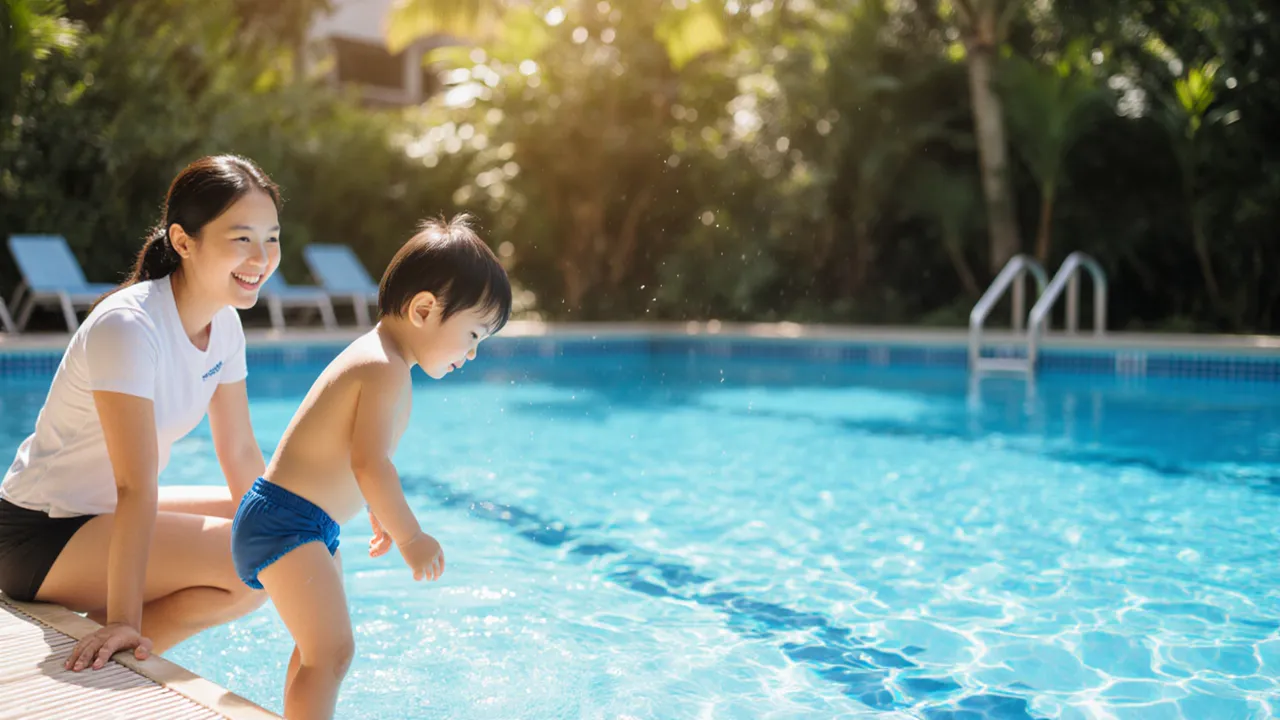
It’s the first Monday of the June break. The kids slept in, there’s no homework, and by 9am someone’s already asking what they’re doing today. Sound familiar? For thousands of Singapore parents, the school holidays, especially the four-week June window, are when the “we should really sort out swimming” thought finally becomes action. And it turns out, they’re right. Not because it’s convenient, but because the science (and the pool data) backs it up: kids who start or intensify swimming lessons during school holidays make faster, more lasting progress than almost any other time of year.
Whether your child is a complete beginner, stuck at the same SwimSafer stage they’ve been at since last year, or a water-anxious kid who’s been resisting lessons, the June holidays offer a genuine window of opportunity. Here’s everything you need to know to make the most of it.
Why School Holidays Are the Best Time to Learn to Swim
There’s a physiological reason why intensive, high-frequency learning works, and swimming is one of the clearest demonstrations of it. When a child swims once a week during the school term, they spend six days forgetting the muscle memory they built in the lesson before. They arrive the following Saturday at roughly the same starting point. Progress happens, but slowly.
During school holidays, something different occurs. With three, four, or even five sessions per week, the body doesn’t get the chance to forget. Stroke corrections stick. Breathing rhythm becomes automatic. A child who has been timidly floating with a kickboard in February can be swimming an independent freestyle lap by late June, not because the teaching changed, but because the repetition compounded.
There’s also a safety dimension worth naming plainly. Singapore kids spend more time near water during the June and December holidays than at any other point in the year, trips to Sentosa, chalet stays with pools, family outings to the beach. The holidays are precisely when water safety matters most, and the best time to refresh or accelerate those skills is right before and during that period, not after.
The June 2026 school holidays run from 30 May to 28 June. Four full weeks. That’s 20 weekdays, and potentially 12–16 lessons if you’re running a structured holiday programme. That is transformative for most children.
Intensive Holiday Programmes vs. Term-Time Lessons: What’s Actually Different?
Most Singapore swim schools offer both term-time and holiday programmes, but parents often aren’t clear on what they’re actually signing up for. The distinction matters.
Term-time lessons typically run once or twice a week over a 10–12 week school term. They’re designed for sustained, gradual progression. Ideal for children who are advancing steadily and benefit from reflection time between sessions.
Holiday intensive programmes run daily or near-daily over 1–4 weeks. They work differently. The skill-to-skill transfer happens faster because the child is returning to the water before the previous lesson fades. Instructors can also build on corrections in real time across consecutive days, rather than starting each class with a reminder of what was covered seven days ago.
For parents whose children have plateaued, “she’s been on Stage 2 for months and I don’t know why”, an intensive programme often breaks through the stall. For beginners who’ve been nervous to start, a concentrated burst of calm, structured exposure can build water confidence far faster than a once-a-week term programme.
That said, intensive doesn’t mean rushed. The best holiday programmes maintain the same structured curriculum as term-time lessons, they just deliver it more frequently. At Ace Dolphin, the SwimSafer 2.0 framework (merged with the Tatsuki Japanese methodology) underpins every class regardless of whether it’s a term programme or a holiday enrolment. The 12-week progressive grading cycle adapts to fit the holiday format without cutting corners on technique.
What to Look for in a Holiday Swim Programme
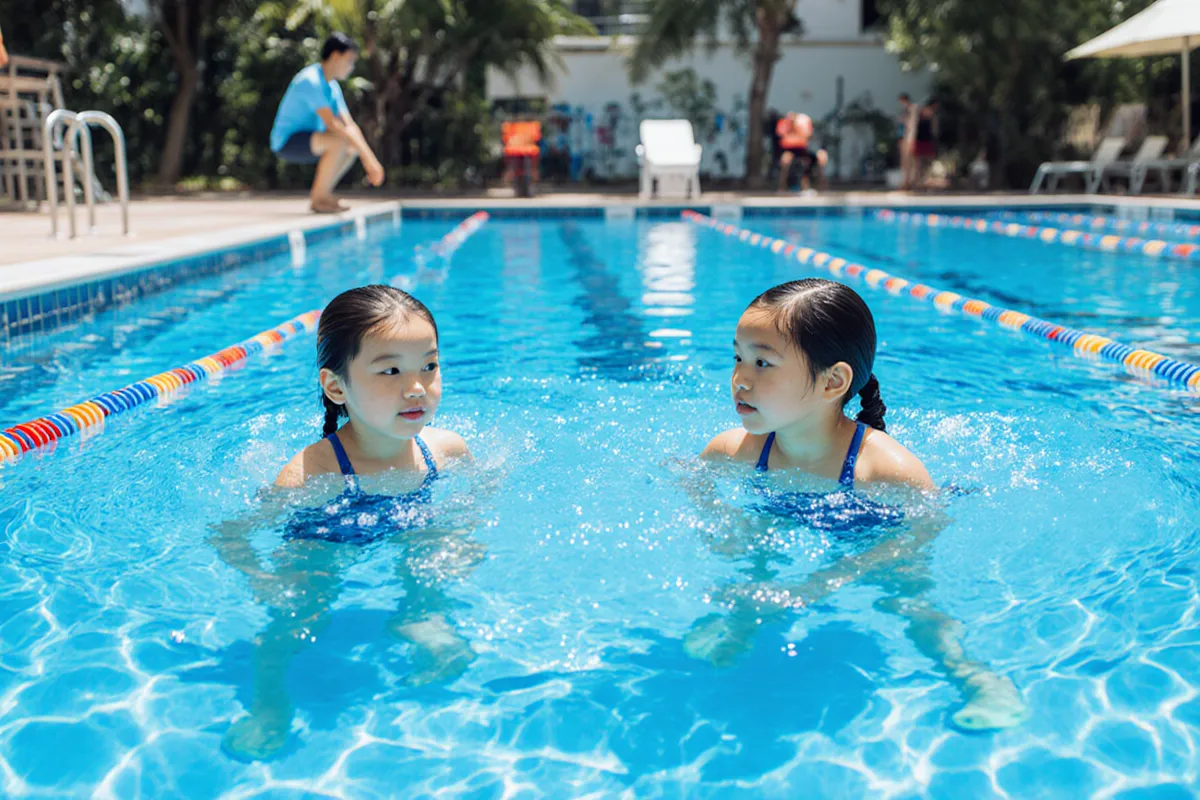
Not all holiday swim programmes are equal, and the June holidays bring a surge of options, some genuinely excellent, some simply capitalising on parent demand. Here’s what to evaluate before you book.
Coach continuity
Holiday programmes sometimes use rotating coaches or temporary staff, which undermines the whole point of intensive learning. Ask whether your child will have the same coach across sessions. Continuity matters because coaches who track individual progress, who know that Rayan tends to hold his breath and tense up at the turn, or that Priya needs a beat of encouragement before she’ll try a new drill, get dramatically better results than coaches meeting a child for the first time each lesson.
Class size
Smaller groups mean more water time and faster correction. A class of eight children with one coach in a 45-minute session means each child gets under six minutes of direct coaching attention. Look for programmes capped at five or six per class, or consider private coaching if your child is a visual learner who loses confidence in group settings.
A recognisable curriculum
SwimSafer 2.0 is Singapore’s national learn-to-swim framework, administered through Sport Singapore. Any reputable school’s holiday programme should map onto the six-stage SwimSafer progression. If a school can’t tell you which SwimSafer stages their holiday classes cover, that’s a red flag.
Make-up policy
Kids get sick. Holiday plans change. A good programme gives you flexibility, not a policy that voids missed lessons with no recourse. Ace Dolphin’s long-term enrolment includes unlimited make-up lessons, which matters even more during holidays when one bout of the sniffles can disrupt an entire week.
Practical Tips for the First Lesson
First-time parents often underestimate how much the preparation around the lesson affects what happens in the water. A few things that make a material difference:
Arrive early. Rushing to the pool, scrambling to change, and arriving at the pool deck frazzled gives a child no time to acclimatise. Build in 15 minutes before the lesson starts. Let them watch the water, see the other kids, and settle.
Bring the right gear, and keep it consistent. Proper-fitting goggles (not the loose supermarket kind) make a significant difference to comfort and confidence. Tight, chlorine-resistant swimwear. For longer hair, a swim cap reduces drag and distraction. Bring a dry bag so the post-lesson towel-off is smooth, not stressful.
Talk about swimming positively, not anxiously. Children pick up on parental tone more than parents realise. “I hope you’re not scared” plants a seed. “I can’t wait to hear what you learned today” does the opposite. Save the debrief for after, in the moment, keep your energy calm and expectant.
Don’t hover poolside. Most coaches and child development experts agree: parents watching from the pool deck, especially anxious, reactive parents, increases a child’s performance anxiety and makes it harder to build the coach-child rapport that drives learning. Drop off, take a walk, and come back at the end.
What If My Child Is Afraid of the Water?
Water phobia in children is more common than most parents realise, and the school holidays are actually an excellent time to address it. if the programme is the right one.
The mistake many parents make is booking a child who’s genuinely water-anxious into a standard group class, expecting results. Group classes are designed for children who are ready to learn technique. A water-phobic child needs something different first: desensitisation, trust-building, and a coach who understands that forcing progression (getting the child to submerge before they’re ready) can set confidence back weeks.
Ace Dolphin has built a particular reputation in Singapore for this specific situation. Parents of highly anxious children, kids who scream at the pool edge, refuse to get in, or cling to the ladder, regularly report that the “Calm & Chill” coaching approach creates a breakthrough they hadn’t achieved elsewhere. No forcing. No counting-down pressure. Just structured, patient repetition until the child leads the progression themselves. It’s slower at first, but the results are durable.
If your child falls into this category, consider starting with a private session rather than a group class during the holidays. One-to-one attention in the first two or three sessions can create enough safety and trust that a move to a small group class, with the same coach, ideally, becomes possible within the same holiday period.
How to Choose Between Group and Private Lessons This June
This is the question Ace Dolphin gets most often from parents enquiring about holiday programmes. The short answer: it depends on what your child needs right now.
Group classes (typically four to six children) are ideal for children who are socially motivated, who benefit from seeing peers tackle the same challenges, and who are progressing steadily. The peer energy in a well-run group class is genuinely motivating, kids push themselves in groups in ways they don’t when swimming alone with an adult.
Private coaching is better suited to children who are anxious, who have specific technical problems to fix (a stroke fault that’s been dragging SwimSafer progress for months), or who are preparing for a specific assessment and need accelerated, targeted work. It’s also the right choice for parents who’ve tried group lessons at other schools and hit a wall.
Some families find a hybrid works well: start with a block of private sessions to build water confidence or fix technique, then transition to group classes for the social learning and peer motivation. Ace Dolphin’s partner-matching service helps connect families to the right format based on the child’s age, temperament, and current ability, with no obligation to book before you’re sure it fits.
Making the Most of June: What a 4-Week Window Can Actually Achieve
To set realistic expectations: four weeks of consistent swimming lessons, three to four sessions per week, can realistically take a non-swimmer to an independent floater. It can move a child who’s been stuck at SwimSafer Stage 2 up to Stage 3 or 4. It can convert a child who cried at the pool edge into one who jumps in unassisted.
These aren’t marketing claims, they’re the kind of outcomes Ace Dolphin’s coaches document through the Tatsuki Japanese precision tracking system, which logs stroke mechanics, breath control, and safety skill milestones at each session. Parents get tangible visibility into progress rather than a vague “she’s doing well” at pickup.
What a four-week window can’t do: replace long-term skill consolidation. A child who swims intensively in June and then doesn’t return to the pool until December will lose some of what they gained. The holidays are the accelerant. Consistent term-time lessons are what lock the skills in. The best outcomes come from families who treat June as a launch pad into a regular swimming habit, not a standalone event.
Conclusion
The June school holidays are the best swimming opportunity of the year, and if your child doesn’t have a solid swim programme yet, this is the moment to sort it out. The combination of available time, concentrated frequency, and Singapore’s peak outdoor water season makes it the highest-leverage window for building water confidence and genuine swim competency.
Whether your child is a complete beginner, a nervous non-swimmer, or ready to push through to the next SwimSafer stage, Ace Dolphin’s holiday programmes across six ActiveSG locations, Tampines, Pasir Ris, Yio Chu Kang, Bishan, Punggol, and Sengkang, are designed to meet them exactly where they are. To find out which programme fits your child best, reach out at admin@acedolphin.com or call +65 9105 5244. June fills up quickly, early enquirers get first pick of coaches and timeslots.