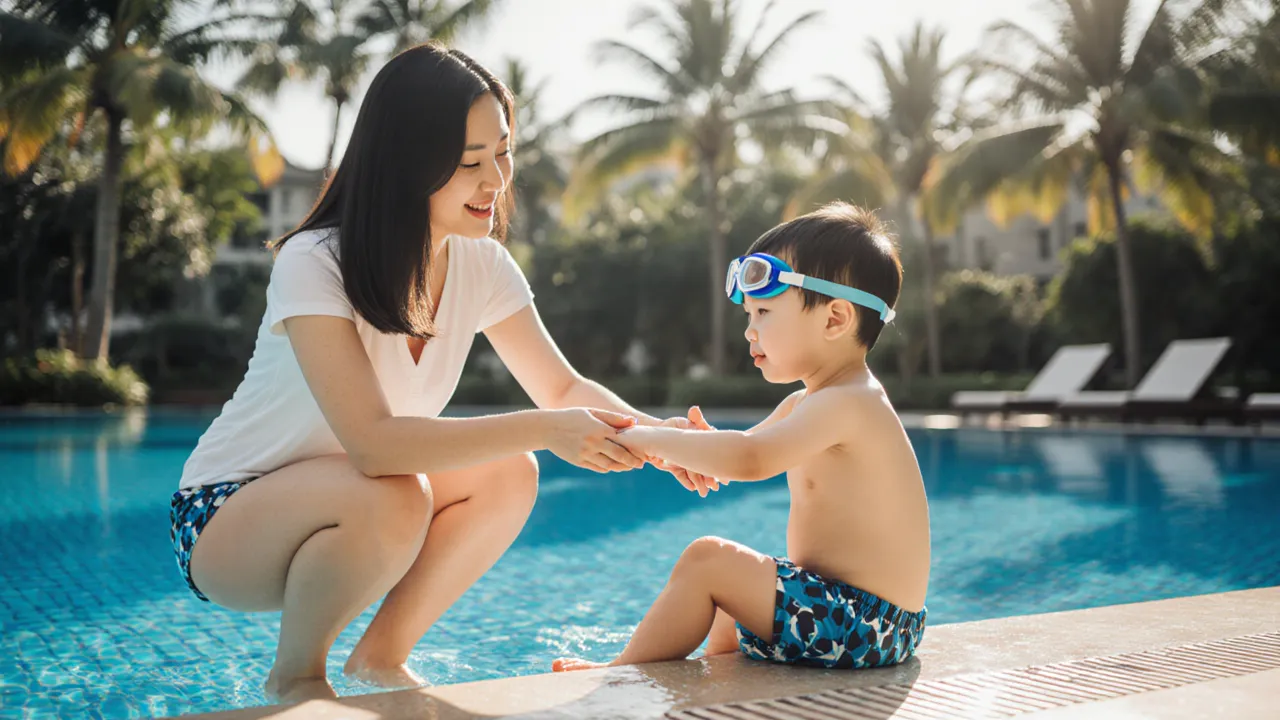
The suitcase is barely unzipped and your six-year-old is already in swimwear, asking when the pool opens. It is the best part of a year-end holiday, and it is also the moment many parents relax for the first time in months. Those two things together are the problem. Your child’s weekly lesson happens in a pool they know, with a coach whose only job is to watch them. A hotel pool in Bali, a beach in Phuket or a wave pool in Johor is a completely different environment, and most children do not notice the difference until they are out of their depth.
This guide covers holiday water safety for kids in practical terms: what changes when you leave your usual pool, the specific risks at hotel pools, beaches and water parks, and the skills worth practising before you fly.
Why holiday water is riskier than lesson water
Local data makes the pattern clear. When KK Women’s and Children’s Hospital reviewed 104 child submersion cases seen between 2011 and 2015, more than three-quarters involved children aged six and under. Over half happened in condominium pools, and about one in five happened during pool parties. Roughly one in ten cases ended in death. These were not open-sea accidents. They happened in ordinary leisure pools, with adults nearby, during relaxed social time.
A holiday recreates those conditions almost exactly. The pool is unfamiliar, so your child does not know where the floor drops away. There are more adults around, which paradoxically means less supervision, because everyone assumes someone else is watching. And the day has no structure: nobody blows a whistle after 45 minutes.
The other thing worth knowing is what trouble actually looks like. Drowning is quiet. A child who is struggling cannot shout or wave, because all their effort goes into getting their mouth above the surface. UNICEF notes that a young child can slip under in well under a minute, and that toddlers can drown in a few centimetres of water. If you are waiting to hear splashing, you will hear nothing.
Hotel and resort pools: the hazards parents miss
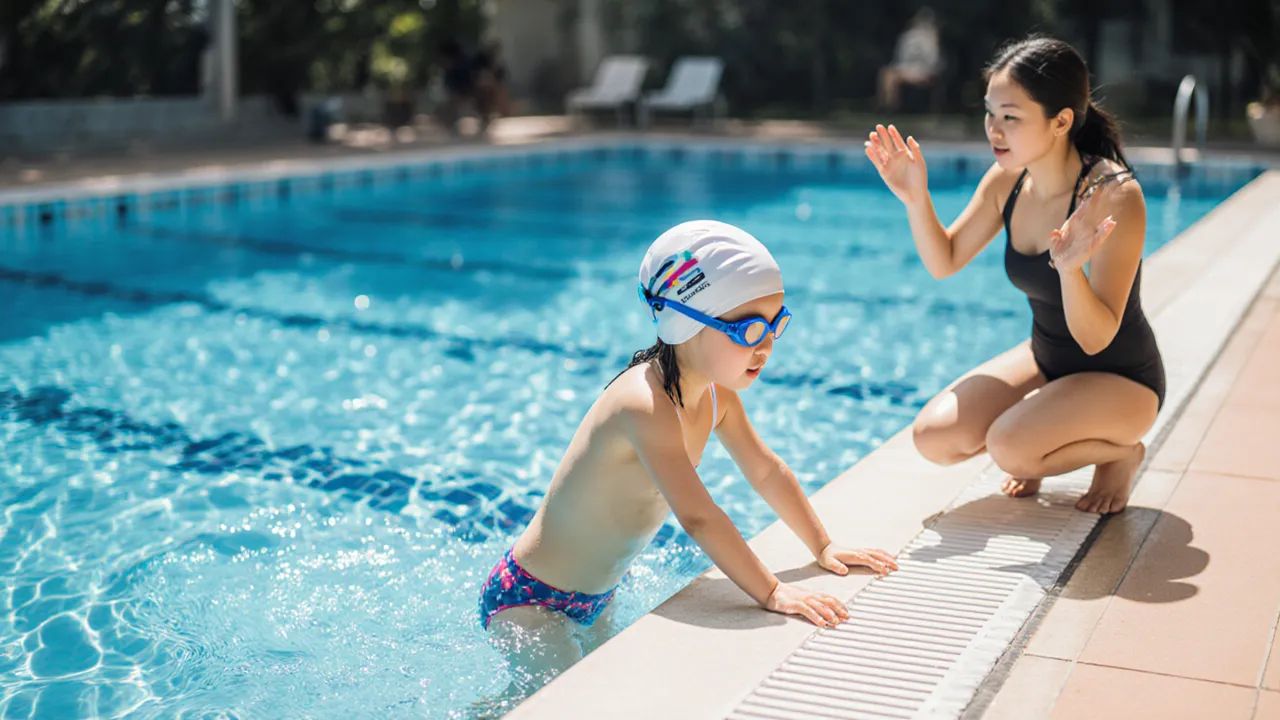
Singapore parents are used to ActiveSG complexes, where lifeguards are on duty, depths are painted on the wall and the teaching pool is separate from the deep one. Most hotel pools offer none of that. Before your child gets in, spend two minutes checking the following.
Find the depth change
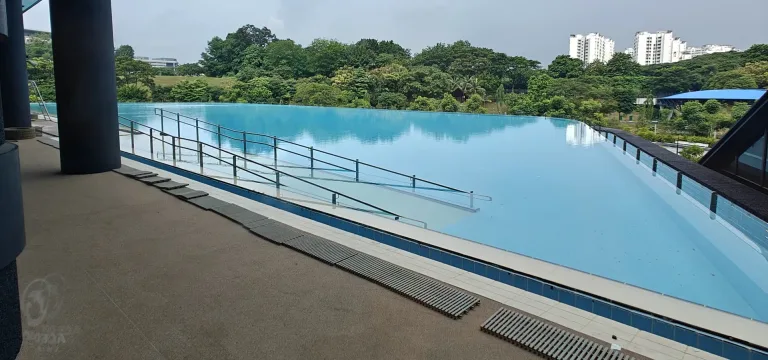
Resort pools are designed to look good, not to be read easily. Many slope from 0.9 metres to 1.8 metres with no rope or marking, and infinity edges and dark tiles make depth hard to judge. Walk the pool yourself first, and show your child exactly where they can stand and where they cannot.
Assume there is no lifeguard
Plenty of hotels have a pool attendant who hands out towels and nothing more. Even where a lifeguard is present, they are covering the whole pool. Treat yourself as the only supervisor your child has.
Watch the extras
Swim-up bars, slides, jacuzzis and villa plunge pools all add risk. A private villa pool is the one to take most seriously: it is a few steps from the bedroom, usually unfenced, and available at 6am while you are still asleep. Keep the door to it locked, and tell your child plainly that the pool is closed unless an adult is in the water with them.
If you live in a condominium, much of this will sound familiar. Our guide to condo pool safety for kids in Singapore goes deeper on unsupervised pools at home.
Beaches and open water: a different skill set
A child who swims confident laps in a pool is not automatically safe in the sea. Pool water is still, clear and has walls. The sea moves, hides the bottom and has no edge to grab. Children who have only ever swum in pools are often shocked by how quickly a wave can knock them over in knee-deep water.
- Swim where it is patrolled. On many international beaches, red-and-yellow flags mark the lifeguarded zone. A red flag means stay out. If a beach has no flags and no lifeguards, treat it as paddling only for young children.
- Explain rip currents before you arrive. A rip is a narrow channel of water flowing out to sea, and it often looks like the calmest patch between breaking waves. The rule for older children is simple: do not fight it. Float, raise an arm, and swim sideways along the beach once the pull eases.
- Set a depth limit and a landmark. “No deeper than your waist, and stay in front of the blue umbrella” is a rule a five-year-old can follow. “Don’t go too far” is not.
- Stay in the water with under-sevens. Arm’s reach in the sea means you are wet too.
Singapore beaches such as Sentosa, East Coast and Pasir Ris are gentler than most holiday coastlines, but the same rules apply. Check for posted advisories before anyone gets in.
Water parks: wave pools, slides and lazy rivers
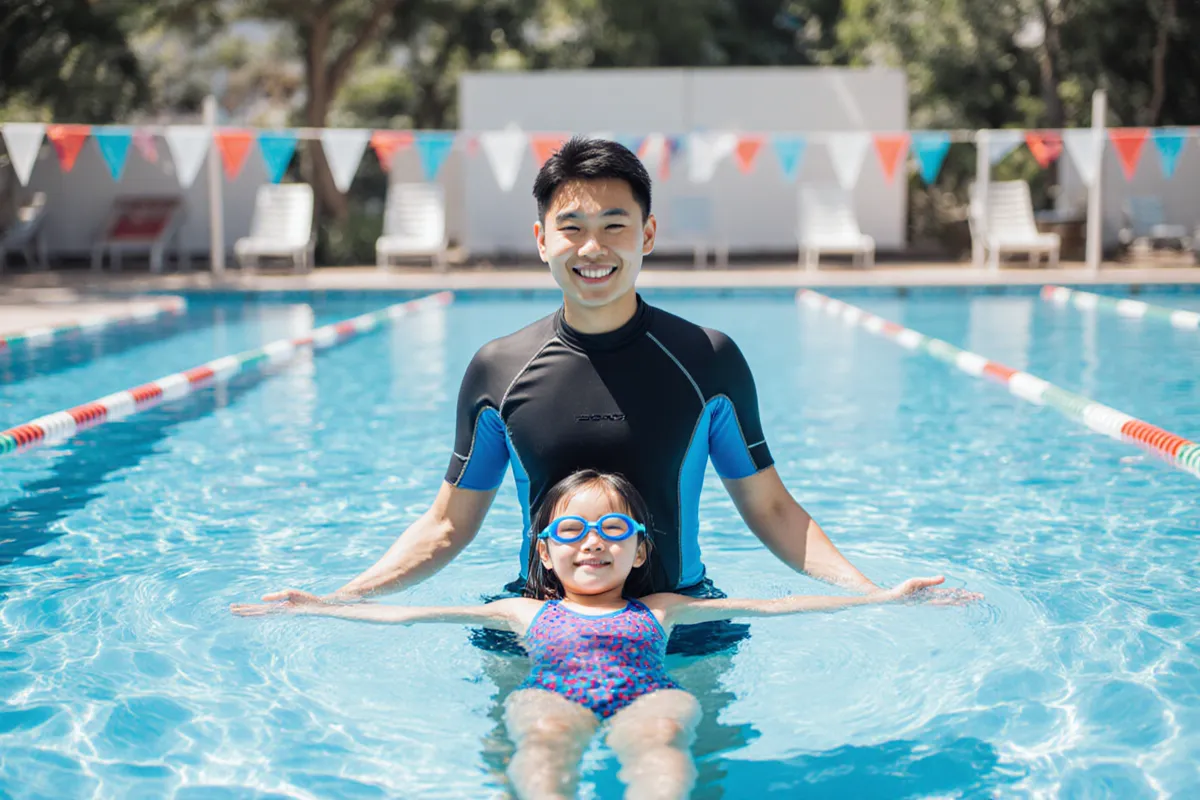
Water parks feel safe because there are lifeguards everywhere and the water is rarely deep. The risk is different: crowds, noise and moving water make it very easy to lose sight of a child for the 30 seconds that matter.
Wave pools deserve the most caution. The floor slopes, the waves arrive in sets, and a small child standing comfortably at chest depth can be lifted off their feet when the machine starts. Keep young children in the shallow third and stay beside them. On lazy rivers, the current is stronger than it looks and tubes flip, so use the life jackets the park provides. Respect height limits on slides, because the splash pool at the bottom is sized for the rider the slide was built for.
Two habits help a great deal: dress your child in a bright rash guard so you can spot them instantly, and agree on a meeting point the moment you walk in.
Floaties, life jackets and the supervision rule that actually works
Armbands, swim rings and inflatable unicorns are toys. HealthHub’s guidance is direct on this point: flotation aids can slip off or deflate and never replace adult supervision. They also give children a false sense of what their bodies can do in water, which is the opposite of what you want before they step into a deep hotel pool without them.
For boat trips, snorkelling, kayaking and banana boats, use a properly fitted life jacket instead. Check that it is the right size for your child’s weight, that every buckle is fastened, and that it does not ride up over their chin when you lift it by the shoulders.
Then there is the supervision rule. Vague shared responsibility fails, so make it explicit:
- Name one water watcher. One adult is on duty, with no phone, book or drink, for a fixed stretch such as 20 minutes. Then hand over out loud: “You’re watching now.”
- Arm’s reach for non-swimmers and under-sevens. That means in the water, not on a sun lounger.
- Everyone out when the watcher leaves. Even for a toilet break.
Five skills to practise before you travel
Lessons do not make a child drown-proof, and no honest coach will tell you otherwise. What they do is buy time: a child who can stay calm, float and get to an edge gives you the seconds you need. These are the survival skills built into the early stages of SwimSafer 2.0, and they are worth rehearsing in the weeks before a trip.
- Back float. The single most useful skill. A child who can roll onto their back and breathe can rest and call for help.
- Getting back to the wall. Jump or slide in, turn around, and return to the edge. It sounds trivial and it is the skill that matters most in a fall-in.
- Climbing out without a ladder. Many resort pools have high edges and few steps.
- Treading water. Even 20 to 30 seconds makes a difference.
- Asking first. The habit of checking with an adult before entering any water is a skill too, and it is the one that prevents most incidents.
If your child is nervous in unfamiliar water, do not push them into the hotel pool on day one to “get over it”. Fear tends to grow under pressure. Our guide on helping your child overcome fear of water explains the gradual approach our coaches use. For a child who needs to build these skills quickly before a trip, private swimming lessons let a coach focus on exactly the gaps that matter.
A two-minute checklist for day one
Before the first swim of any holiday, run through this with your child standing next to you:
- Where is the shallow end, and where does it get deep?
- Is there a lifeguard, and where is the rescue equipment?
- Where are the steps and ladders?
- Who is the water watcher right now?
- What is the rule? (Ask before you get in. Every time.)
It takes less time than applying sunscreen, and it resets your child’s expectations from “this is like my lesson pool” to “this is somewhere new”.
Conclusion
Holiday water is the highlight of the trip for most children, and it should stay that way. The risk does not come from the water being unusually dangerous. It comes from an unfamiliar setting, relaxed adults and a child who assumes every pool behaves like the one they know. Check the pool, name a watcher, skip the floaties, and practise floating and getting back to the wall before you leave.
At Ace Dolphin, water safety is taught alongside stroke technique from the first stage, at a pace that keeps children calm and confident. Over 15 years and 8,000 graduates, we have seen that children who learn to float and recover early become the safest swimmers later. If you would like your child to build those skills before or after the break, take a look at our kids swimming lessons, email admin@acedolphin.com or call +65 9105 5244.