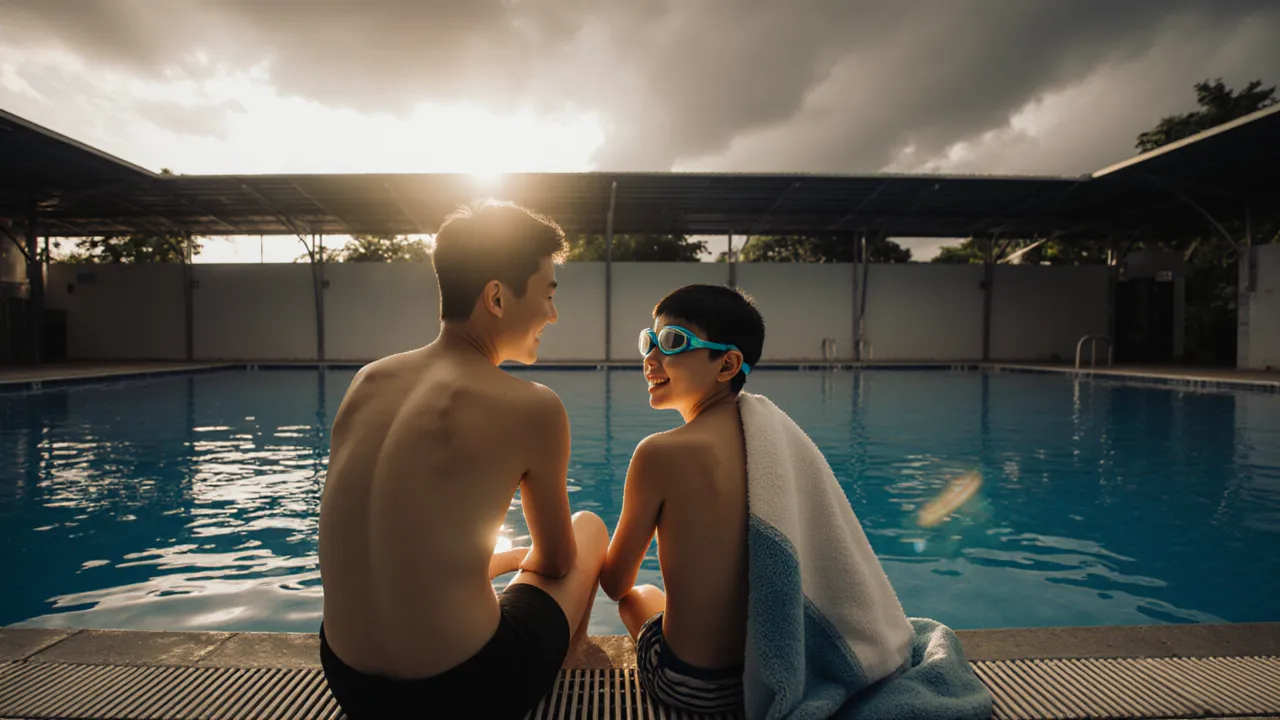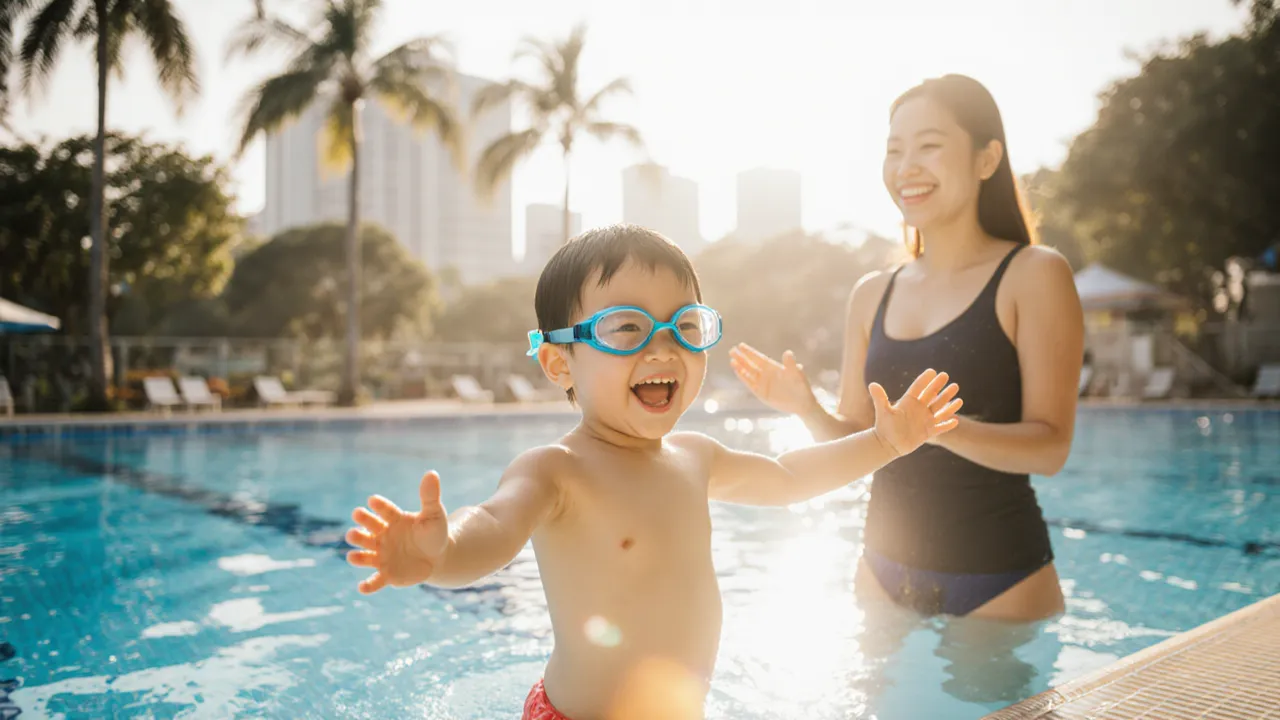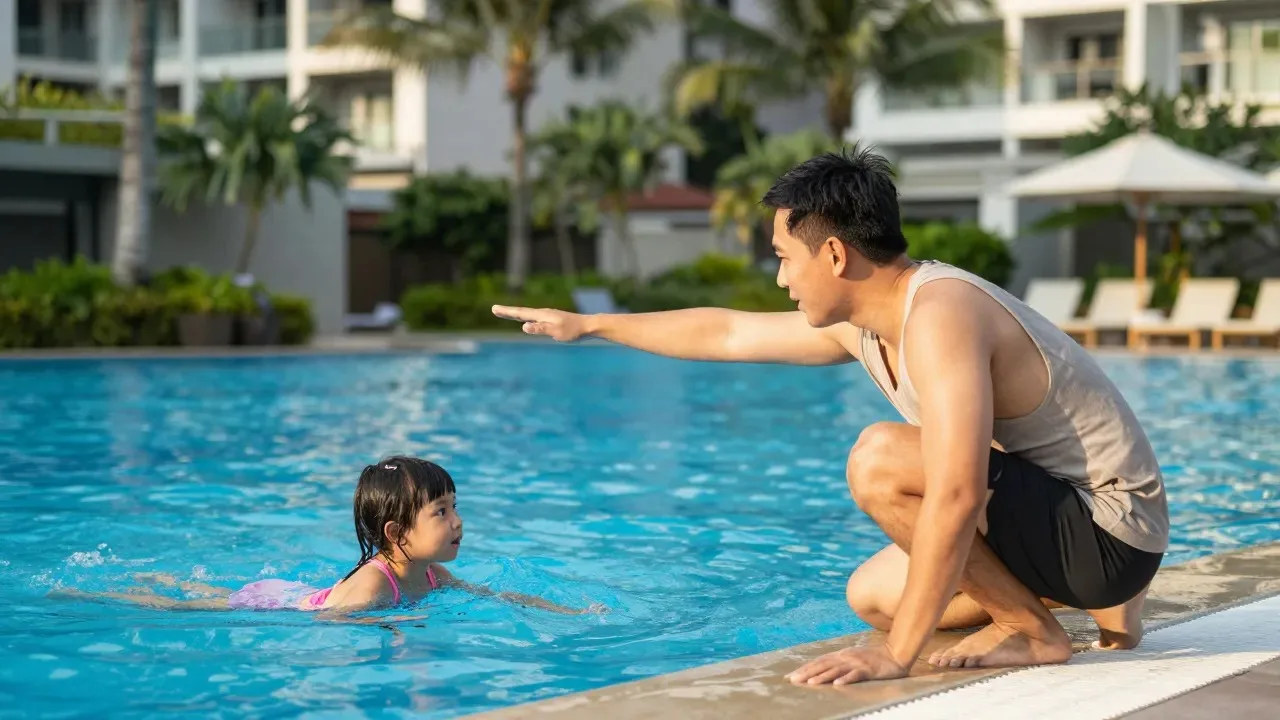
It’s 6:15pm. Dinner’s on the stove, your phone buzzes with a work message, and your five-year-old is “just in the pool downstairs” with the neighbour’s kids. Thirty seconds. That’s roughly how long it takes for a child to slip under water and stop making noise — no splashing, no shouting, nothing that pulls your attention back to the pool. In Singapore, where most families live within a hundred metres of a condo pool, this scenario plays out every single day, and it’s the reason drowning has been the leading cause of child injury death here for over a decade.
This isn’t an article to scare you. It’s the article we wish every parent read before, not after. Here’s what the data actually says about where children drown in Singapore, what real supervision looks like, and how swimming lessons — done right — change the odds.
Where Singapore’s Child Drownings Actually Happen
Public awareness campaigns tend to picture drowning as a beach or open-water event. The numbers tell a different story. Between 2012 and 2023, 361 children in Singapore were treated for drowning-related incidents, and swimming pools — not the sea, not rivers — accounted for 83% of them. Condo and residential pools make up the bulk of that figure, simply because that’s where most young children in Singapore actually spend time in water.
Even more striking: 86% of the children involved were seven years old or younger. This lines up with what every swim coach already knows — younger children have less body awareness, weaker instinctive responses to being submerged, and no reliable sense of when they’re out of their depth. A pool that feels completely safe to an adult standing at the edge can be genuinely dangerous for a four-year-old the moment a parent looks away.
The pattern in these incidents is remarkably consistent: a child was in or near water, a supervising adult was nearby but not watching closely, and the gap lasted only a minute or two. It’s rarely negligence in the way people imagine it — it’s a phone call, a conversation with another parent, a sibling needing something at the exact wrong moment. Which is exactly why “watching the pool” needs to mean something more specific than it usually does.
What “Supervision” Actually Means (And Where It Breaks Down)
Most parents believe they’re supervising when they’re at the pool, chatting nearby, glancing over occasionally. For children under five, this isn’t supervision in any meaningful sense — it’s proximity.
Touch supervision is the standard that actually prevents drowning: a responsible adult stays within arm’s reach of a young child in or near water, close enough to physically grab them within a second. Not “watching from the lounger.” Not “keeping an ear out.” Arm’s reach, the entire time the child is in or near water — including the shallow end, and including what looks like a harmless wading pool.
For children aged five to twelve, who are more capable but still inexperienced, a “water watcher” system works well: one adult is explicitly assigned the sole job of watching the water, with no phone, no conversation, rotated every 15 minutes so attention doesn’t drift. The key word is “explicitly” — a group of parents standing around the pool, each assuming someone else has eyes on the kids, is functionally the same as nobody watching at all.
If your condo pool is accessible from your unit or a shared corridor, physical barriers matter as much as active supervision. A self-latching gate around the pool area, door alarms that alert you if a child wanders toward water unsupervised, and simply never leaving pool gates propped open “just for a minute” close the gap during the moments no adult is actively watching at all.
The Water Safety Skills Every Child Needs Before They’re “Pool Independent”
Swimming lessons and water safety aren’t the same thing, and this is where a lot of well-meaning parents get the sequencing wrong. A child who can do a decent freestyle across the pool isn’t automatically a child who’s safe near water — those are different skill sets, and the survival skills need to come first.
The core skills every child needs, well before stroke technique matters:
- Returning to the edge or wall from an unexpected fall in — the single most common drowning scenario is a child who overbalances at the pool edge, not one who deliberately jumps in over their depth.
- Floating on their back unaided — this is the skill that buys time. A child who can roll onto their back and float can rest, breathe, and call for help instead of panicking and going under.
- Treading water or floating calmly, without the frantic, exhausting thrashing that burns through a child’s limited stamina in seconds.
- Knowing to call out immediately rather than trying to solve the problem alone or, worse, staying quiet out of embarrassment.
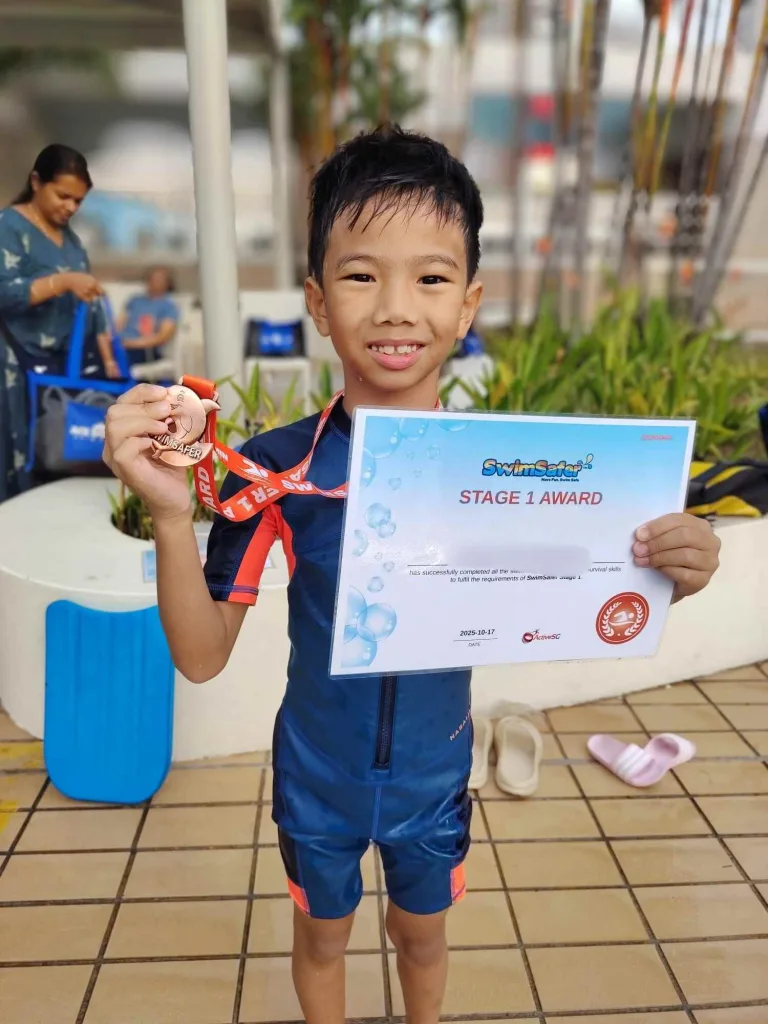
This is precisely why Singapore built the SwimSafer 2.0 framework the way it did. Early SwimSafer 2.0 stages are deliberately weighted toward breath control, unaided floating, and water confidence before a single lesson touches stroke mechanics — because a child who panics the moment their face goes under can’t learn a stroke, and more importantly, can’t keep themselves safe. Confident water skills come before elegant swimming, not after.
Where Swimming Lessons Fit Into Condo Pool Safety
Swimming lessons don’t make a pool safe — supervision and barriers do that. What lessons do is dramatically change what happens in the moments before an adult reaches the water, and that’s often the difference that matters.
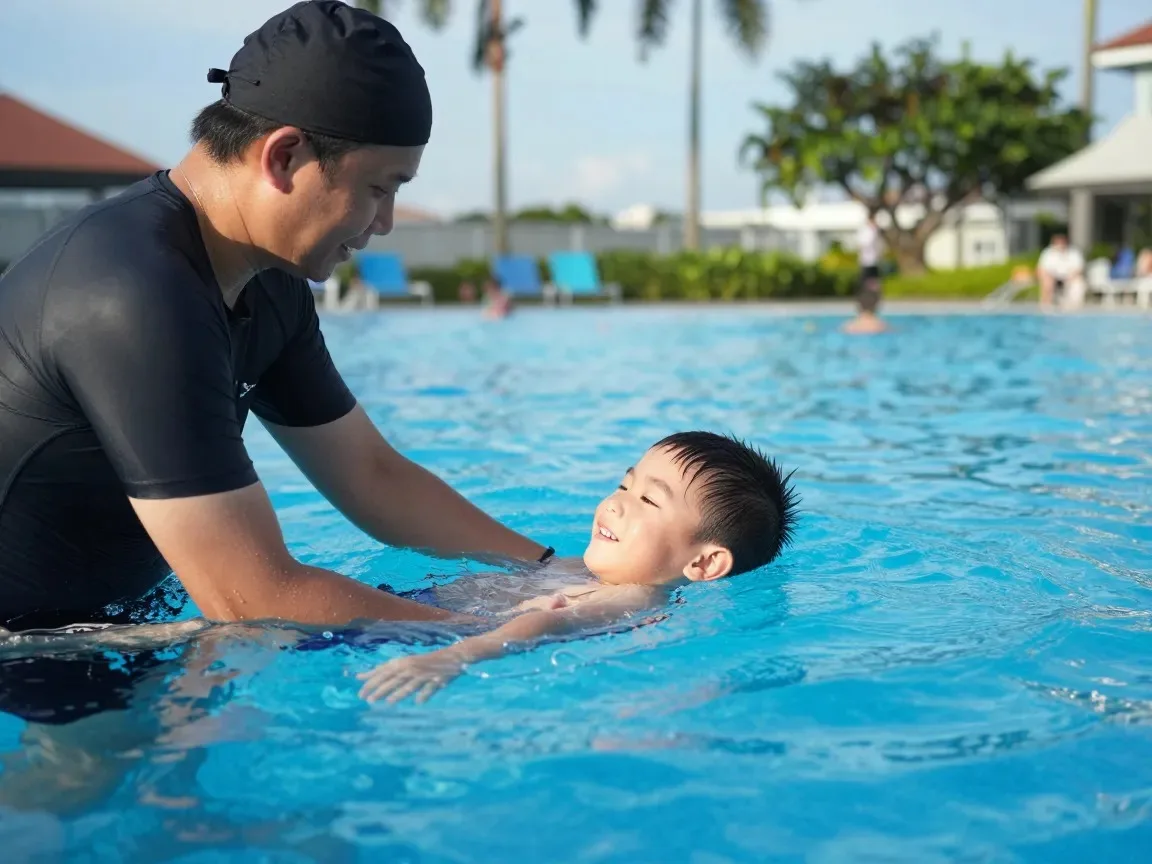
At Ace Dolphin, this is one of the reasons private condo-based lessons have become such a popular option for Singapore families: instead of driving to a public pool, a coach comes to your own condo pool, works with your child in the exact environment where most of their unsupervised pool time will actually happen, and builds the specific skills — comfort in that water, ability to reach the edge, ability to float — that matter most in that setting. A child who’s only ever practised in a calm, structured lesson environment at an unfamiliar public pool doesn’t automatically transfer that comfort to a different pool with different steps, different depth markings, and different friends splashing around.
For families dealing with a child who’s genuinely anxious around water — not uncommon, and nothing to be embarrassed about — this is also where a patient, unhurried teaching approach earns its keep. Rushing a nervous child into deep water “to get it over with” tends to backfire, reinforcing the fear rather than resolving it. The better path is smaller steps, more repetition, and coaches who read a child’s comfort level rather than following a rigid script regardless of how the child is actually responding in the water that day.
It’s also worth being honest with yourself about what age-appropriate expectations look like. No swimming programme, however good, makes a toddler or preschooler “drown-proof” — the Singapore data on under-sevens makes that painfully clear. Lessons reduce risk and build genuinely useful survival skills; they don’t replace an adult within arm’s reach.
A Simple Pool Safety Checklist for Condo Living
Before the next pool session, it’s worth running through a short mental checklist:
- Is a responsible adult within arm’s reach of every child under five in or near the water, for the entire time?
- If older kids are swimming unsupervised by a dedicated adult, is there an explicit “water watcher” with no other job?
- Does your child know how to float on their back and reach the pool edge from any point in the pool?
- Are pool gates, if your unit has direct access, self-latching and never propped open?
- Has your child had enough structured water time to be genuinely comfortable — not just tolerant — of the pool they use most?
If the honest answer to any of these is “not really,” that’s a solvable problem, not a reason to panic — but it is worth solving soon rather than later.
Bringing It Together
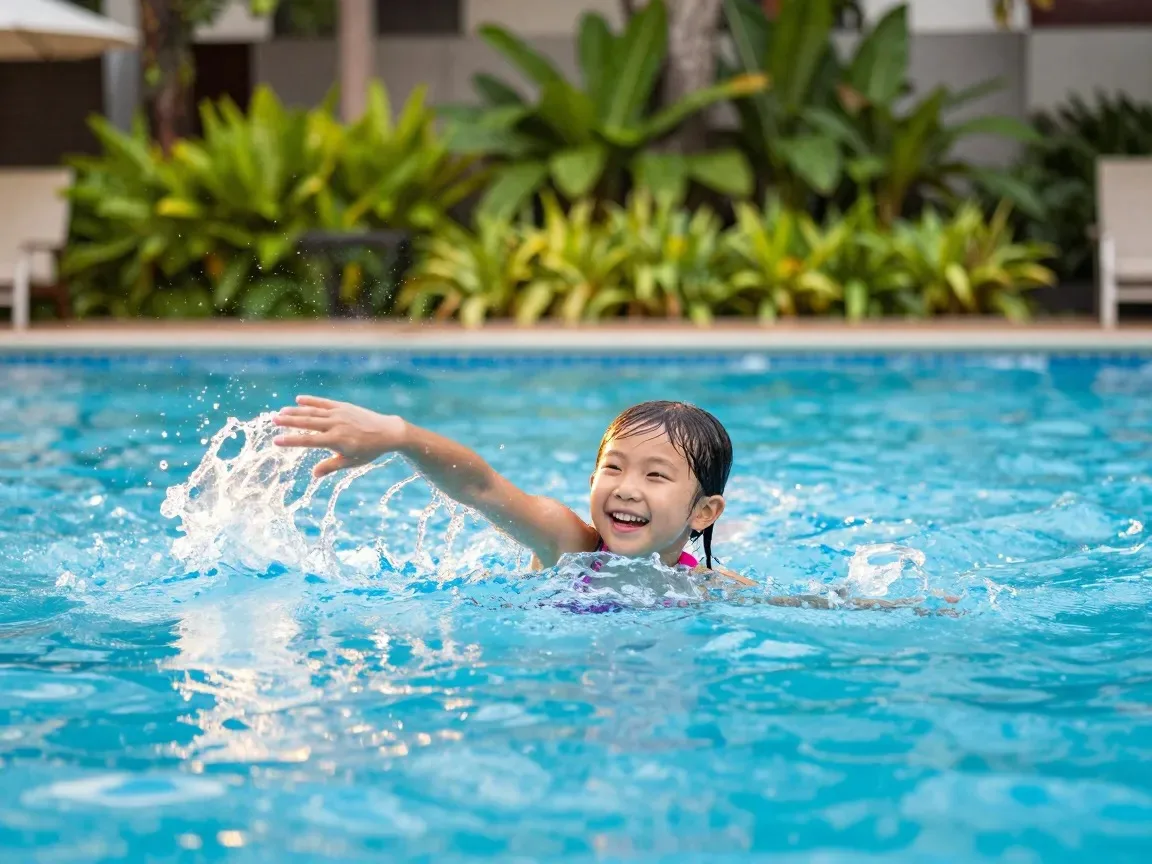
Singapore’s condo pools are wonderful for families — daily exercise, weekend fun, a way to cool off in the tropical heat almost every evening of the year. The data simply asks that we treat them with the seriousness they deserve, which mostly comes down to two things: supervision that’s actually active, and children who have the specific survival skills to buy time if something goes wrong.
Ace Dolphin has spent 15+ years and worked with over 8,000 children building exactly these foundations, whether through group SwimSafer classes at one of our six ActiveSG locations or private lessons brought directly to your own condo pool — the place where most Singapore children actually spend their time in water. If you’d like to talk through what makes sense for your child’s age, comfort level, and pool setup, reach out at admin@acedolphin.com or +65 9105 5244, or take a look around acedolphin.com.
Opening soon at Punggol: our new Punggol pool is opening soon, and pre-registration is now open. Find out more and pre-register on our Punggol page.