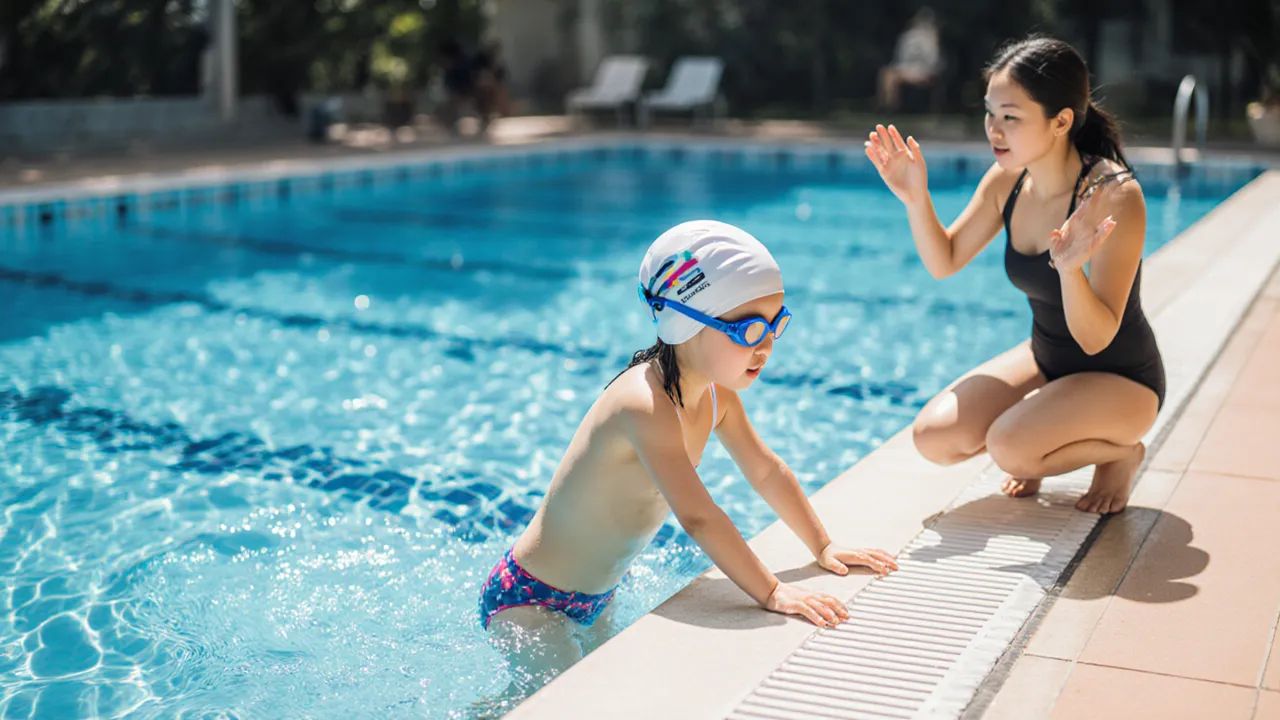
Most Singapore parents have had the same moment at the pool. Your child finishes a length, you cheer from the side, and then the coach quietly mentions that the kick is coming from the knees, the head is lifting on every breath, and the arms are crossing over the midline. Nothing is “wrong” — they are swimming — but the habits are there, and they are much easier to fix at six than at twelve.
That gap between swimming and swimming well is where the Japanese Tatsuki methodology earns its place. Ace Dolphin is certified by Tatsuki Japan and pairs it with Singapore’s national SwimSafer 2.0 framework. This guide explains what that combination means for your child’s stroke technique, how it feels from the poolside, and what you can reasonably expect to see week by week.
What the Tatsuki Methodology Actually Is
Tatsuki is a Japanese swimming programme with a long history of teaching children in structured, progressive steps. The core idea is simple: a stroke is built from small, correctable pieces, and each piece is taught, checked and consolidated before the next one is stacked on top. Instead of asking a child to “just swim faster”, the coach isolates one thing — say, where the hands enter the water — and works on it until it becomes automatic.
For parents, the practical difference is precision. Coaches trained in this approach watch for specific, observable markers: how flat the body sits, how the kick is generated, how long the arm reaches before it pulls, and when the child breathes. Ace Dolphin tracks these markers across each 12-week grading cycle, which is why a parent can ask “what is my child working on this term?” and get an answer more specific than “he is improving”.
One caveat worth stating plainly: no method replaces hours in the water. What a structured system does is make those hours count, by making sure the child practises the right movement rather than rehearsing a flawed one.
Why Technique Matters More Than Speed in the Early Years
A child who thrashes across a pool on sheer effort can look impressive at seven and be exhausted by fifteen metres at nine, when the distances get longer. Efficient technique is what makes swimming sustainable: less energy wasted, longer distances, safer breathing. It is also what the SwimSafer stages quietly reward as children progress from basic water skills towards continuous swimming and survival skills.
There is a safety angle too. A child with a horizontal body position and a relaxed, rhythmic breath can stay afloat and keep moving when tired. A child who swims vertically, heads up and legs sinking, burns out fast. In a country where nearly every family has access to a condo pool, a beach trip or a holiday resort, efficient swimming is a safety skill, not just a sports one.
The Habits Coaches Fix Most Often
Across thousands of young swimmers, the same few issues come up again and again: lifting the head to breathe, kicking from the knees instead of the hips, a short, choppy arm stroke, and legs that drop because the core is not engaged. Each one has a straightforward fix, but only if it is spotted early and corrected consistently. If your child already swims and you suspect some of these habits, our earlier piece on why a child who can swim may still need technique work goes into detail.
How Technique Is Built, Step by Step
A well-sequenced lesson does not throw the whole stroke at a child at once. The order below is how most structured programmes, including ours, tend to build freestyle.
1. Body Position and Streamline
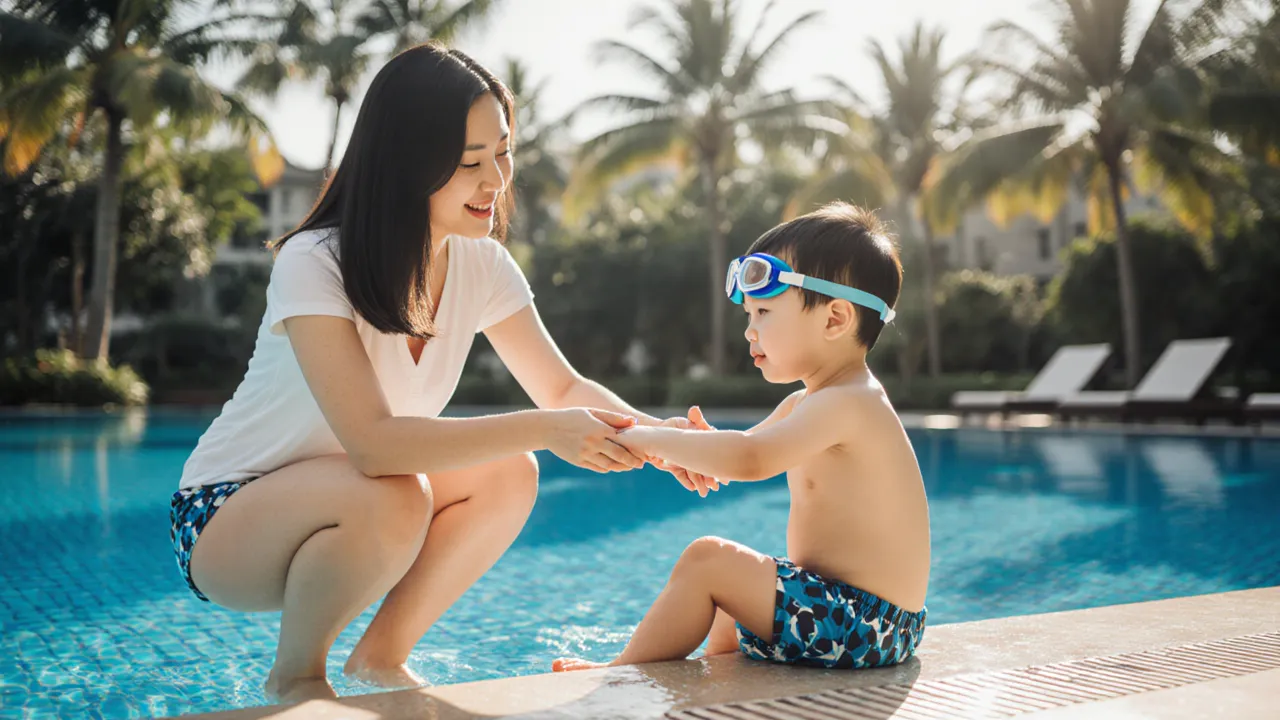
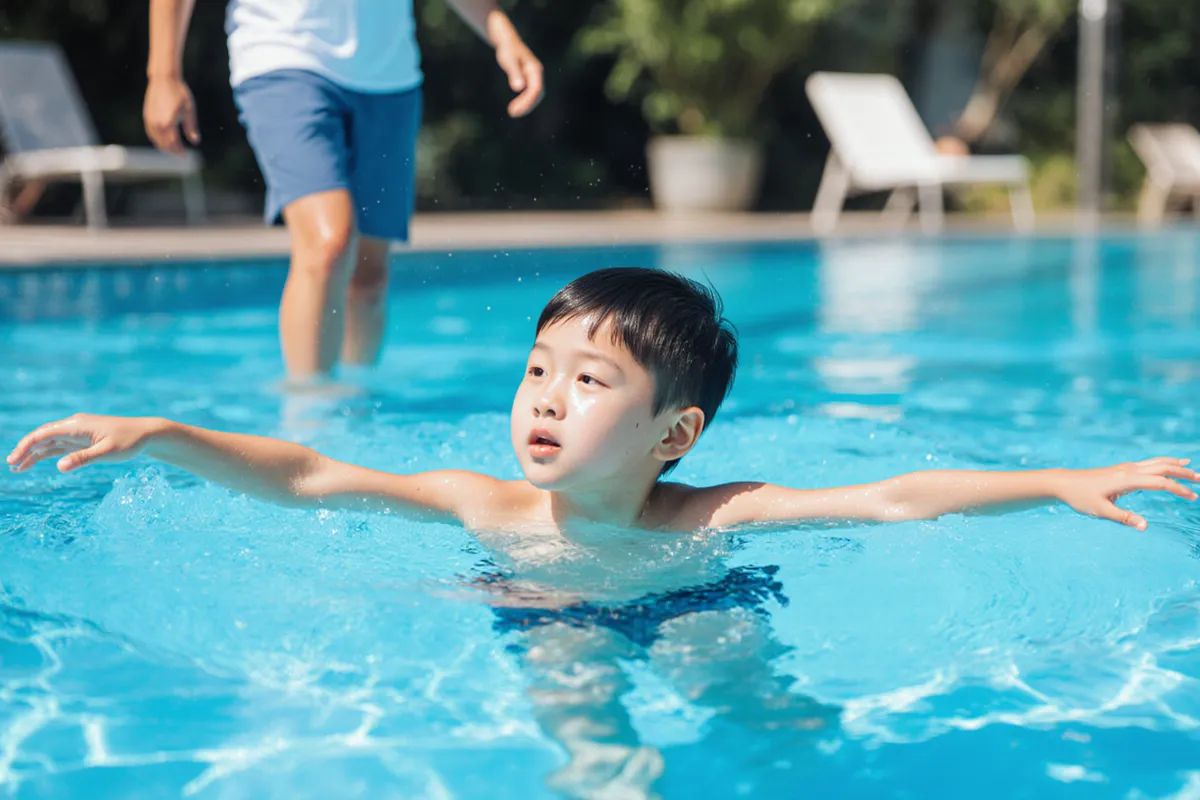
Everything starts with lying flat and long. Children practise pushing off the wall in a tight streamline, arms stretched, head neutral, belly button gently drawn in. It sounds dull, but a good streamline fixes sinking legs before the child ever kicks, and it gives the coach a clear baseline to measure against.
2. A Kick That Starts at the Hips
Small, quick kicks from the hips with relaxed ankles propel a child far better than big knee bends. Kickboard work is useful here, but only when the child keeps the face in the water and the body flat. Otherwise the board simply teaches a head-up, hips-down posture.
3. Arm Reach, Pull and Recovery
Once the body is stable, the arms get attention: a long reach forward, a pull that stays under the body, and a relaxed recovery with the elbow leading out of the water. This is where fine, precise coaching matters most, because small angle changes at the hand and elbow make a large difference to how far each stroke carries.
4. Rhythmic Breathing
Breathing is usually the last piece to click. The goal is a quick turn of the head to the side, with one goggle staying in the water, rather than lifting the chin forward. Children who learn to exhale steadily underwater breathe far more calmly than those who hold their breath and gasp.
5. Putting It Together
Only when each component is reliable do children link them into continuous lengths. This is also where the national framework helps. The SwimSafer stages give every child a clear map from basic water skills to longer, more confident swimming, and the technique work underneath keeps progress smooth rather than stop-start.
What “Calm and Chill” Has to Do With Technique
It is tempting to assume a precision-focused method means drill after drill and a stern coach with a whistle. The opposite is true of our poolside. A tense child tightens their shoulders, holds their breath and kicks stiffly — all of which wreck technique. A relaxed child floats higher, reaches longer and learns faster.
That is why Ace Dolphin’s coaches are known for patience and rapport. They correct one thing at a time, explain it in language a six-year-old understands, and move on when the child is ready, not when the calendar says so. Parents who tell us they saw “zero progress” at a previous school often find that the change is less about harder training and more about a calmer, clearer one. You can meet the instructors on our coaches page or read what other families say in our parent testimonials.
What Progress Looks Like Week to Week
Parents often ask how quickly technique changes. Honest answer: it depends on the child’s age, starting point and how often they swim. As a rough guide for a child attending weekly lessons across a 12-week cycle:
- Weeks 1–3: The coach assesses body position, kick and breathing, and picks one or two priorities. Expect small, specific feedback rather than big leaps.
- Weeks 4–8: The priority habits start to correct. You may notice a flatter body, a smoother kick, or less head lifting.
- Weeks 9–12: Skills are linked into longer swims and checked against the grading criteria for the next level.
These are typical patterns, not guarantees. Children who are anxious in the water may spend longer on the early stages, and that is perfectly fine. Our water-confidence programme exists for exactly that reason.
Group or Private: Which Suits Technique Work?
Group classes are excellent for peer motivation and steady progression through the SwimSafer stages. Private coaching suits children who need targeted attention on a stubborn habit, who are preparing for a specific assessment, or who simply learn better one-to-one. Neither is “better” in general. If you are weighing it up, our honest guide to private vs group lessons lays out the trade-offs, and the private lessons page explains how one-to-one coaching works here.
How to Support Technique Between Lessons
You do not need to be a swimmer to help. A few low-pressure habits go a long way:
- Ask what the focus is. “What is the one thing you are working on?” gives your child a clear goal and tells you what to look for.
- Praise the process. “I saw your long arms” beats “you were so fast”.
- Keep casual pool time fun. Condo-pool play is valuable water time. Skip the extra coaching from the side unless your child asks for it.
- Stay consistent. Weekly attendance matters more than occasional long sessions, especially for younger swimmers.
Motivation Matters Too
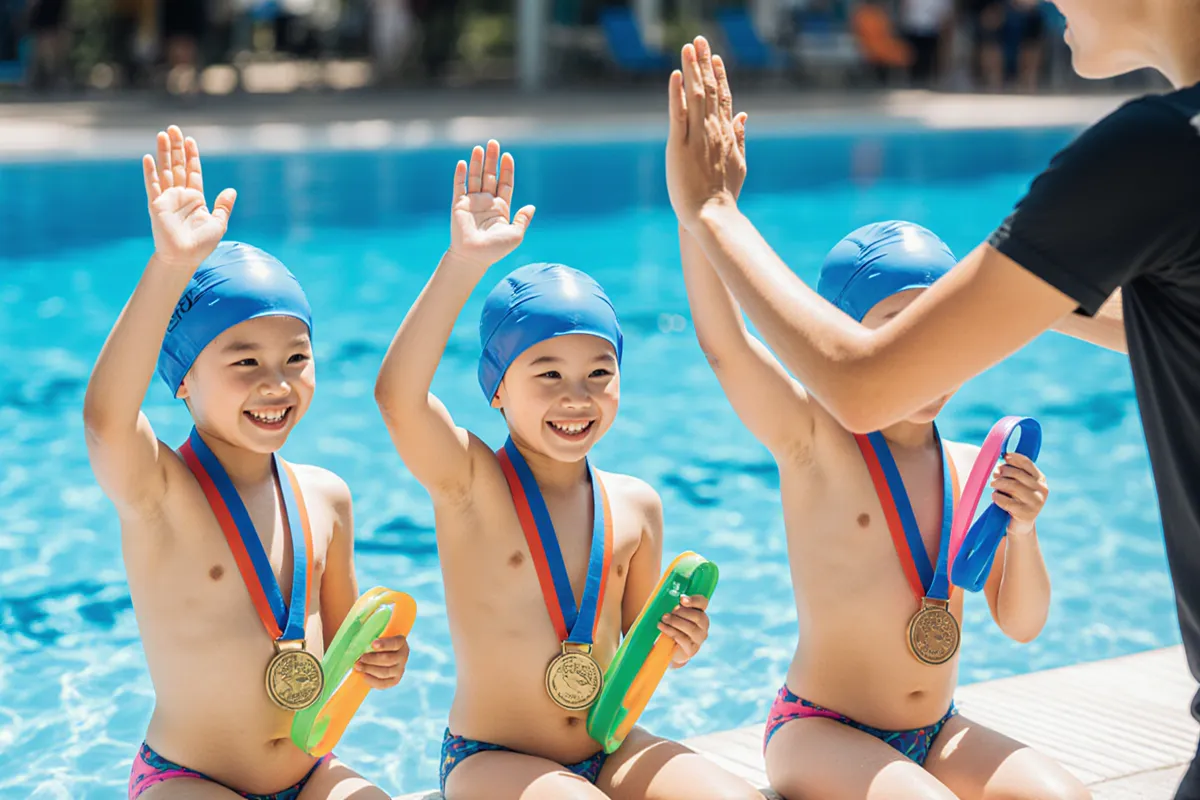
Technique work can feel abstract to a young child, so milestones help. Ace Dolphin is the only school in Singapore with its own swim bands and custom medals, awarded as children hit each stage. It turns “keep your hips up” into something a child can see and wear, and it gives families a natural moment to celebrate before the next goal begins.
Where to Try It
We teach at six ActiveSG locations: Tampines, Pasir Ris, Yio Chu Kang, Bishan, Punggol and Sengkang. Each location follows the same curriculum, so your child gets the same structure wherever they swim.
Conclusion
Good technique is what turns a child who can get across the pool into one who swims safely, comfortably and for life. The Tatsuki approach, combined with SwimSafer 2.0, gives that process structure: one skill at a time, measured clearly, taught calmly. After 15+ years and 8,000+ graduates, that is the formula we trust.
If you would like to see how it works for your child, explore our kids swimming lessons, email admin@acedolphin.com or call +65 9105 5244.