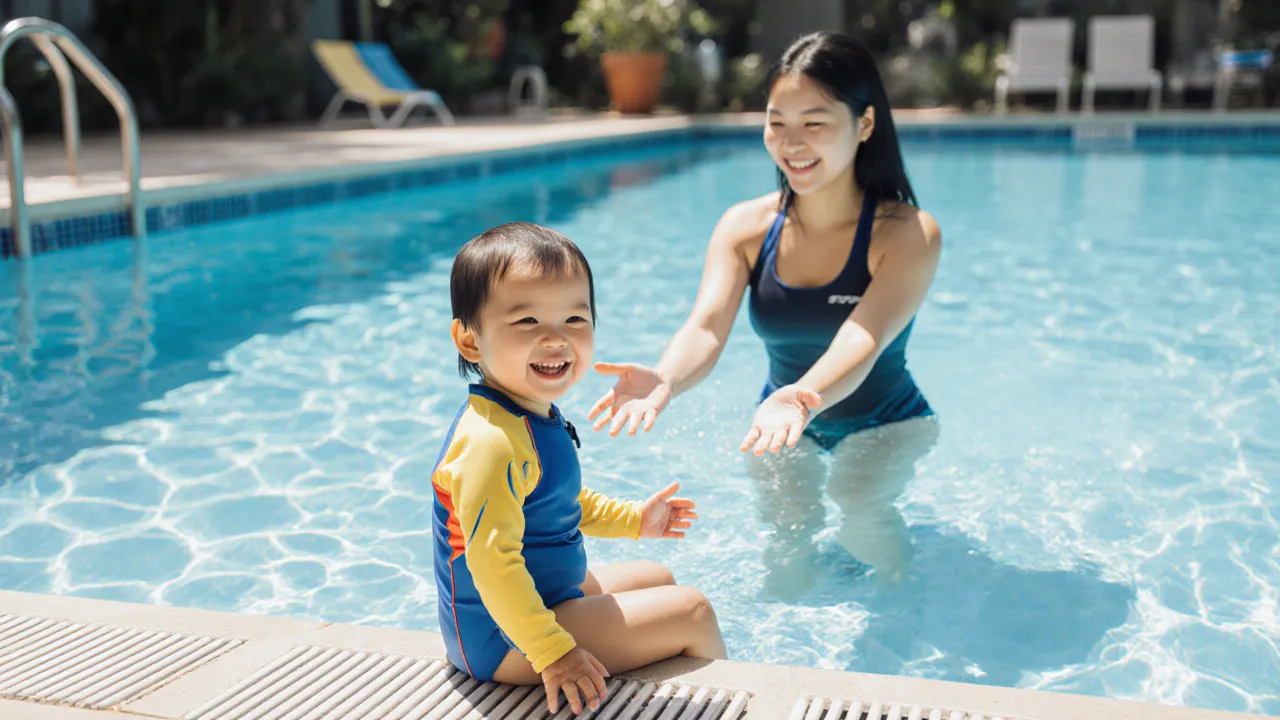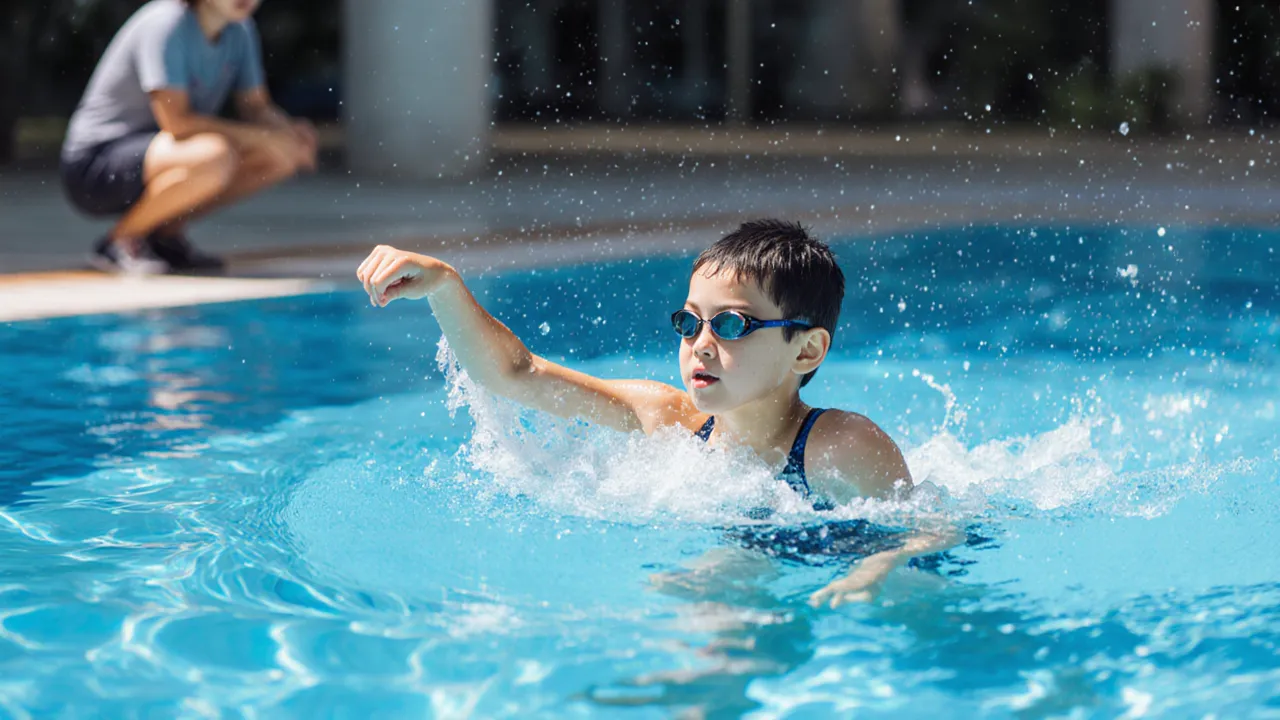
Your child paddles across the condo pool without help, comes up for air somehow, and gets to the other side. To most parents, that’s the finish line. Job done, tick the box, move on to the next milestone. But ask a swim coach to watch that same lap, and they’ll usually spot three or four habits quietly working against your child — habits that get harder to undo the longer they go unnoticed. This isn’t about perfectionism. It’s about understanding the real difference between a child who can swim and one who swims well, why that gap matters more as they get older, and what it actually takes to close it without turning swimming into a chore.
“Can Swim” and “Swims Well” Are Not the Same Thing
Plenty of Singapore kids learn to swim informally — a patient grandparent in Bali, a week of holiday lessons in Bintan, an older sibling’s tips at the condo pool, or a lot of independent trial and error. They come away able to get from one end of the pool to the other, and that’s a genuine achievement worth celebrating. But “getting there” and swimming with correct mechanics are different skills entirely.
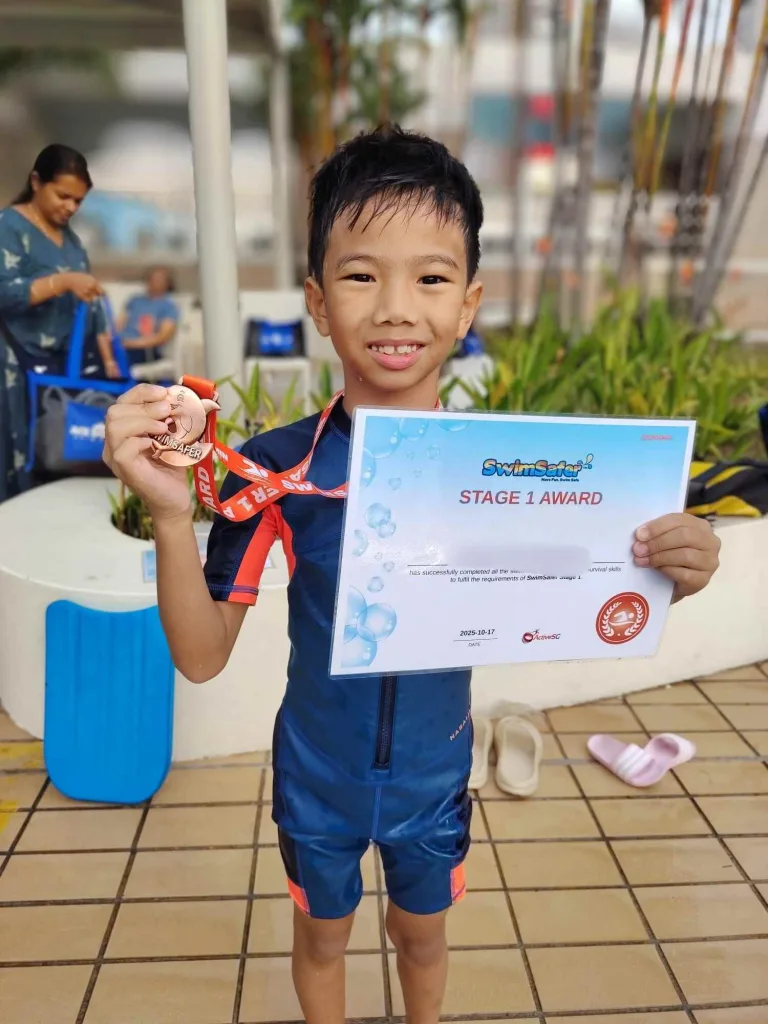
Singapore’s national framework, SwimSafer 2.0, is built around this exact distinction. It doesn’t just ask whether a child can cover a distance — it assesses whether they can do it with control, proper form, and water-safety awareness at each of its six stages. A child who “already knows how to swim” informally has often skipped the mechanics that SwimSafer, and any structured programme, actually measures. That’s not a criticism of the child — it’s simply what happens when swimming is picked up rather than taught.
Five Bad Habits That Quietly Sabotage Progress
Most self-taught or informally-taught swimmers carry at least one or two of these without realising it, and none of them are obvious from the pool deck unless you know what to look for:
- Lifting the head to breathe instead of rotating the body — this drags the hips and legs down, forcing the legs to work overtime just to keep the body afloat.
- Crossing the arm over the centreline on entry, which throws off balance and wastes energy with every stroke.
- Dropped elbow during the pull, where the forearm doesn’t catch enough water, so every stroke does less work than it should.
- Kicking from bent knees — the “bicycle kick” — which looks like effort but generates almost no propulsion.
- Holding the breath and panic-gasping at the surface instead of exhaling underwater in rhythm, which is exhausting and often the real reason a child tires out after 10 metres.
Individually, each of these seems minor. Together, they’re usually why a child who “can swim” still gets tired fast, avoids backstroke or freestyle, or seems to plateau no matter how many casual pool sessions they rack up.
Why “Just Let Them Swim More” Makes It Worse
Here’s the part that catches parents off guard: unstructured practice doesn’t fix these habits — it cements them. Every lap swum with a dropped elbow or a bent-knee kick is another repetition telling the body that’s the correct way to move. Muscle memory doesn’t distinguish between good form and bad form; it just remembers what’s repeated most often.
This is exactly why the Tatsuki Japanese methodology that Ace Dolphin combines with SwimSafer 2.0 puts so much weight on correcting mechanics from the very first lesson, rather than waiting until a child hits a wall. A coach trained in this approach will fix hand-entry angle, kick timing, and breathing rhythm in real time — because it’s genuinely easier to build the right pattern early than to dismantle a wrong one two years and hundreds of laps later. Children who arrive already swimming informally aren’t at an advantage here; if anything, they usually need more deliberate correction than a true beginner, precisely because they have more ingrained habits to unlearn.
How to Tell If Your Child Needs Correction, Not Just More Practice
A few signs are worth watching for, especially if your child has been swimming casually for a while without formal instruction:
They tire disproportionately fast over short distances, or avoid one stroke entirely (backstroke and freestyle are the usual culprits) without being able to say why. They plateau despite consistent time in the water — 25 metres today looks the same as 25 metres three months ago. Or, if they’re already in structured lessons, the coach keeps flagging the same correction week after week rather than moving on to new skills. That last one is a particularly reliable signal: it usually means the underlying mechanic hasn’t actually changed, just the child’s tolerance for hearing about it.
If you’re also wondering whether your child is on track to progress through the national stages, it’s worth reading our related guide on the signs your child is ready to move up a SwimSafer level — stagnation at a stage is often driven by exactly the habits described above, not a lack of effort or ability.
What Effective Correction Actually Looks Like
Fixing established habits takes a different approach than teaching a total beginner, and it’s worth knowing what good correction looks like so you can tell whether it’s actually happening.
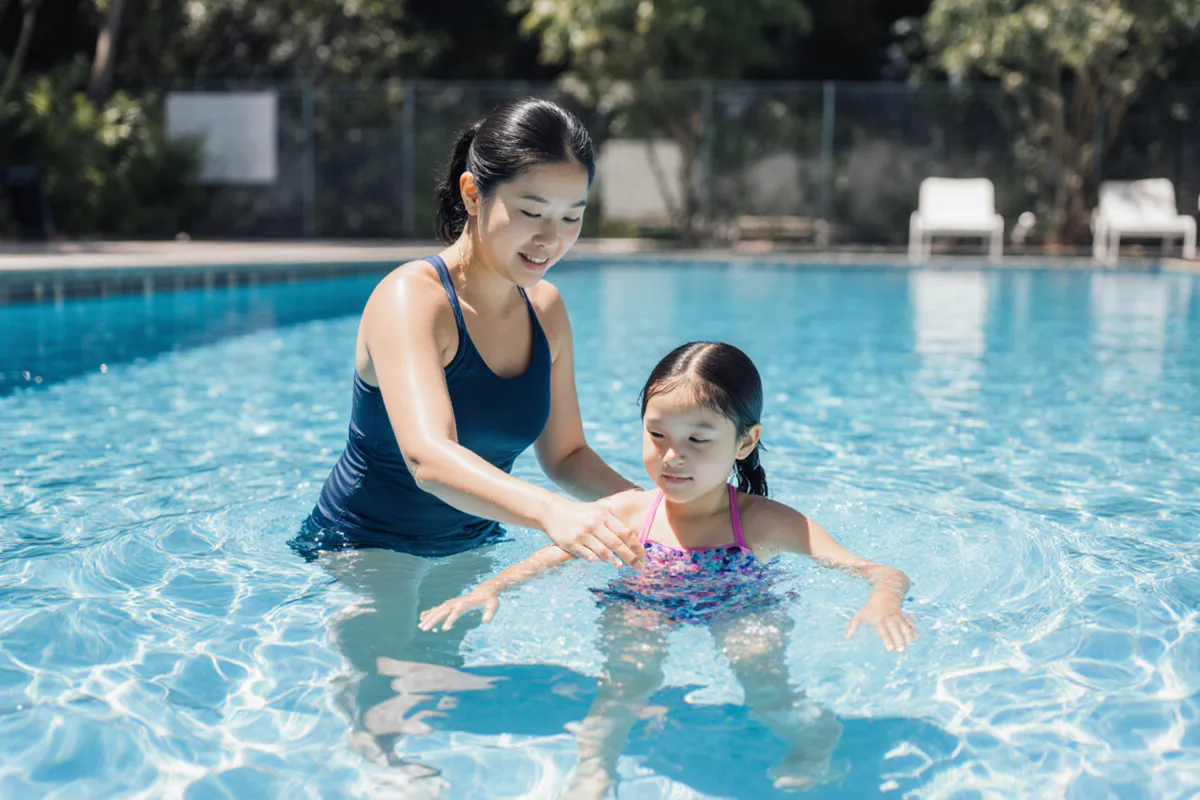
It starts with individualised feedback — a coach who can watch one child closely enough to catch a dropped elbow mid-stroke and correct it before it repeats fifty more times. This is genuinely difficult to do well in a large group class, which is why private coaching tends to work faster for kids with entrenched habits — there’s simply more attention per stroke.
It also has to be calm, not corrective in a way that makes a child self-conscious or anxious about a skill they were previously proud of. Ace Dolphin’s coaches — trained under NROC and Tatsuki Japan certification — are known for a “Calm & Chill” approach precisely because piling on criticism tends to backfire with children who already think they’ve mastered swimming. The goal is small, specific adjustments, celebrated as progress rather than framed as fixing something “wrong.”
Finally, good correction is trackable. You should be able to see concrete change — a longer continuous swim, a stroke your child previously avoided, a coach note that a specific habit is resolving — rather than a vague sense that lessons are “going fine.” Across 8,000+ graduates, this is the pattern that consistently separates children who eventually pass SwimSafer stages cleanly from those who stall out repeating the same stage.
Conclusion
There’s nothing wrong with a child learning to swim informally — it’s often how a love of the water starts. But recognising the difference between “can get across the pool” and “swims with correct, efficient technique” is what actually protects your child’s safety and keeps their progress moving, especially once SwimSafer assessments or longer-distance swimming come into play. Catching a habit early, before hundreds of repetitions have locked it in, is far easier than un-teaching it later. If you’ve noticed your child getting tired fast, avoiding a stroke, or stuck at the same level despite regular pool time, it’s worth having a coach take a proper look. Reach out to Ace Dolphin at admin@acedolphin.com or +65 9105 5244, or explore acedolphin.com to find out more.