Every Singapore parent has had the same experience: you type “swim school near me”, and forty tabs later every school looks identical. Same blue pool, same smiling toddler, same promise that your child will be swimming “in no time”. The brochures blur together, the WhatsApp groups give conflicting advice, and the real question — will my child actually learn here, and enjoy it? — stays unanswered.
The good news is that the differences between swim schools show up quickly if you know what to look for. This guide walks through the six things that genuinely separate a good swim school from an average one, based on what we’ve seen across 15+ years and 8,000+ graduates at Ace Dolphin. Use it as a checklist when you visit, call, or sit in on a trial lesson.
1. Check the coaches’ credentials first, then their temperament
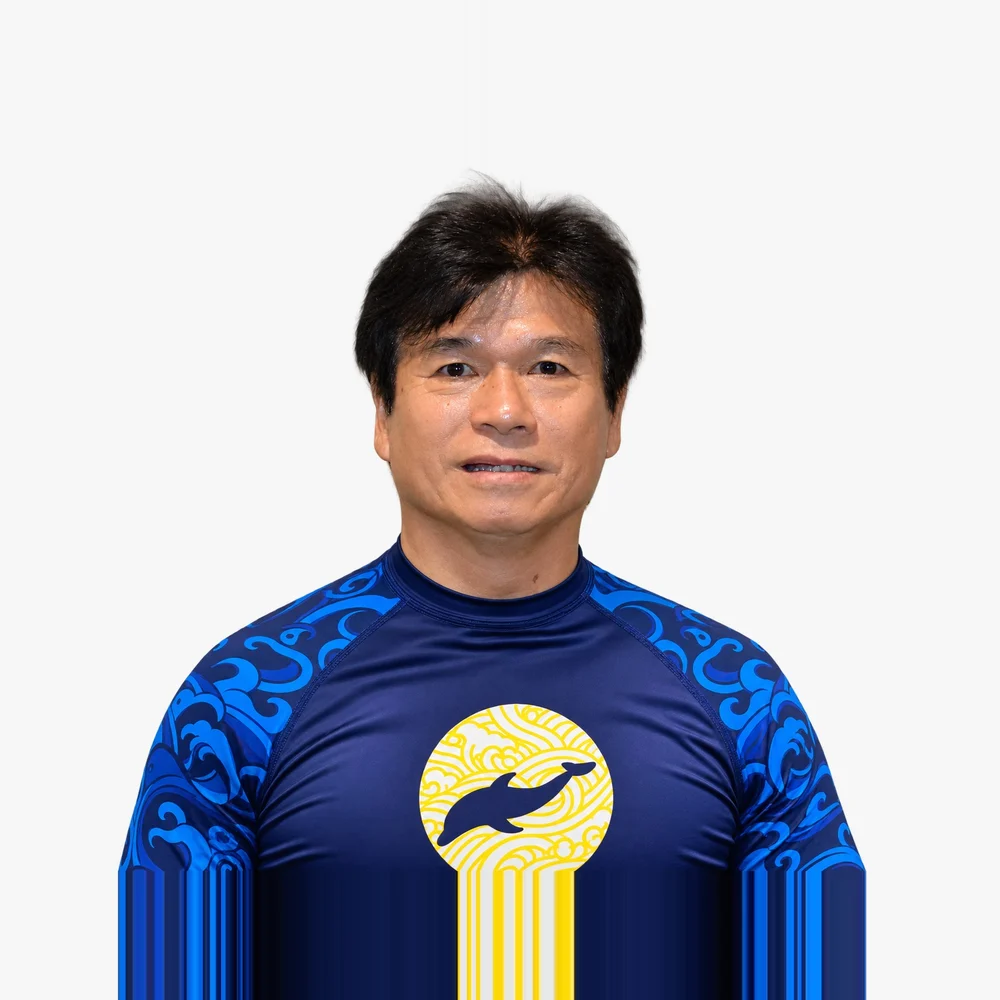
Credentials are the baseline. In Singapore, look for coaches registered with the National Registry of Coaches (NROC) and trained to deliver the national SwimSafer 2.0 programme. If a school can’t tell you who is teaching your child or what they are certified in, treat that as a red flag. At Ace Dolphin, every coach is NROC-registered, and our methodology is additionally certified by Tatsuki Japan (TJAP). You can see who they are on our coaches page.
But a certificate doesn’t tell you whether a coach is good with a nervous five-year-old. That comes down to temperament, and it matters more than most parents expect. A child who is rushed, shouted at, or pushed to submerge before they’re ready will often dig in harder. The coaches who get results with anxious children are the patient ones, who read a child’s mood and adjust on the spot.
How to test this in a trial lesson
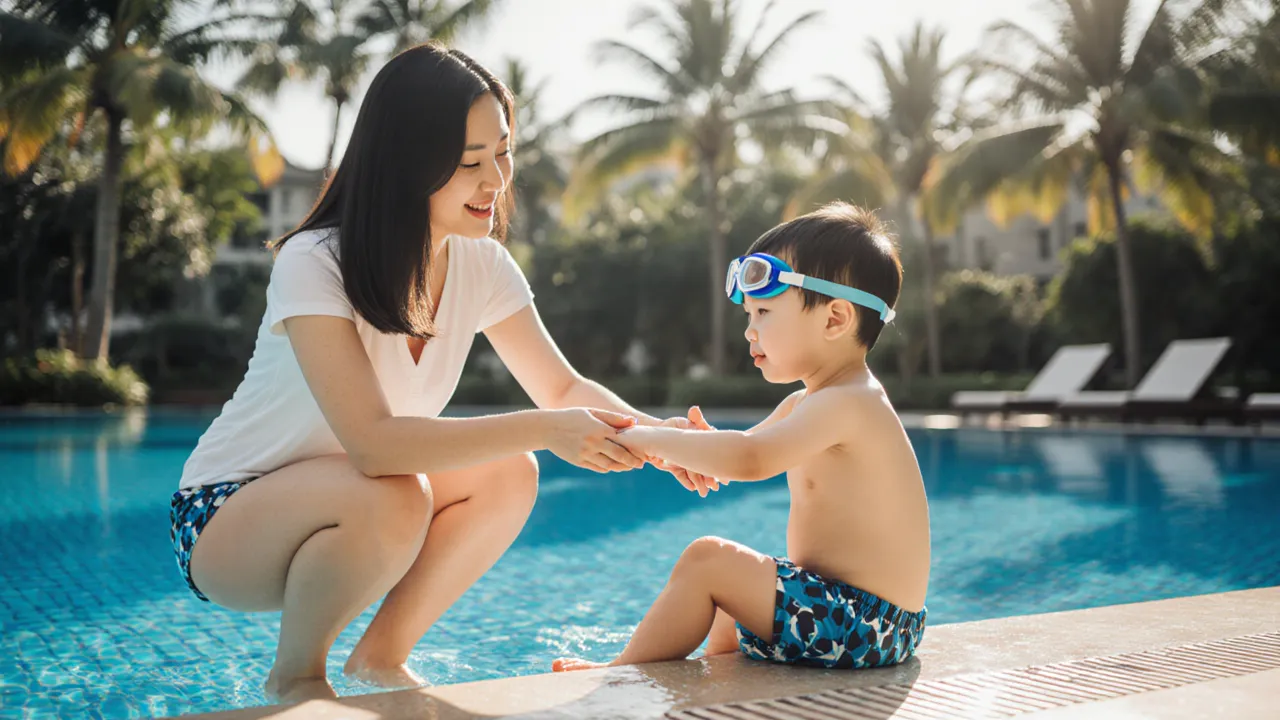
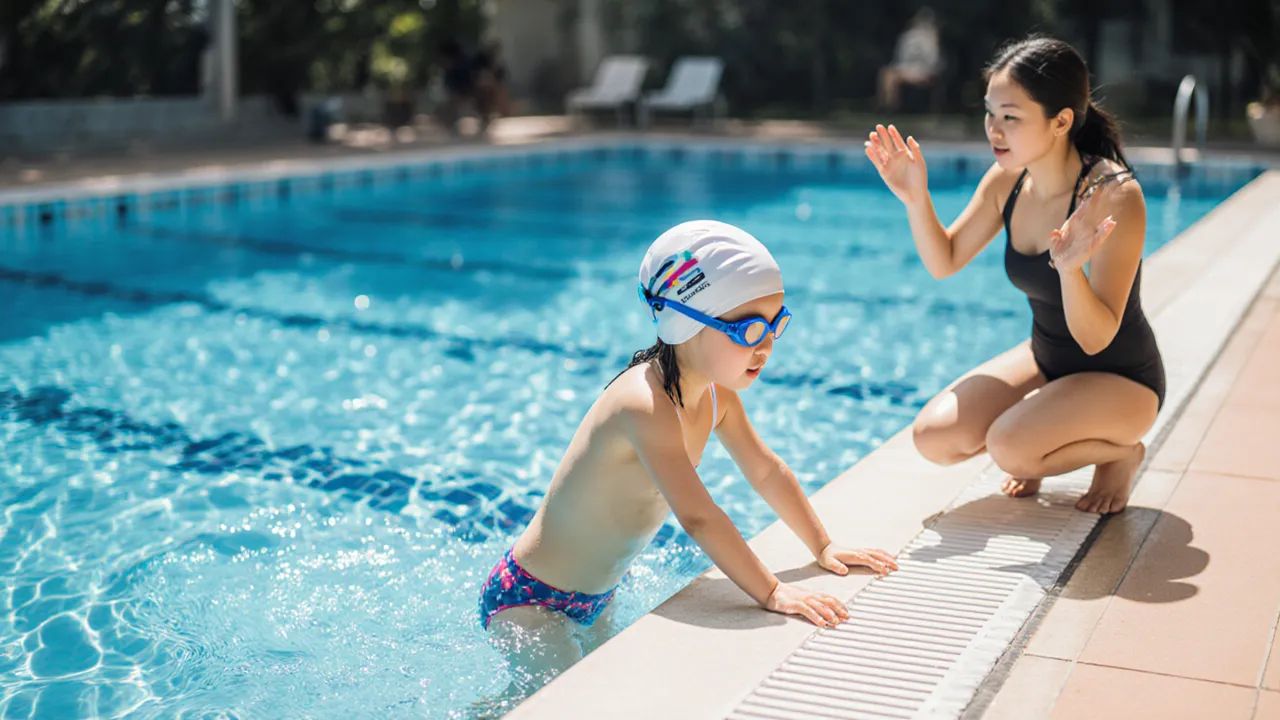
Watch how the coach reacts when a child hesitates at the pool edge. Do they wait, crouch down to the child’s level and offer a choice? Or do they hurry the child along to keep the class on schedule? Also notice the children who are not your child: are they relaxed, laughing, and willing to try? Calm kids are the best evidence of calm coaching.
2. Ask what the curriculum actually is
“We teach all four strokes” isn’t a curriculum. A good school can show you a clear, staged progression and tell you exactly where your child sits on it. In Singapore the national reference point is the SwimSafer 2.0 framework, which runs from Stage 1 to Stage 6 and covers both water-safety skills and swimming technique. It’s recognised by schools, and passing the stages gives your child a real, portable credential.
The question to ask is how the school builds on top of that framework. Ace Dolphin combines SwimSafer 2.0 with the Tatsuki Japanese methodology, delivered in 12-week progressive grading cycles. The practical effect for parents is clarity: every 12 weeks, you know what your child has mastered and what’s next, rather than wondering whether the last month of lessons moved anything forward. If you’re planning on a formal assessment, our guide to booking a SwimSafer test through CAMS explains the process.
3. Look at class size, format and ratio
Class size is the single biggest driver of how much individual attention your child gets. A coach with a large group simply cannot correct each child’s kick, breathing or arm entry — they can only run the group through drills. Ask for the typical coach-to-child ratio at your child’s level, and ask whether it changes as classes fill up during peak periods such as the year-end holidays.
Also think about format. Group lessons are excellent for confidence, peer motivation and cost, and most children do very well in them. Private lessons make sense for children who are very anxious, who have stalled, or who need to hit a deadline. If you’re weighing the two, we wrote an honest guide to private vs group lessons that covers when each one makes sense.
4. Find out how the school handles a child who is scared of water
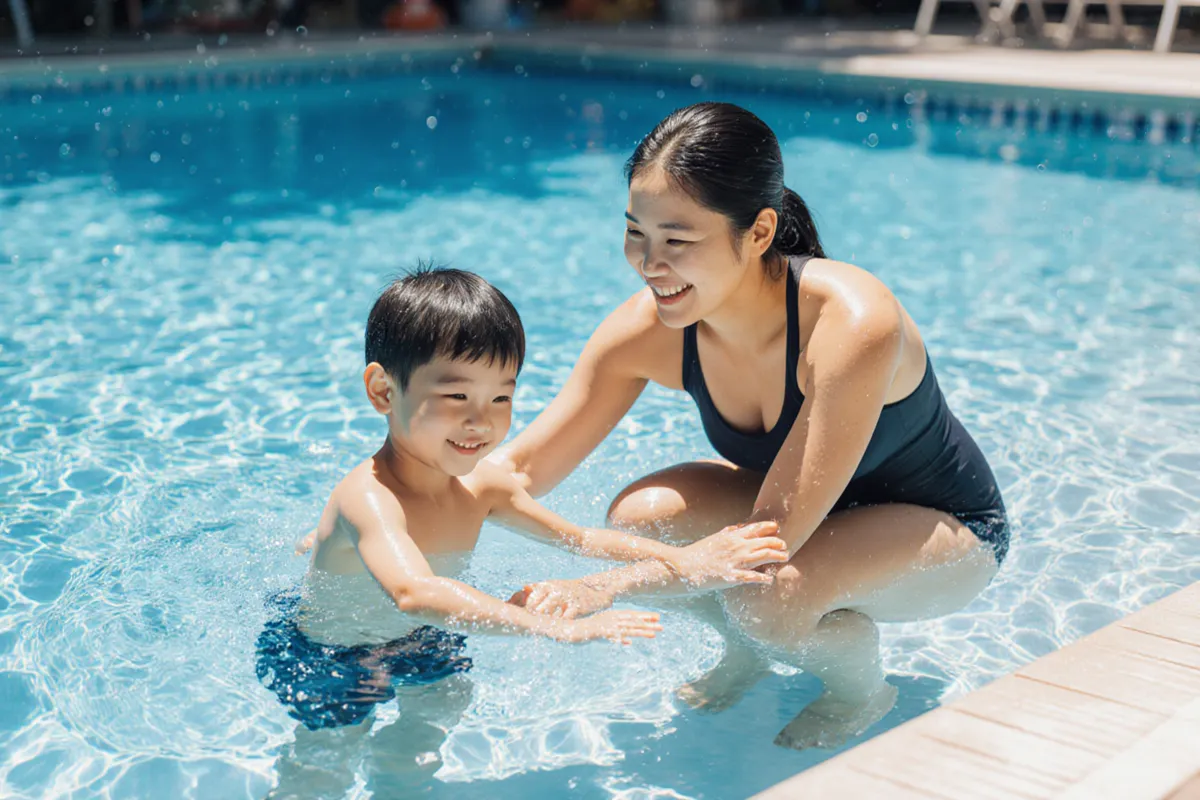
Almost every child is a little wary of the water at first, and some are genuinely frightened. This is where schools differ the most, and it’s worth asking directly: what happens when a child won’t put their face in?
A good answer sounds like a plan: small, repeatable steps, no forced submersion, and a coach who celebrates tiny wins. A poor answer sounds like “they’ll get used to it” or “we just keep going”. Water confidence is built on trust, and once a child associates the pool with being forced, it can take months to undo.
This is the area we’re proudest of at Ace Dolphin. We’ve worked with many children who refused to submerge at other schools, and our “Calm & Chill” approach — no forced progression, no pressure, plenty of rapport-building — has taken many of them to independent, float-free swimming within weeks. If your child is on the anxious end, ask any school you’re considering for specific examples of children they’ve helped, and read the parent testimonials for the kind of detail that’s hard to fake.
5. Judge the school on progress you can see
Parents often tell us they switched schools because their child had “zero progress” after several months. That’s usually not a talent problem; it’s a tracking problem. If no one is measuring skills against a clear standard, progress becomes a matter of impression.
Look for schools that give you concrete milestones and a way to see them. Ace Dolphin uses Japanese-style precision tracking for stroke development, plus a proprietary system of swim bands and custom medals that mark each milestone. It sounds simple, but children respond to it. A band they can wear, a medal they can hold, and a clear sense of “what’s next” turns swimming from a chore into a game they want to win.
Questions that reveal how a school tracks progress
Ask how often you’ll get feedback, what skills are assessed at each level, and what happens if your child isn’t ready to move up. A school confident in its teaching will be happy to answer in detail.
6. Be realistic about logistics: location, schedule and make-ups
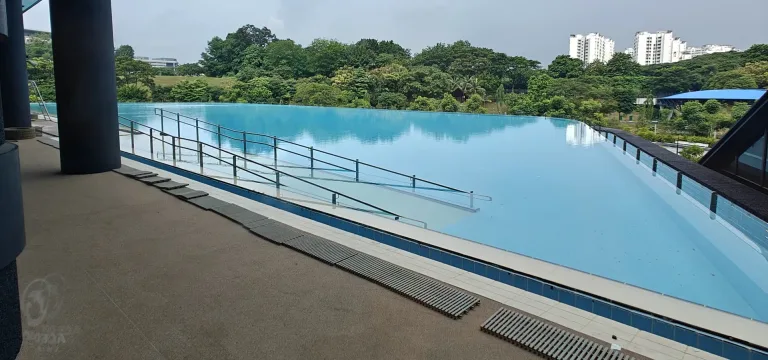
The best programme in the world won’t help if the commute makes you dread every lesson. Consistency is what builds swimming skill, so choose a school whose location and timing you can sustain for months, not weeks. Ace Dolphin teaches at six ActiveSG venues — Our Tampines Hub, Pasir Ris, Yio Chu Kang, Bishan, Punggol and Sengkang — so most families can find a pool close to home or school.
Then ask about missed lessons. Children get sick, school activities clash, and Singapore’s afternoon thunderstorms occasionally close pools mid-lesson. A school with a clear make-up policy removes a lot of stress. Ours is straightforward, and you can request a make-up lesson online; long-term programmes also include unlimited make-ups, which suits families with unpredictable schedules.
Finally, ask about pricing transparently. Compare what’s included — pool entry, assessment fees, medals, make-ups — rather than only the headline rate per lesson. A cheaper lesson that doesn’t include make-ups or has a large class can end up costing more per skill learned.
Red flags to watch for
When you’re visiting or trialling schools, a few warning signs are worth taking seriously:
- Vague answers about coach qualifications. A good school names its credentials and is proud of them.
- Pressure to sign up on the spot. A confident school lets you try a lesson and decide in your own time.
- Children who look stressed or unhappy. You can learn more from five minutes at the poolside than from any brochure.
- No clear progression. If no one can tell you what level your child will be at in three months, you probably won’t see progress.
- Forced submersion for hesitant kids. It might produce a quick dunk, but it often creates a long-term fear.
A simple way to decide
If you shortlist two or three schools, book a trial or observe a lesson at each, and bring the same short list of questions: who is teaching, what’s the ratio, how do you handle a nervous child, and how will I know my child is progressing? Pay attention to your child’s reaction on the drive home. A child who talks about the lesson, asks when they can go back, and wants to show you what they learned has told you everything you need to know.
It’s also worth thinking beyond the first few weeks. Swimming is a skill that compounds: the children who learn early, stay consistent and enjoy the process usually become the confident swimmers who can join school swim events, handle open water safely, and keep swimming for fun well into their teens. A school that keeps your child happy and progressing for the long run is worth more than one that offers the cheapest first month.
Conclusion
Choosing a swim school comes down to a handful of things you can check yourself: credentialed coaches with the right temperament, a clear curriculum, sensible class sizes, a plan for anxious children, visible progress, and logistics that fit your life. Ace Dolphin was built around these principles — NROC-registered coaches, SwimSafer 2.0 combined with Tatsuki methodology, and a calm approach that works even for children who’ve struggled elsewhere.
If you’d like to see how we teach, reach out at admin@acedolphin.com or WhatsApp +65 9105 5244, or browse our kids swimming lessons to find the right class for your child.