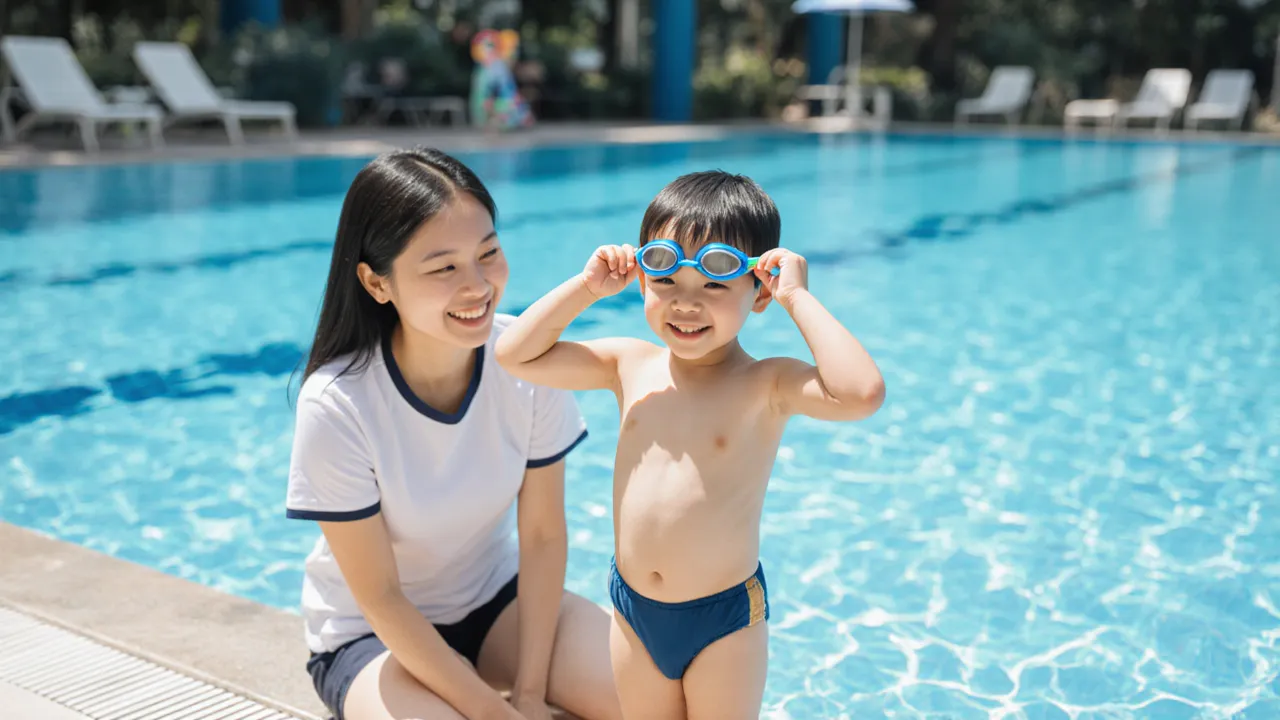
It is the first Monday back after the year-end holidays. Your child has spent three weeks at the beach, at grandma’s, or in front of a screen, and now you are standing at the pool gate at Tampines or Bishan wondering the same thing every Singapore parent wonders: will she still remember how to swim?
The short answer is that she will remember more than you fear and less than you hope. Children rarely lose a skill entirely after a few weeks off, but the finer details of technique, breath control and confidence do fade. This guide explains what actually slips, why some children bounce back in one lesson while others need a month, and how to restart so the break does not turn into quitting.
Do kids really forget how to swim after a break?
Swimming is a motor skill, and motor skills behave differently depending on how deeply they are learned. A child who has just learned to float independently is a bit like a toddler who has just learned to walk: the pattern exists, but it is fragile. A child who has swum a clean freestyle for a year has a much more durable pattern, much like riding a bicycle.
Swimming is also less forgiving than cycling because water is an unfamiliar environment every single time. Even a child who “knows” the stroke has to re-trust the water, and trust is the first thing to wobble after time away. Swim educators overseas consistently report the same pattern: UNSW researchers have warned that skills fade without practice and that a pause can quietly become a permanent stop, particularly as children approach seven or eight.
So the honest answer is: yes, there is usually some regression, but it is rarely a return to zero. What matters is how long the gap was, how old the child is, and how solid the skill was before the break.
What fades first (and what stays)
In our experience across 15+ years and more than 8,000 graduates, regression follows a fairly predictable order. Knowing it helps you judge what you are seeing at the first lesson back.
Usually fades first
Breath control and rhythmic breathing go first. A child who was happily blowing bubbles and turning her head to breathe may suddenly hold her breath and lift her chin. Kicking stamina is next, because leg muscles tire quickly when they have not been used, and stroke timing, the coordination between arms, legs and breathing, tends to come apart a little.
Usually stays
Water safety instincts, basic floating, and the feel of a good streamline are far more durable. A child who understands that she should roll onto her back and float when tired will almost always keep that. This is also why the foundational stages of the SwimSafer 2.0 programme matter so much: they build the survival skills that survive a long holiday.
The hidden casualty: confidence
For anxious children, confidence is the real thing at risk. A child who needed months to put her face in the water can feel that progress slip away after three weeks off. If your child was previously nervous, expect the first one or two lessons back to feel like a step backwards. It is not. It is a warm-up for the nervous system.
Why some children bounce back faster than others
If your neighbour’s son was fine after a six-week break and your daughter was not, there is nothing wrong with either child. Four things drive the difference.
How long the gap was. One or two weeks is barely noticeable. Four to six weeks, the length of the long Singapore school holidays, is where most parents see a dip. Three months or more usually means rebuilding some skills from the previous stage.
How secure the skill was. A skill that was only just passed, for example a child who scraped through a SwimSafer stage the week before the holidays, is the most likely to wobble. A skill practised over several 12-week cycles is much sturdier.
Age. Younger children, roughly three to five, lose water comfort faster but regain it quickly with a patient coach. Children of seven and above often retain technique better but can be more self-conscious about “being worse than before”.
What happened during the break. A child who spent holiday afternoons in the condo pool or at the beach keeps far more than one who did not touch water. Even casual splashing counts. A word of caution though: casual play keeps comfort alive, but it does not correct technique, and unsupervised play is not a substitute for supervised practice. Always stay within arm’s reach of young children in condo pools.
How to restart lessons without a meltdown
The first lesson back is not a test. The worst thing a parent can do is arrive at the pool announcing, “Show Coach how well you can swim!” That turns a warm-up into a performance and makes a child who feels rusty feel judged.
Before the lesson
Tell your child the day before that the first lesson is for remembering, not for being perfect. Pack goggles, a towel and a snack as usual, and arrive a few minutes early so she can sit at the poolside and watch the water before getting in. Our first lesson guide shows where to meet at each pool.
During the lesson
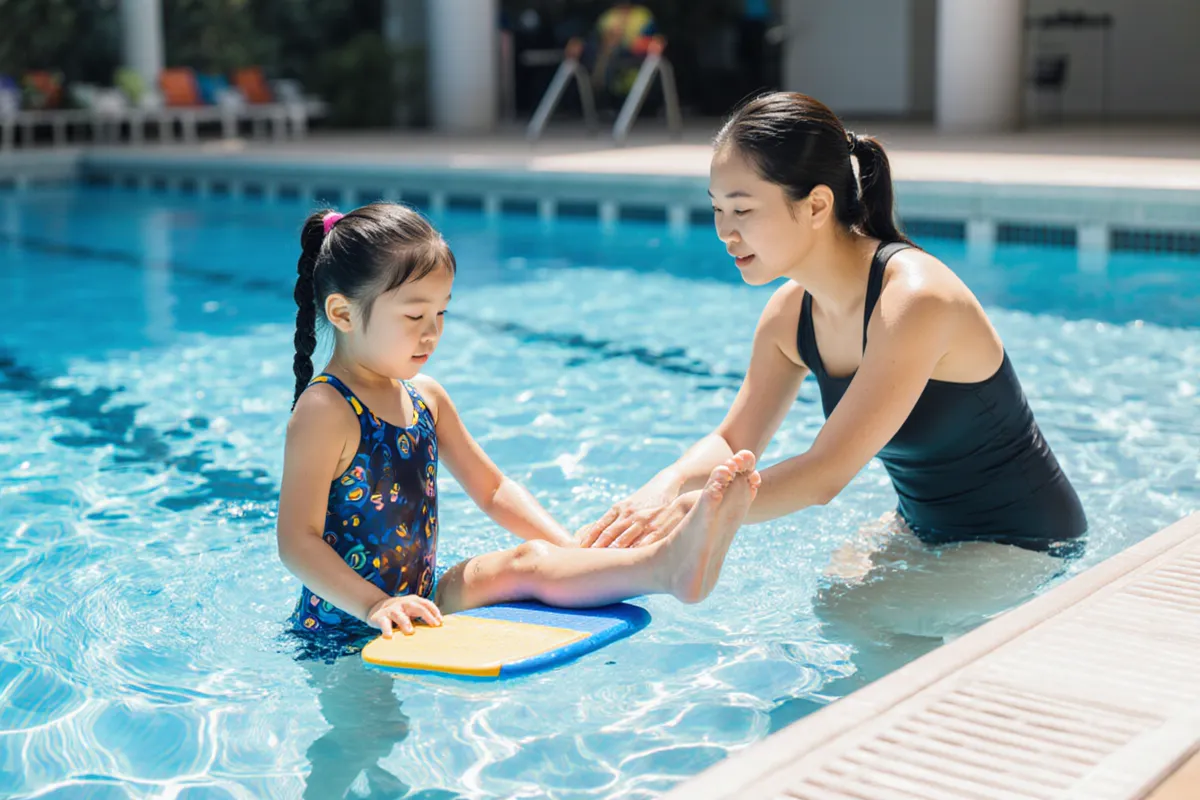
A good coach will drop the lesson back a notch. At Ace Dolphin our “Calm & Chill” approach means coaches deliberately start with skills the child already owns, such as floating, bubbles and glides, so the first ten minutes are guaranteed successes. Progress then resumes at the child’s pace. We never force a child to jump straight back to where she was, because pushing a nervous child too fast is the quickest way to create a new fear. If you are unsure how to choose a coach with this temperament, look at our coaches’ profiles.
After the lesson
Resist the urge to review mistakes in the car. Comment on effort (“I saw you put your face in straight away”) rather than outcome. Most children are back to their pre-break level within two to four lessons if the restart is gentle.
How to protect progress during the holidays
You do not need to book a full programme for every holiday week. You do need a plan, because “we’ll see” is how three weeks become three months.
- Keep one weekly water touchpoint. Even a single supervised 30-minute session in an ActiveSG pool or condo pool keeps the body’s memory of the water alive.
- Use a holiday block for children close to a stage jump. If your child is a lesson or two away from moving up, a short intensive series can finish the job. Our private lessons are designed for exactly this kind of targeted push.
- Pick flexibility if travel is likely. Long-term programmes with unlimited make-up lessons mean a family trip to Japan or Perth does not cost you lessons. You can request one on our make-up lessons page.
- Practise bubbles in the bath. It sounds trivial, but humming underwater or blowing bubbles at home preserves the breathing pattern that fades first.
If your child is anxious, protecting the routine matters more than protecting the stroke. A weekly pool visit with a familiar coach is worth far more than a perfect technique drill she dreads.
When a dip is normal, and when to talk to your coach
A wobble that lasts one to four lessons is normal. It is worth a conversation with your coach if your child is still struggling after a month, if she has newly started refusing to enter the water, or if she cries at the pool gate when she never used to. Those signs usually point to a confidence issue rather than a technique issue, and they respond well to a slower, more individual approach. Our guide to private versus group lessons explains when one-to-one coaching is the better fit for a restart.
Also be honest about the pattern. If every holiday ends with a month of rebuilding, the problem is not the child, it is the gap. Either shorten it with a small holiday block or accept that the first month of each term is a rebuilding phase and plan your expectations around it.
Is it worth pausing lessons at all?
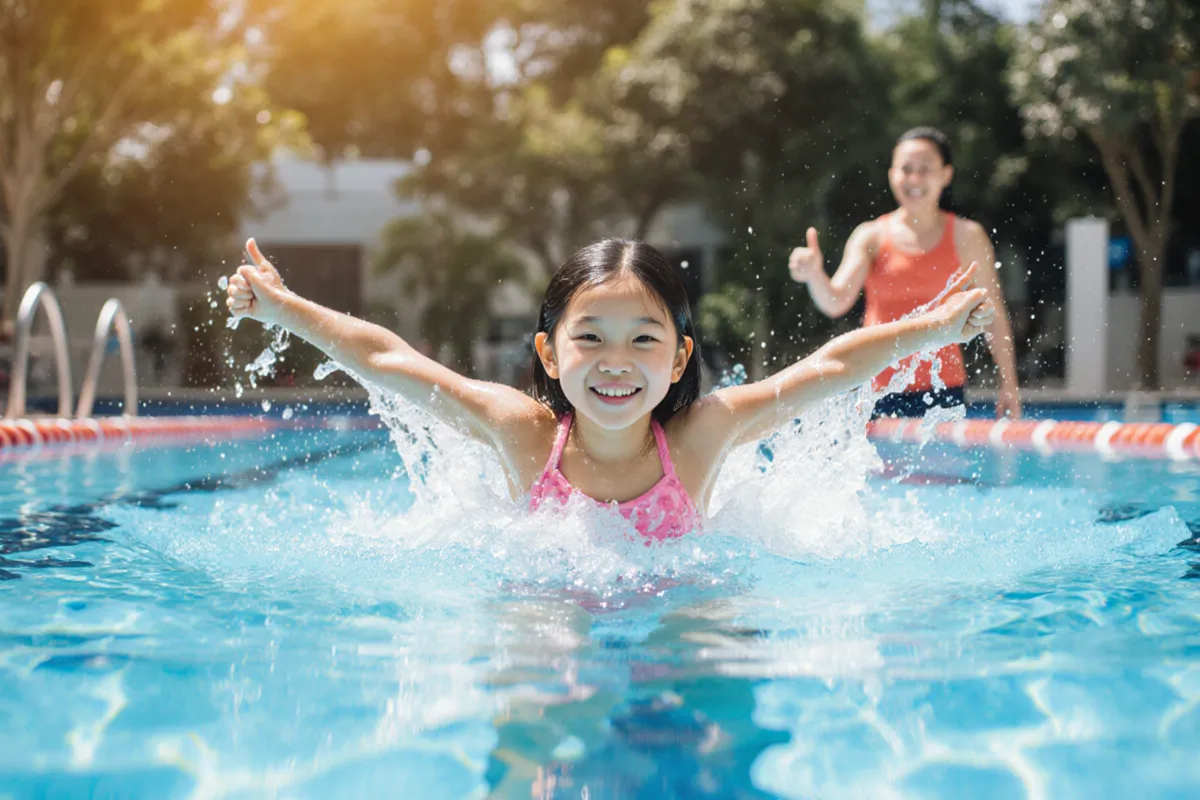
Sometimes a pause is the right call: illness, exams, a family emergency, or a child who is genuinely burnt out. Pausing is not failure. But for a child who is still building the basics, continuity beats intensity. A steady weekly lesson through the year gives better results than bursts of lessons separated by long gaps, because each gap forces some re-learning.
The practical cost of pausing is also real. Popular timeslots at ActiveSG pools fill up, and a child who drops out in November may find her preferred weekend slot gone in January. If you are only pausing for travel, ask about make-up options instead of cancelling outright.
Bringing it all together
Your child will not forget how to swim over the holidays, but she may forget how comfortable she was. The best response is a gentle restart, a coach who begins with what she already knows, and a realistic expectation that a few lessons are needed to get back to where she left off. Keep one small water habit going during the break, and the dip shrinks dramatically.
At Ace Dolphin, our coaches have guided thousands of children through exactly this transition at our six ActiveSG locations: Tampines, Pasir Ris, Yio Chu Kang, Bishan, Punggol and Sengkang. If your child is returning from a break and you would like a coach to assess where she is, you can read our kids swimming lessons overview, email admin@acedolphin.com or call +65 9105 5244.