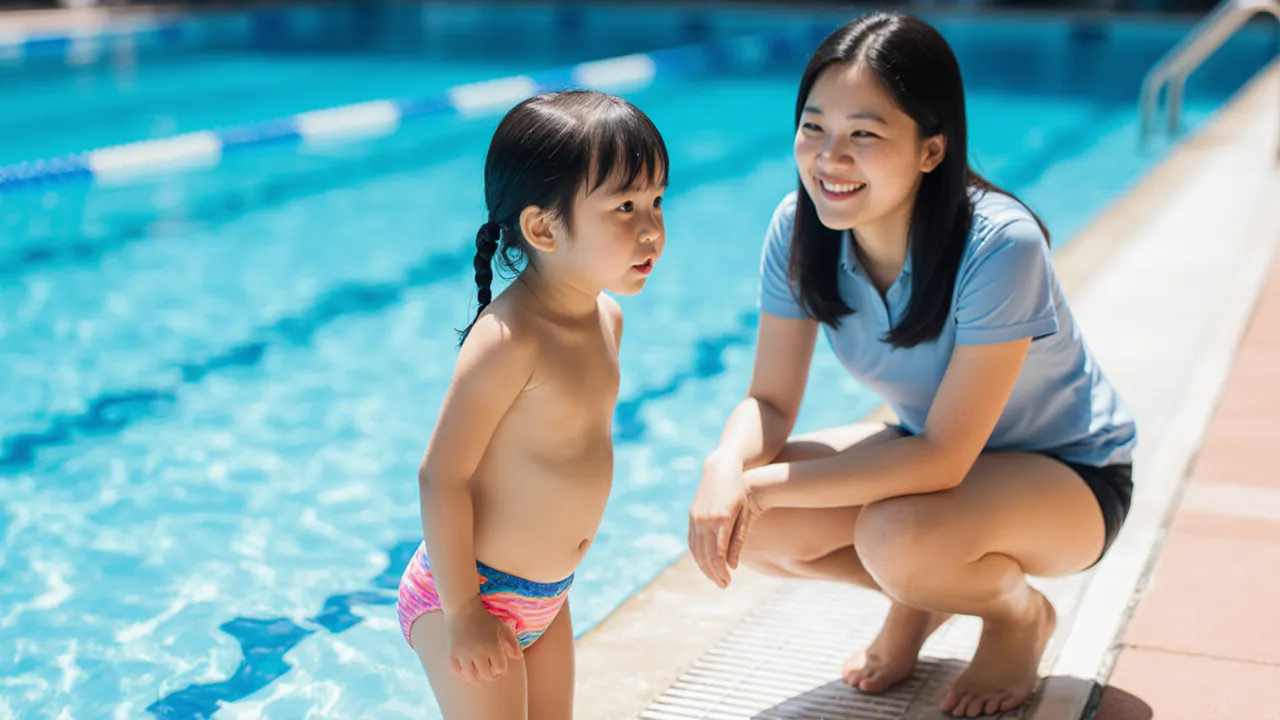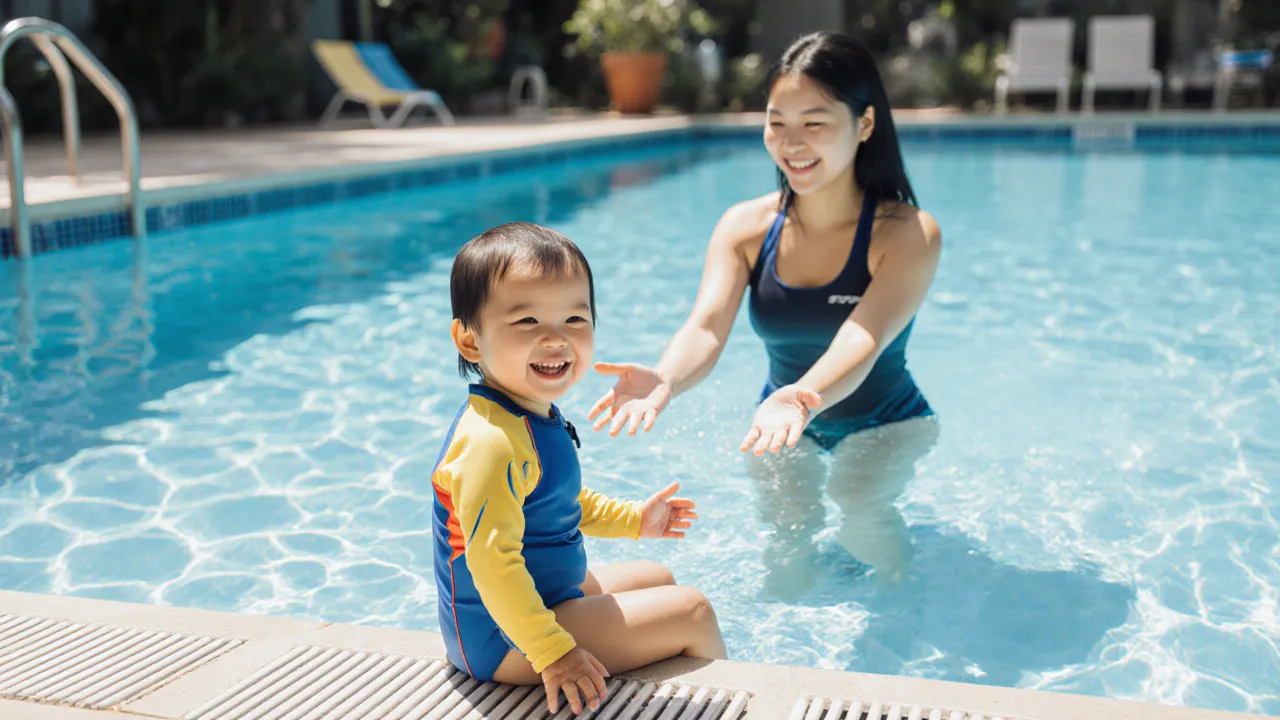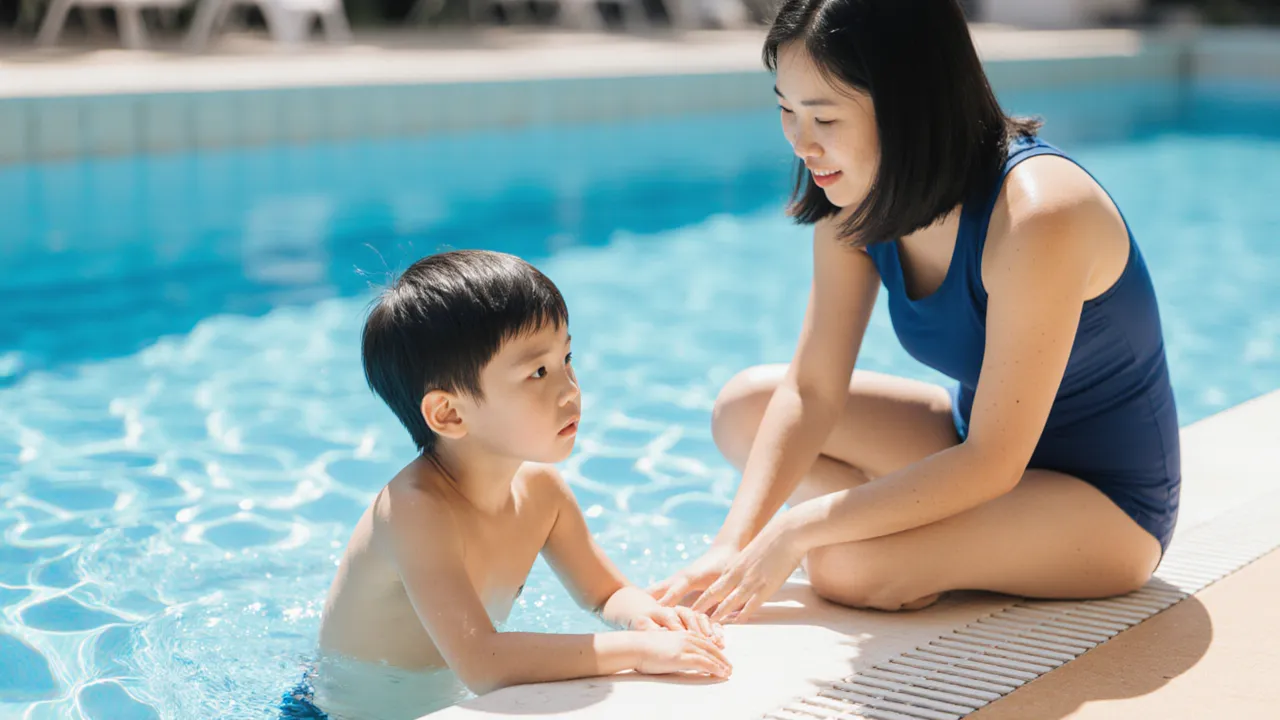
The first time Mrs Lim brought her son to a public pool in Punggol, he lasted four minutes. The echo of shouting off the water, the whistle blasts, thirty unfamiliar bodies moving at the edge of his vision — it was too much, and he was tugging at her hand to leave before his feet had even touched the water. She isn’t alone. Many Singapore parents of autistic or ADHD children want their kids to learn to swim — for safety, for fun, for the sheer physical joy of it — but the standard group-class environment can be the wrong starting point entirely. This guide covers what actually makes a swimming lesson work for a neurodivergent child, what to ask a swim school before you sign up, and how to set your child up for a good first few weeks in the water.
Why Swimming Is Worth the Effort for Neurodivergent Kids
Water does something most land-based activities can’t: it applies gentle, even pressure across the entire body. For children who seek deep pressure input — a common trait among autistic and sensory-sensitive kids — this can be genuinely calming rather than overwhelming, once the initial adjustment period is over. The resistance of water also demands sustained, rhythmic, bilateral movement (using both sides of the body together), which occupational therapists often point to as useful for building coordination and body awareness in kids who struggle with proprioception.
For children with ADHD, swimming offers something rarer still: an activity that’s physically demanding enough to be genuinely tiring, structured enough to have a clear beginning and end, and repetitive enough that the same movement pattern is practised over and over until it becomes automatic. Parents often report better sleep and an easier evening on the days their child has had a swim lesson — not a guaranteed outcome, but a common enough pattern that it’s worth trying.
None of this means swimming is a treatment for autism or ADHD, and any school that frames it that way should raise a flag. What it does mean is that swimming can be a genuinely good fit for a child who finds many other structured activities difficult — provided the lesson itself is built around how that child actually processes the world, not around a standard 6-kids-in-a-lane group format.
Singapore’s autism prevalence is estimated at roughly one in 100 children, based on recent National University Health System data — which means most swim schools in Singapore are, whether they realise it or not, already teaching neurodivergent children in their group classes. The difference is whether the school has actually adapted its approach for them.
What “Sensory-Friendly” Actually Means in a Swimming Lesson
The term gets used loosely, so it’s worth being specific about what it should mean in practice.
A quieter pool window matters more than most parents expect. ActiveSG pools are busiest after school hours and on weekend mornings — a lesson slot during a quieter period cuts down on ambient noise, splashing from unrelated lanes, and the general visual chaos of a crowded pool deck.
A predictable, repeated routine matters just as much as the noise level. A child who knows exactly what happens first (say, sitting on the pool step), second (blowing bubbles at the wall), and third (kicking with a float) can regulate far better than one facing a lesson plan that changes every week. Good coaches build a consistent opening and closing ritual into every session, even as skills progress.
- No forced submersion, ever — pushing a child’s face into the water before they’re ready doesn’t build resilience, it builds a fear response that can take months to undo. A sensory-friendly lesson lets the child choose the pace of exposure, session by session.
- Advance warning before transitions — “in two minutes we’re going to try floating on your back” gives a child time to prepare mentally, rather than being surprised by a sudden change in activity.
- A consistent instructor — swapping coaches week to week means a child has to rebuild trust and read a new person’s cues every single lesson, exhausting for any child, and especially disruptive for one who relies on routine and familiar faces to feel safe.
What to Look For in a Swim School or Coach
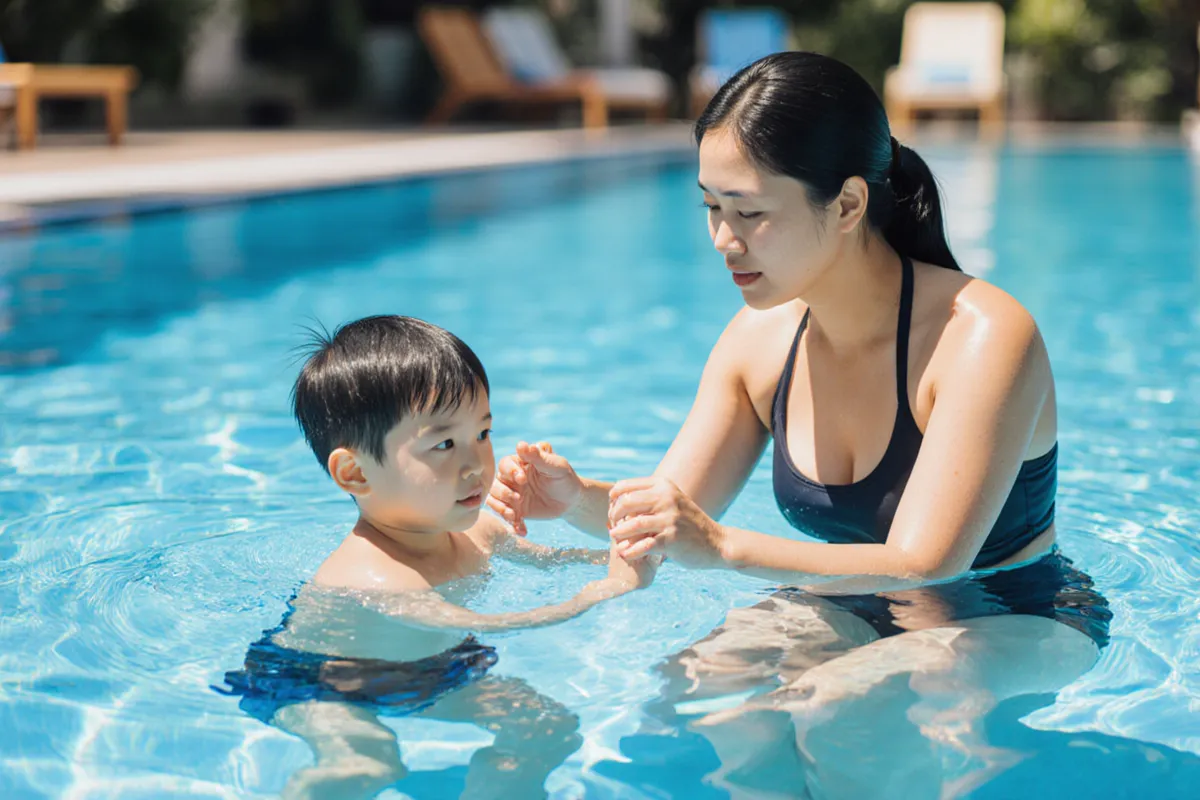
Most of what separates a good fit from a bad one comes down to the coach’s temperament, not their qualifications on paper. Ace Dolphin’s coaches are trained around what the school calls its “Calm & Chill” approach — deliberately unhurried, with no pressure to hit a milestone by a fixed date, and a strong emphasis on reading a child’s comfort level before asking for the next step. It’s the same approach the school built its reputation on with water-phobic children more broadly, and the overlap with what a sensory-sensitive or anxious child needs is significant: patience, consistency, and a coach who treats “not today” as a completely acceptable answer.
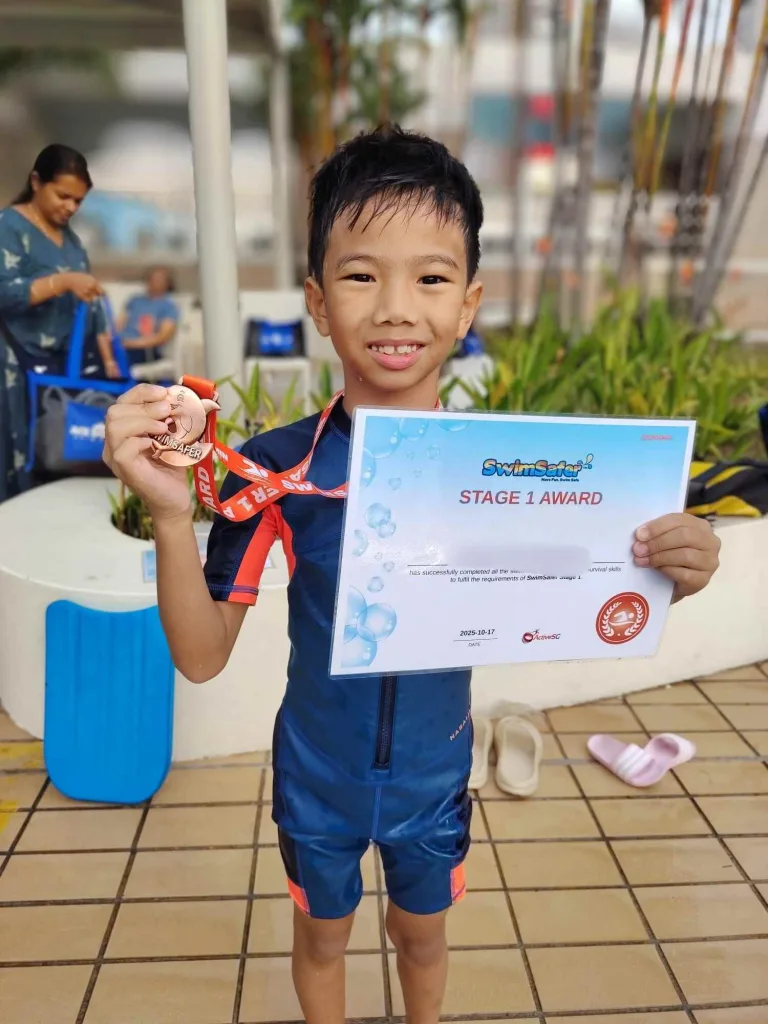
One detail worth asking about specifically: how does the school track and celebrate progress? Ace Dolphin uses a proprietary system of swim bands and custom medals, awarded as a child masters each skill — a visual, tangible, predictable marker of achievement that tends to land especially well with kids who respond strongly to clear structure and concrete milestones rather than vague verbal praise. A visit to meet the coaches beforehand, even briefly, also gives your child a chance to see a friendly, familiar face before the first real lesson.
Don’t be shy about asking direct questions before booking: How many children per instructor? Can we request the same coach every week? What happens if my child refuses to get in the water that day? Can we do a shorter trial session first? A school confident in its methods will welcome these questions rather than brush past them.
Private Coaching vs Group Classes for Kids Who Need More Support
For most neurotypical children, group classes work well — there’s peer motivation, a fixed curriculum, and a lower cost per lesson. For a child who needs more processing time, more flexibility in pacing, or who finds a group of unfamiliar peers overwhelming, one-to-one private coaching is usually the better starting point.
The core advantage isn’t just the attention ratio — it’s control over the environment. A private lesson can be scheduled during a genuinely quiet pool slot, run at whatever pace the child needs that particular day, and adjusted mid-session if something isn’t working, without six other children waiting on the sidelines. Many parents start their child in private lessons to build a foundation of comfort and basic skills, then transition into a small group once the child has enough confidence and familiarity with the water to handle the added stimulation. We’ve written a fuller breakdown of the trade-offs between private and group lessons if you’re weighing the decision for any child, neurodivergent or not.
Preparing Your Child for the First Few Lessons
A short pool visit before the actual first lesson — just to sit at the edge, dip toes in, and leave — can take the edge off the “unknown environment” factor considerably. Bring along anything that reliably helps your child self-regulate: a comfort object that can wait poolside, noise-reducing earplugs if sound is the main trigger, or a favourite towel for the moment they get out.
A simple visual schedule, even a hand-drawn one showing “car → pool → shower → snack → car,” gives a child a way to see the whole event mapped out rather than facing it as one long unpredictable block of time. If your child has particular sensitivities — to the smell of chlorine, the texture of a swimsuit, or being touched unexpectedly by an instructor — tell the coach directly before the first session, not after a difficult one. A good coach will build around that information rather than treat it as an inconvenience.
Expect the first few sessions to look like very little “swimming” at all. Sitting on the steps, playing with a float at the shallow end, pouring water from a cup — this groundwork is what makes everything that follows possible, and rushing past it tends to cost more time than it saves. If your child arrives already anxious around water generally, our guide on building real water confidence covers the same patient, step-by-step approach in more depth.
Conclusion
Learning to swim is genuinely valuable for every child in Singapore, given how much of daily life here happens near water — but for a neurodivergent child, the environment and the coach matter far more than the curriculum on paper. Look for a school that treats “calm and unhurried” as a methodology rather than a marketing line, and ask direct questions about pacing, consistency of instructor, and how they handle a difficult day before you book. Ace Dolphin’s private coaching, quieter lesson slots, and Calm & Chill approach were built around exactly this kind of patient, individualised progress — many of the water-phobic and sensory-sensitive children who’ve come through the school over the past 15 years started out much like Mrs Lim’s son, unable to stay poolside for more than a few minutes. Read what other parents have to say in our testimonials, or if you’d like to talk through what a first lesson could look like for your child, reach out at admin@acedolphin.com or +65 9105 5244, or explore our kids swimming lessons at acedolphin.com.