Your child comes home from swim class scratching at red patches on their arms, and you’re standing at the kitchen sink wondering if you’ve made a mistake signing them up. It’s one of the most common reasons Singapore parents hesitate to start — or quietly pull their child out of — swimming lessons. Given that roughly one in five children here has some form of eczema, this isn’t a niche worry. The good news: with the right preparation, most children with eczema swim just fine, and pulling them out is rarely the answer. Here’s what actually helps.
Does Chlorine Really Make Eczema Worse?
Chlorine itself isn’t the villain it’s made out to be. Research on atopic dermatitis has actually found that dilute chlorine exposure can reduce the bacteria that trigger flare-ups on eczema-prone skin — the same logic behind “bleach bath” treatments some dermatologists recommend. What actually damages the skin barrier is prolonged water exposure combined with the stripping of natural oils, especially in Singapore’s chlorinated ActiveSG pools where children often swim year-round rather than for a few summer months.
The real culprits tend to be:
- Drying out, from staying in the water 45 minutes to an hour without any barrier protection
- Skipping the post-swim rinse, letting chlorine residue sit on skin as it dries
- Humidity swings between the pool deck, an air-conditioned car, and home, which stresses the skin barrier more than the water itself
Understanding this changes the question. It’s not “should my child avoid chlorine,” it’s “how do I manage the skin around the swim, not the swim itself.”
Before The Lesson: A Simple Skin Prep Routine
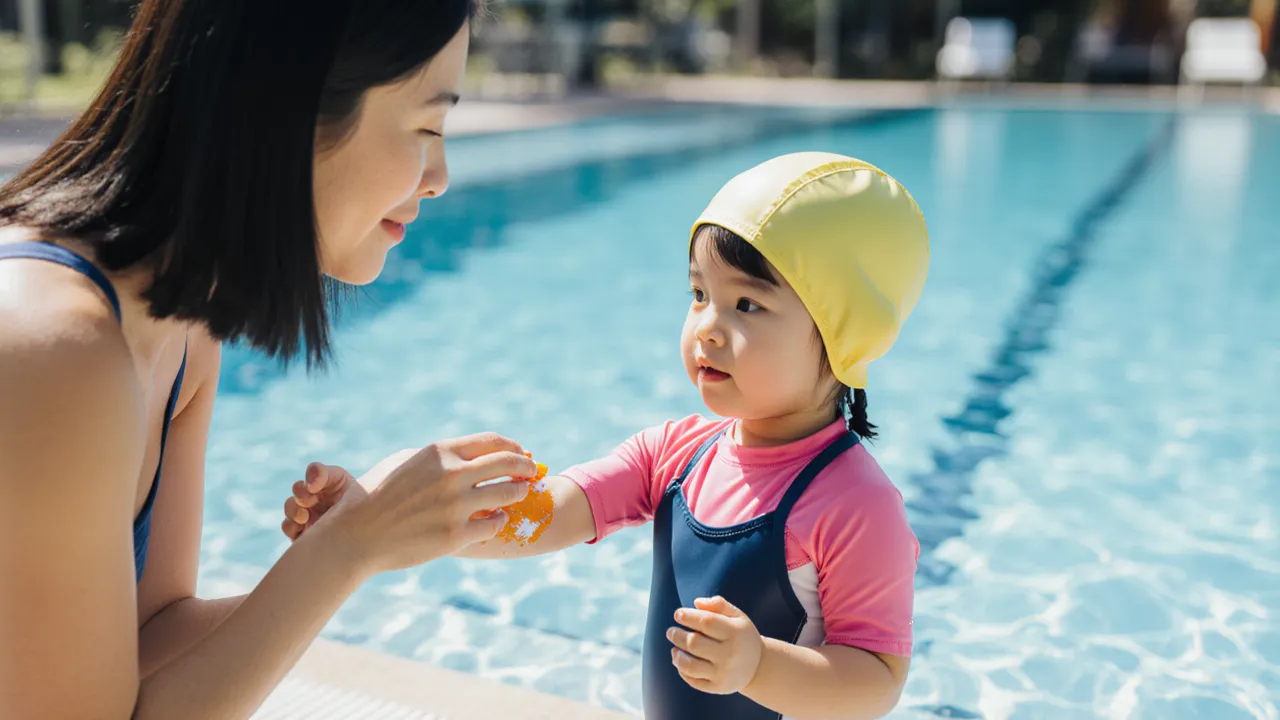
A thin layer of emollient or barrier cream applied 15–20 minutes before getting in the water gives the skin something to hold onto. Focus on the usual flare zones — inner elbows, behind the knees, the neck — rather than a full-body coat, which can feel greasy under a rash guard.
If your child is prone to reacting on the face or scalp, a well-fitted swim cap and properly sealed goggles matter more than most parents realise. Ace Dolphin’s coaches routinely see kids come in with leaking, ill-fitting goggles, and for a child with sensitive skin, chlorinated water pooling around the eyes for 45 minutes is a fast track to irritation. Test the seal at home first: press the goggles to the face without the strap and check they hold for a few seconds before buying.
Timing helps too. If your child’s eczema tends to flare after a bath or shower, scheduling lessons a couple of hours away from bath time — rather than immediately before or after — reduces the number of times skin is wetted and dried in a short window.
During The Lesson: What Coaches Should Actually Be Doing
A swim school that’s genuinely good with sensitive-skin kids won’t single your child out, but they will notice. At Ace Dolphin, this is where the “Calm & Chill” coaching philosophy of our coaches tends to matter more than parents expect — the same patience and low-pressure pacing that works for anxious or water-phobic children also works well for kids managing a physical sensitivity, because neither group responds well to being rushed or made to feel different from their peers.
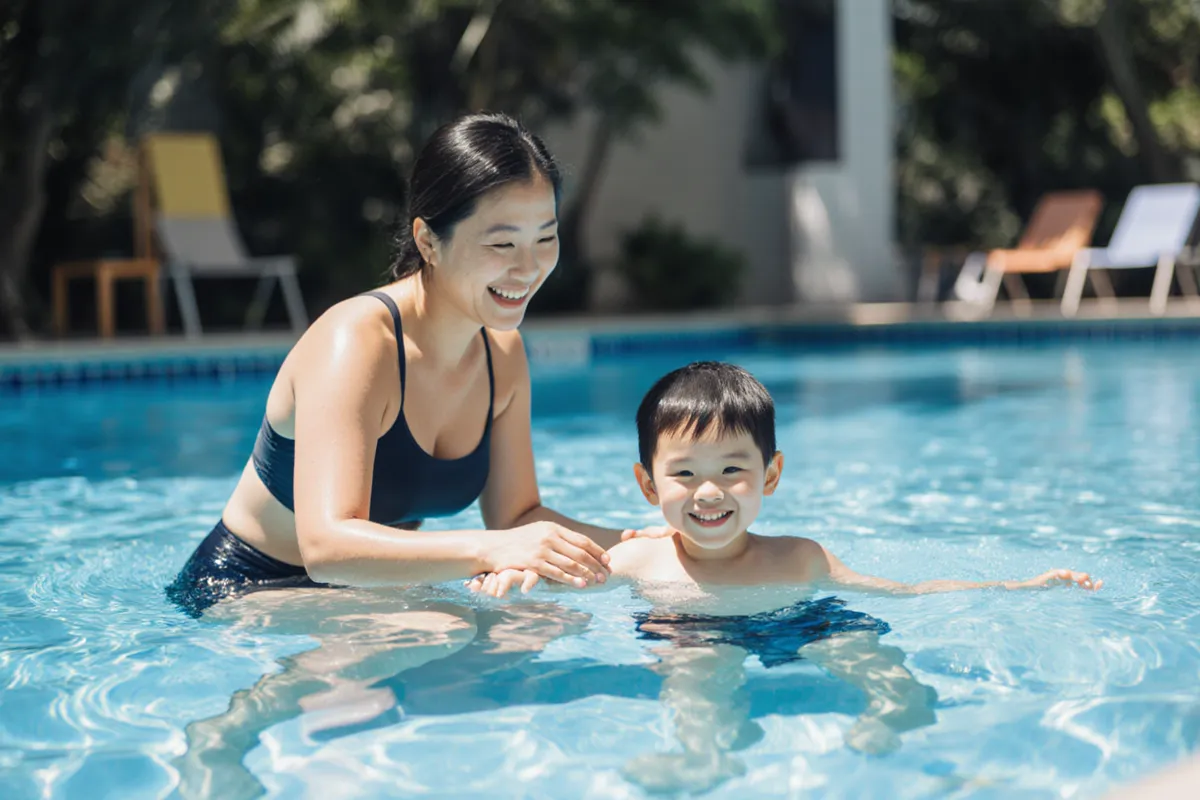
Practically, this looks like: coaches who don’t push a child to stay in past the point of visible discomfort, who’re happy to shorten a session if skin looks aggravated partway through, and who communicate honestly with parents about what they observed rather than downplaying it. If you’re choosing a school and this matters to you, it’s a fair question to ask directly at enrolment — a school with a real methodology will have an answer ready, not a shrug.
After Swimming: The “Soak And Seal” Routine
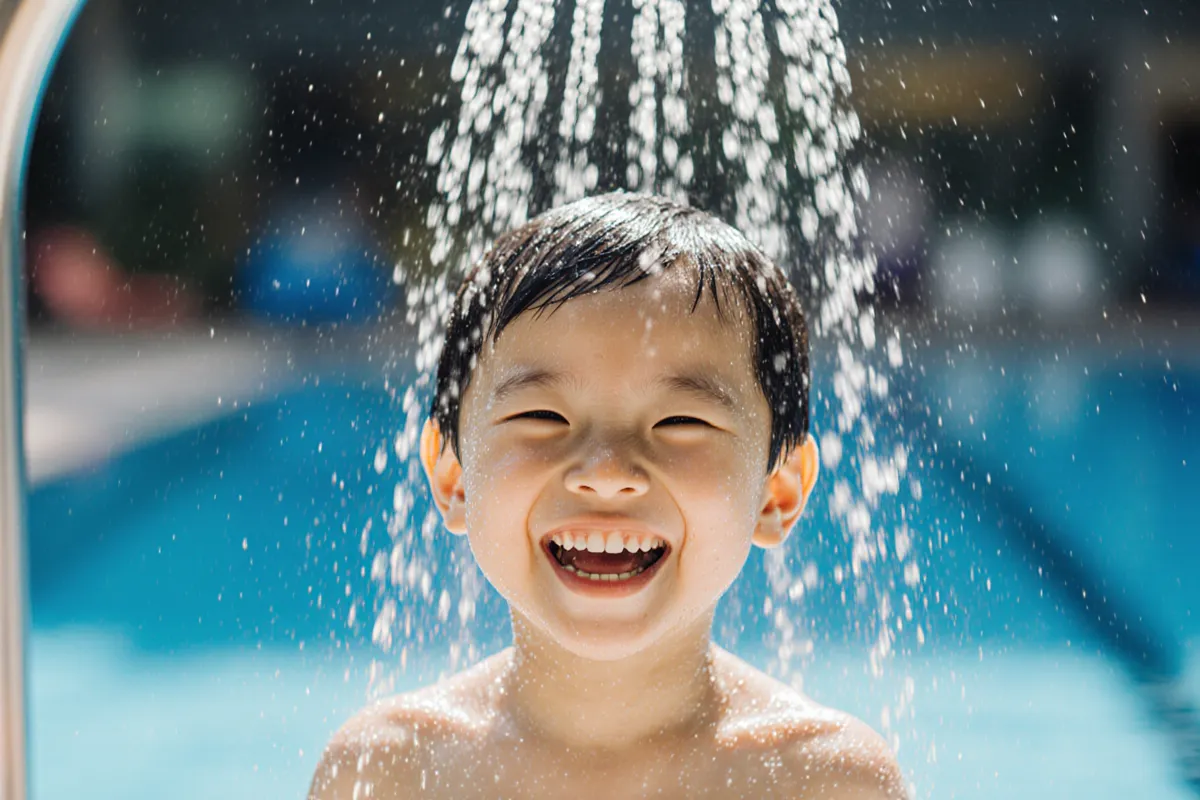
This is the step most families skip, and it’s the one that matters most. Rinse thoroughly with fresh water at the pool’s shower facilities immediately after getting out — most flare-ups trace back to chlorine residue drying on skin during the car ride home, not the swim itself. Pat dry rather than rub, and apply a fragrance-free moisturiser within about three minutes of rinsing, while skin is still slightly damp. Dermatologists call this “soak and seal” — the damp skin locks in the moisture far more effectively than applying cream to fully dry skin later.
Look for moisturisers with ceramides, glycerin, or hyaluronic acid, and avoid anything fragranced, even products marketed as “gentle.” In Singapore’s climate, where kids may swim twice a week for years rather than a single summer, this routine is worth turning into a genuine habit rather than an occasional afterthought — the cumulative effect of consistent aftercare is bigger than any single product choice.
When To Pause — And When To Push Through
Most mild eczema doesn’t require stopping lessons at all. But a few signs are worth taking seriously: open, weeping patches that could be entry points for pool bacteria; a flare that’s worsening week over week despite consistent aftercare; or a child who’s become genuinely afraid of the water because of how their skin feels afterward. In these cases, a short pause while you see a dermatologist and adjust the skincare routine is sensible — this is a temporary skin management issue, not a reason to abandon swimming altogether, particularly given how much water safety matters for children in Singapore.
What you shouldn’t do is let mild, manageable eczema become the reason your child misses out on a skill with real safety stakes. A good swim school will work with you on pacing and session length rather than treating it as your problem to solve alone.
Conclusion
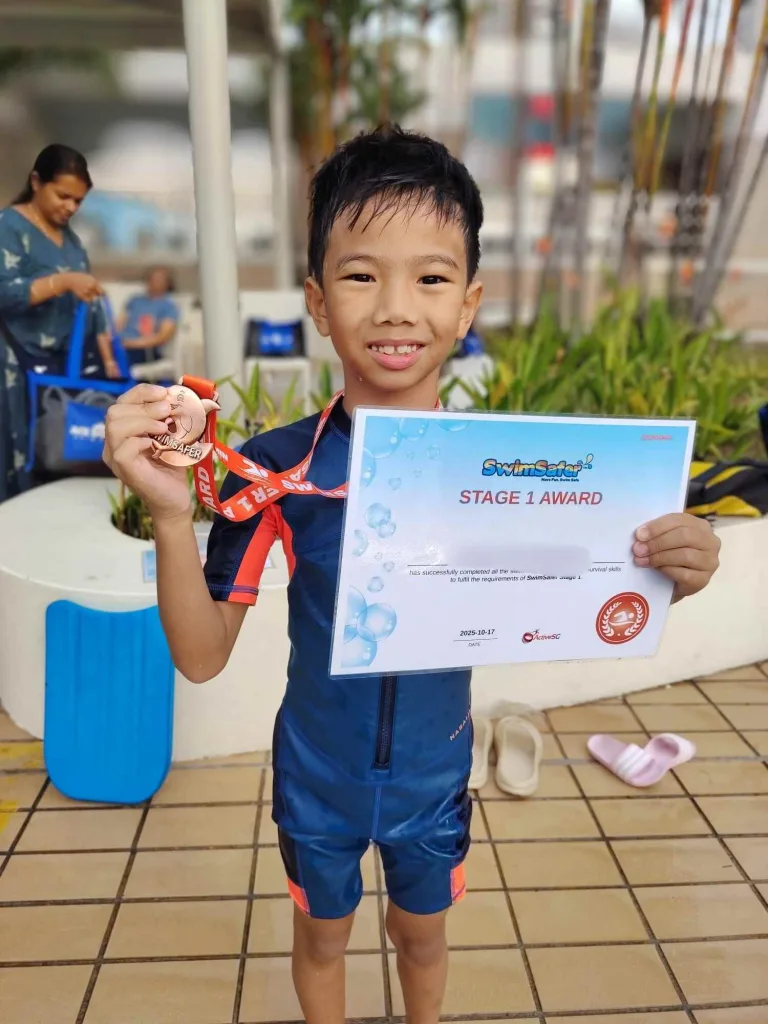
Eczema and swimming lessons aren’t incompatible — they just require a bit more intention around the 20 minutes before and after class than most families realise. Get the prep and aftercare routine right, and most children with sensitive skin progress through SwimSafer 2.0 at exactly the same pace as their peers. At Ace Dolphin, our coaches are used to adjusting pacing for kids who need it — whether that’s a child managing eczema, one still building water confidence, or simply a nervous first-timer — because 15 years and 8,000+ graduates has taught us that no two kids arrive at the pool the same way. If you’d like to talk through your child’s specific situation before enrolling, reach out at admin@acedolphin.com or +65 9105 5244, or take a look at our kids swimming lessons to see how our classes are structured.