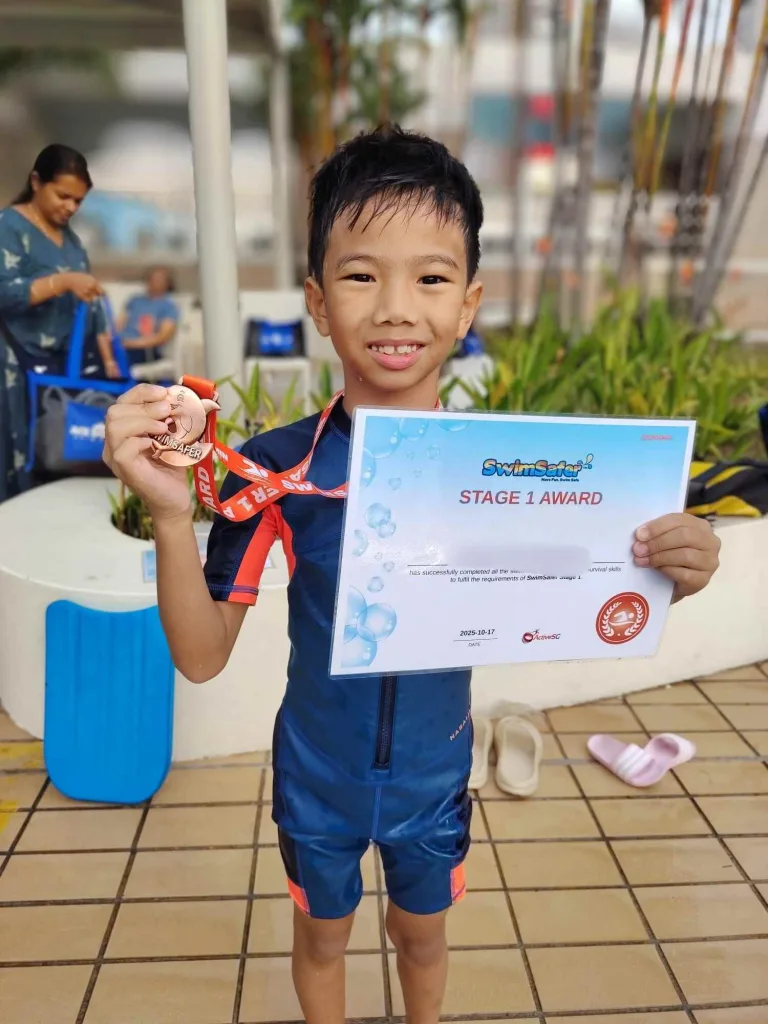
You sign your child up for a SwimSafer stage, half-remembering how the assessment worked when their older sibling went through it three years ago — and then a friend at pickup mentions something about a new booking system, an outside examiner, and a test that’s “gotten harder.” You nod along, but you’re not entirely sure what changed, or whether it affects the stage your child is about to attempt. You’re not alone — a lot of parents are working from an outdated picture of how SwimSafer actually runs today. Here’s what SwimSafer 2.0 is, what genuinely changed recently, and what it means for how you prepare your child.
What SwimSafer 2.0 Actually Is
SwimSafer is Singapore’s national framework for teaching children swimming proficiency and water survival skills, and it’s the standard almost every school-going child in Singapore will encounter, whether through school programmes, ActiveSG lessons, or private swim schools. The “2.0” refresh restructured the original programme into six progressive stages, each building survival and activity skills on top of the last, culminating in the Bronze, Silver, and Gold certifications that many secondary schools and co-curricular activities recognise.
The six-stage structure hasn’t been overhauled since — Stage 1 through Stage 6 still walks a child from basic water confidence and a controlled front float, through unassisted entries and a continuous 25-metre swim, up to longer distances, stroke combinations, and genuine survival skills like treading water and basic rescue awareness. What has changed, and what catches a lot of parents off guard, is how the programme is assessed.
What Changed: The July 2025 Manual and CAMS Rollout
From July 2025, Singapore Aquatics moved SwimSafer testing onto a new Centralised Assessment Management System, known as CAMS. An updated SwimSafer manual took effect alongside it, and the practical impact for parents comes down to three things.
Assessments are now run by independent assessors. Under the previous system, a child’s own coach could be present for, and sometimes involved in, their assessment. Under CAMS, assessments are carried out exclusively by assessors appointed by Singapore Aquatics who have no connection to the child’s regular lessons. This is a more impartial process, but it also means a child can no longer lean on familiarity with a coach’s voice or cues on test day — they need to perform the skill cleanly for someone they’ve never met.
The bar is measurably higher. The updated manual tightened the specific criteria assessors score against at every stage — things like how a stroke is counted, how long a float or tread needs to be sustained without support, and how cleanly a skill needs to be demonstrated rather than just completed. A child who scraped through a stage two years ago on effort and determination may find that same approach doesn’t clear the newer benchmark.
Booking now goes through the CAMS platform. Where a swim school might previously have registered a child for their next stage test directly, parents and schools now book through the centralised system. It’s a more standardised process, but it also means test slots and results follow a different rhythm than some parents remember.
None of this changes what your child is ultimately being taught — the six-stage progression and its survival focus are the same programme Singapore has run for years. What’s changed is how rigorously that progression is checked, and by whom.
Old System vs. SwimSafer 2.0 Today: A Quick Reference
If you’re trying to picture exactly what’s different from what you remember, it helps to see it side by side.
- Assessor: previously, a child’s own coach could be present for and sometimes involved in the test. Today, assessment is handled exclusively by an independent assessor appointed by Singapore Aquatics, someone your child has not trained with.
- Booking: previously, swim schools often registered a child for their next stage test directly with limited standardisation between providers. Today, all bookings run through the centralised CAMS platform, so scheduling and results follow one consistent national process.
- Scoring criteria: previously, stage criteria were comparatively broad, and a child could sometimes pass on effort and stamina alone. Today, the updated manual scores more specifically against form, control, and how cleanly a skill is demonstrated, not just whether the distance or duration was technically completed.
- Structure: this part hasn’t changed. The six-stage progression, the Bronze, Silver, and Gold certifications, and the underlying survival-skills focus of the programme are the same ones Singapore has used for years.
Why the Stricter Standard Is Actually Good News
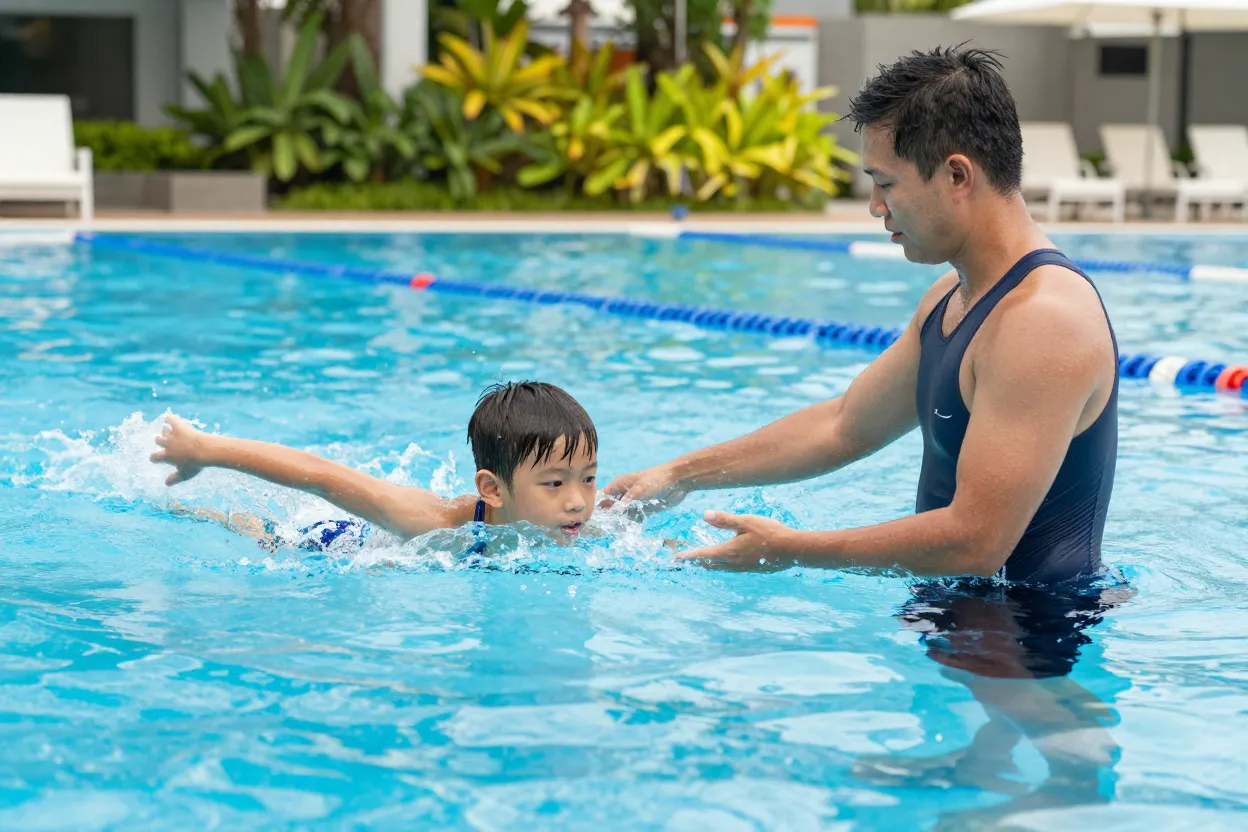
It’s easy to hear “harder test” and feel your child is being set up to fail. In practice, the tightened benchmarks close a gap that used to work against kids: a child who passed a stage on borrowed momentum — legs sinking, arms flailing, but somehow covering the distance — often stalled hard at the next stage, because they’d never actually built the underlying technique. A stricter, more consistent assessment means a pass at any given stage is a more reliable signal that your child has the skill, not just the stamina, to build on.
This is where how a child is coached day to day matters more than ever. At Ace Dolphin, every SwimSafer 2.0 stage is taught alongside the Tatsuki Japanese methodology — a system that logs stroke mechanics, breath control, and safety-skill milestones session by session rather than waiting until test day to find out whether a skill has actually landed. Coaches can see, weeks in advance, whether a child’s technique will hold up against the newer, more exacting criteria, and adjust before the test rather than after a disappointing result.
What This Means for How You Prepare Your Child
A few practical shifts are worth making now that the assessment looks different.
Don’t rely on old benchmarks from an older sibling or a parent forum post from a few years back. If you’re gauging readiness against what you remember the test involving, you may be underestimating what’s now required. Ask your coach directly what the current criteria are for your child’s specific stage — this is one of the most useful five-minute conversations you can have before booking a test.
Prioritise clean technique over covering the distance. Since assessors are now scoring more specifically against form and control, a child who swims 25 metres with efficient, controlled strokes is in a stronger position than one who covers the same distance through sheer effort. If your child’s coach flags that their stroke mechanics need another few weeks before testing, that’s usually the right call to trust rather than push past.
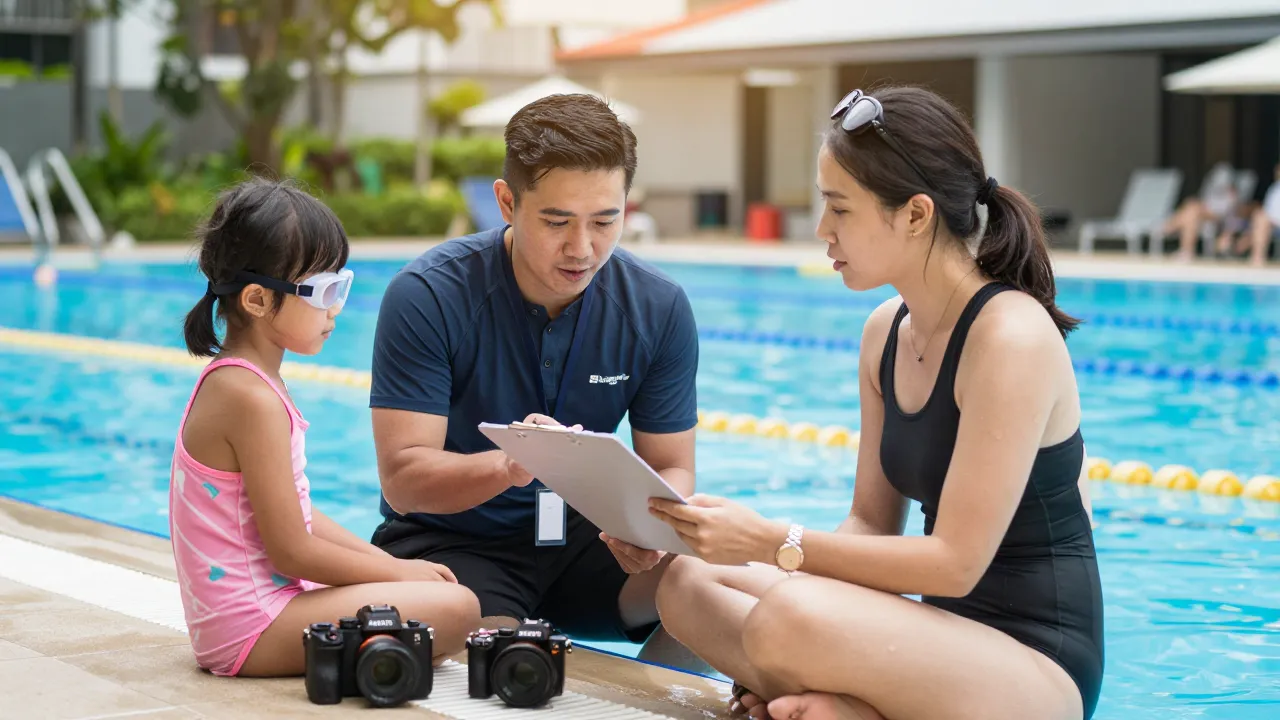
Expect an unfamiliar face on test day, and prepare your child for that. Because the assessor is now someone your child hasn’t met before, it’s worth having a simple conversation beforehand: a new person will be watching and giving instructions, and that’s completely normal — it doesn’t mean anything’s wrong. For children who are naturally more anxious around unfamiliar adults, a little advance notice goes a long way toward keeping test-day nerves from affecting a performance they’re otherwise ready for.
Ask about theory, not just the pool component. SwimSafer assessments include an online theory element alongside the practical test, and it’s worth checking with your coach whether your child has had a chance to run through the relevant water safety concepts for their stage, not just the physical skills.
A Few Questions Parents Often Ask
Does my child need to retest if they already passed a stage before July 2025? No — a passed stage remains valid. The new criteria apply going forward, to whichever stage your child is about to attempt next.
Can I choose which assessor tests my child? No, and that’s by design. Assessors are assigned through CAMS specifically so results are independent of any relationship with a particular coach or school.
Will my child’s usual coach be there on test day? Generally not as part of the assessment itself, though most schools, including Ace Dolphin, will have your child’s coach on hand beforehand to run through final preparation and settle any last-minute nerves.
How Ace Dolphin Approaches SwimSafer 2.0
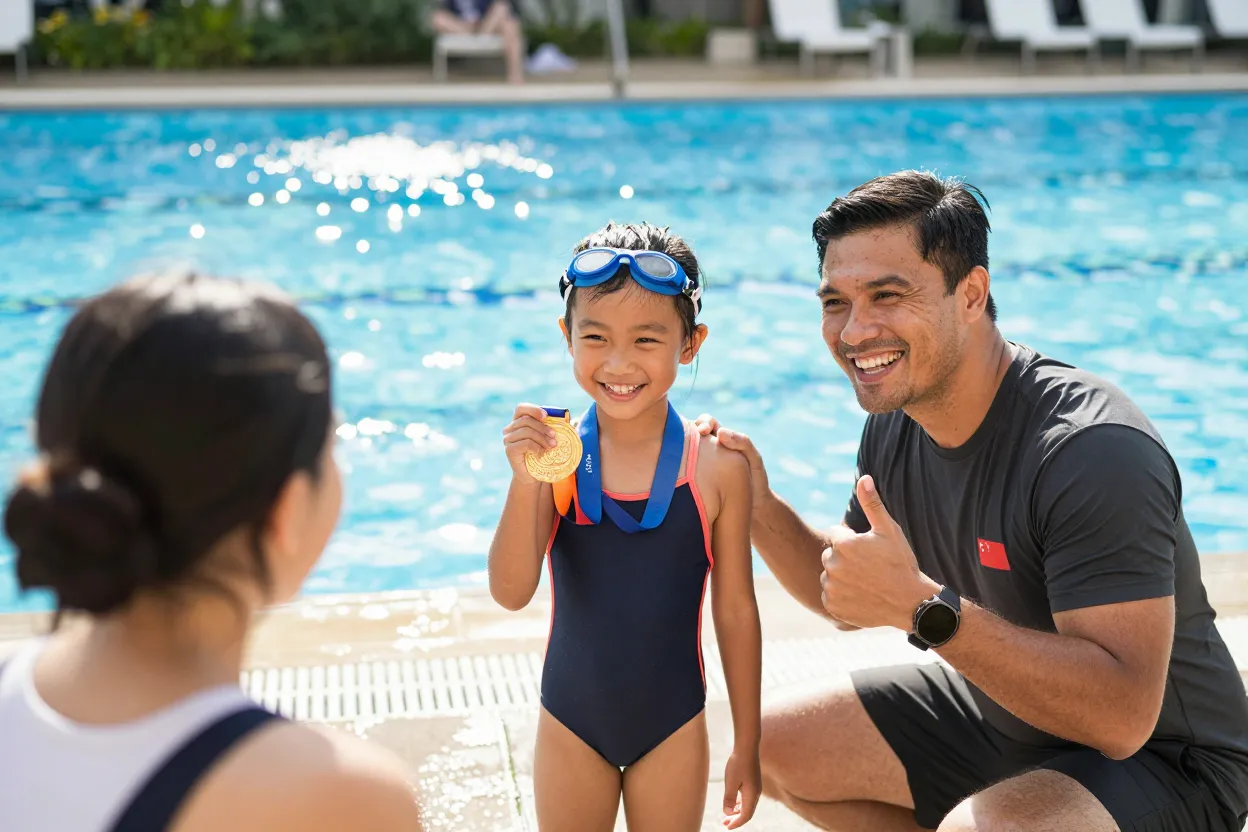
Ace Dolphin has run children through every version of Singapore’s SwimSafer framework across 15+ years and 8,000+ graduates, including the transition to the current CAMS-based assessment system. The dual-curriculum approach — SwimSafer 2.0 setting what needs to be demonstrated at each stage, with the Tatsuki methodology shaping how each skill is actually built — means children generally arrive at test day with technique that holds up under the stricter, more consistent scrutiny of an independent assessor, rather than technique that was only ever good enough to satisfy a familiar coach.
Because Ace Dolphin’s coaches are NROC-certified and log progress against precision metrics every session, most parents get a clear, evidence-based answer well before test day about whether their child is genuinely ready — not a guess based on how the last lesson happened to go. For children who are naturally more nervous about assessments or unfamiliar adults, this same session-by-session tracking makes it easier to time the test for a stretch where a child’s confidence, not just their skill, is in the right place.
The Bottom Line
SwimSafer 2.0’s six-stage structure is the same programme it’s always been, but the way it’s assessed changed meaningfully from July 2025 — independent assessors, tighter scoring criteria, and testing booked through the new CAMS platform. For parents, the practical takeaway is simple: check current criteria with your child’s coach rather than relying on what an older sibling’s test looked like, and prioritise clean technique over simply finishing the distance.
If you’re weighing up when your child should sit their next SwimSafer stage, or want a clearer read on where they currently stand against the updated benchmarks, reach out to Ace Dolphin at admin@acedolphin.com or +65 9105 5244, or find your nearest of our six locations across Tampines, Pasir Ris, Yio Chu Kang, Bishan, Punggol, and Sengkang at acedolphin.com.
Opening soon at Punggol: our new Punggol pool is opening soon, and pre-registration is now open. Find out more and pre-register on our Punggol page.