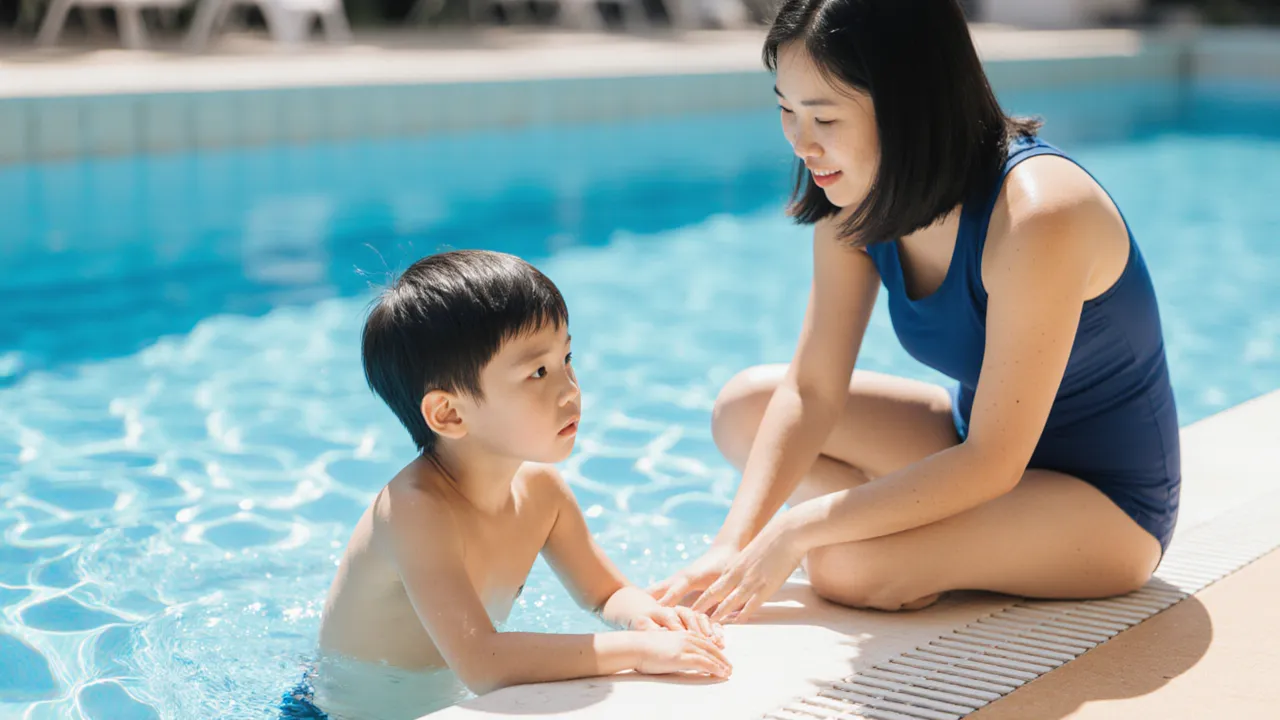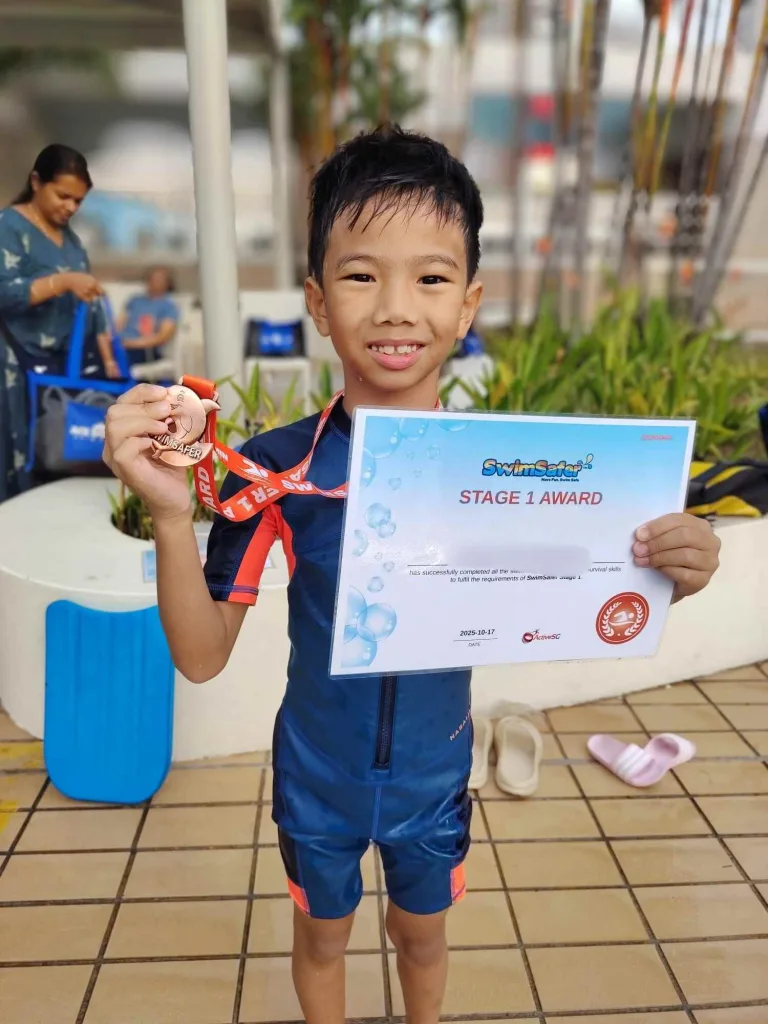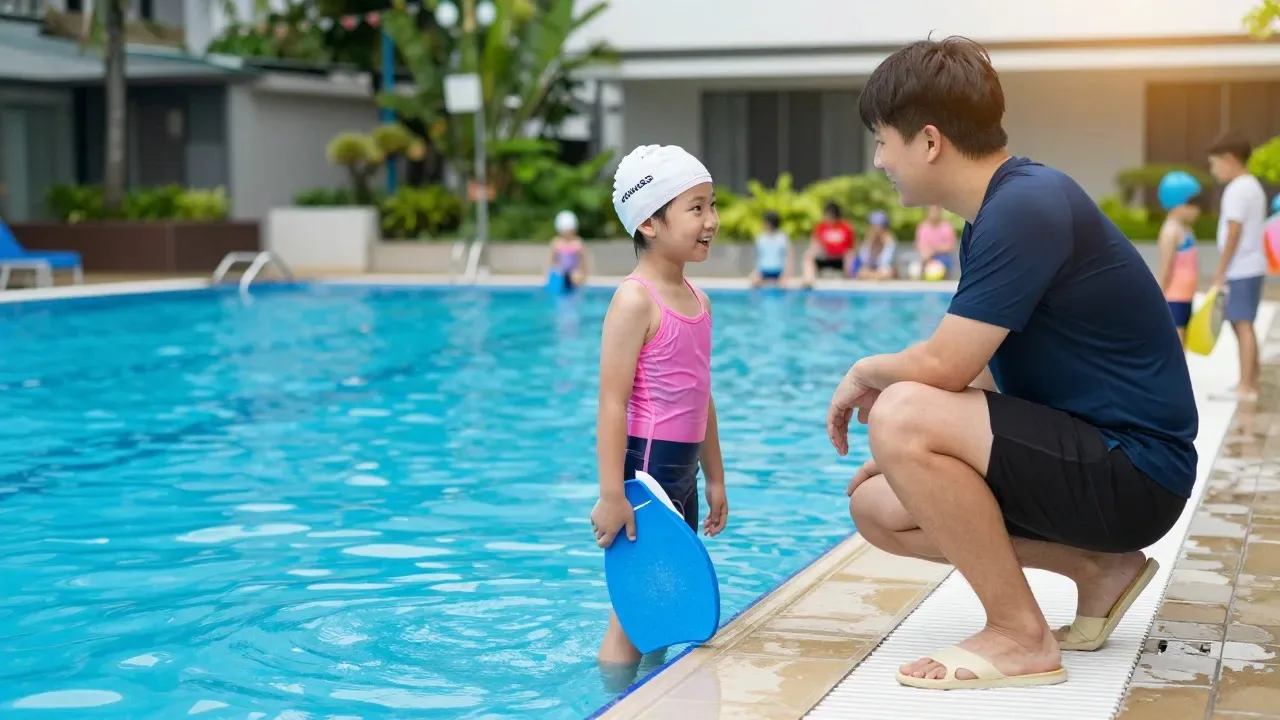
A parent signs their five-year-old up for weekly swimming lessons in January. By June, the child can float and kick a little, but every new term seems to start with the same warm-up drills as the last. Meanwhile, a neighbour’s child who started later is already through two SwimSafer stages. The difference usually isn’t talent — it’s cadence. How often a child gets into the water changes everything about how fast, and how solidly, the learning sticks. Here’s what actually determines the right frequency, and how to know if your child’s current schedule is helping or quietly holding them back.
Why “More Lessons” Isn’t Always the Right Question
It’s tempting to assume more lessons always means faster progress, but frequency only helps when it matches the child’s age, temperament, and current skill level. A confident seven-year-old working through the later SwimSafer stages benefits from a different rhythm than a nervous three-year-old still getting used to having water on their face.
The real question isn’t “how many lessons is best” in the abstract — it’s “how many lessons does this specific child need to keep what they learned last week instead of re-learning it this week.” That’s the pattern Ace Dolphin’s coaches look for after 15 years and more than 8,000 graduates: children plateau or backslide almost entirely because of gaps in consistency, not lack of ability.
The Right Cadence, by Age and Stage
Toddlers and young preschoolers (ages 3–4): Once a week is a reasonable starting point, mainly to build comfort and routine rather than push technical progress. Twice a week accelerates water familiarity noticeably at this age, but three sessions weekly usually offers little extra benefit — young children need recovery time between sessions just as much as they need repetition.
Preschoolers to early primary (ages 5–7): This is where frequency matters most. Children in this band who attend twice weekly build steady, compounding progress through the early SwimSafer stages. Those who go once a week often spend the first ten minutes of every lesson re-establishing skills they’d started to lose. Two sessions a week, spaced a few days apart, is the sweet spot for most kids this age working toward SwimSafer Stage 1–3.
Older kids progressing through SwimSafer Stage 4–6: Once children reach the later stages — treading water, sustained strokes, survival skills — technical precision matters more than raw repetition. Two to three sessions weekly, ideally with some private coaching mixed in, helps refine stroke mechanics that group classes alone can’t always fine-tune.
Children with water anxiety, regardless of age: For an anxious or water-phobic child, frequency needs to work differently. What matters more than sessions per week is that the child isn’t going long enough between sessions to reset emotionally. A once-a-week schedule for an anxious child sometimes means each lesson starts from a slightly more guarded place than the one before. Private lessons twice weekly, delivered patiently, tend to convert anxious children into independent swimmers meaningfully faster than the same total number of lessons spread thin.
What Happens When Lessons Are Too Infrequent
Skill decay is real, especially for young children whose muscle memory hasn’t fully set. A child who learns to float on Monday and doesn’t get back in the water for two weeks often needs several minutes of re-teaching before that skill feels natural again. Multiply that across a ten-to-twelve-week term with only weekly sessions, and a meaningful chunk of total lesson time goes to review rather than new skills.
This is the single biggest reason parents feel their child has “plateaued.” It’s rarely a plateau in ability — it’s a gap in reinforcement. Coaches can usually tell within the first few minutes of a lesson whether a child has swum recently, purely from how much needs to be re-explained.
What Happens When Lessons Are Too Frequent
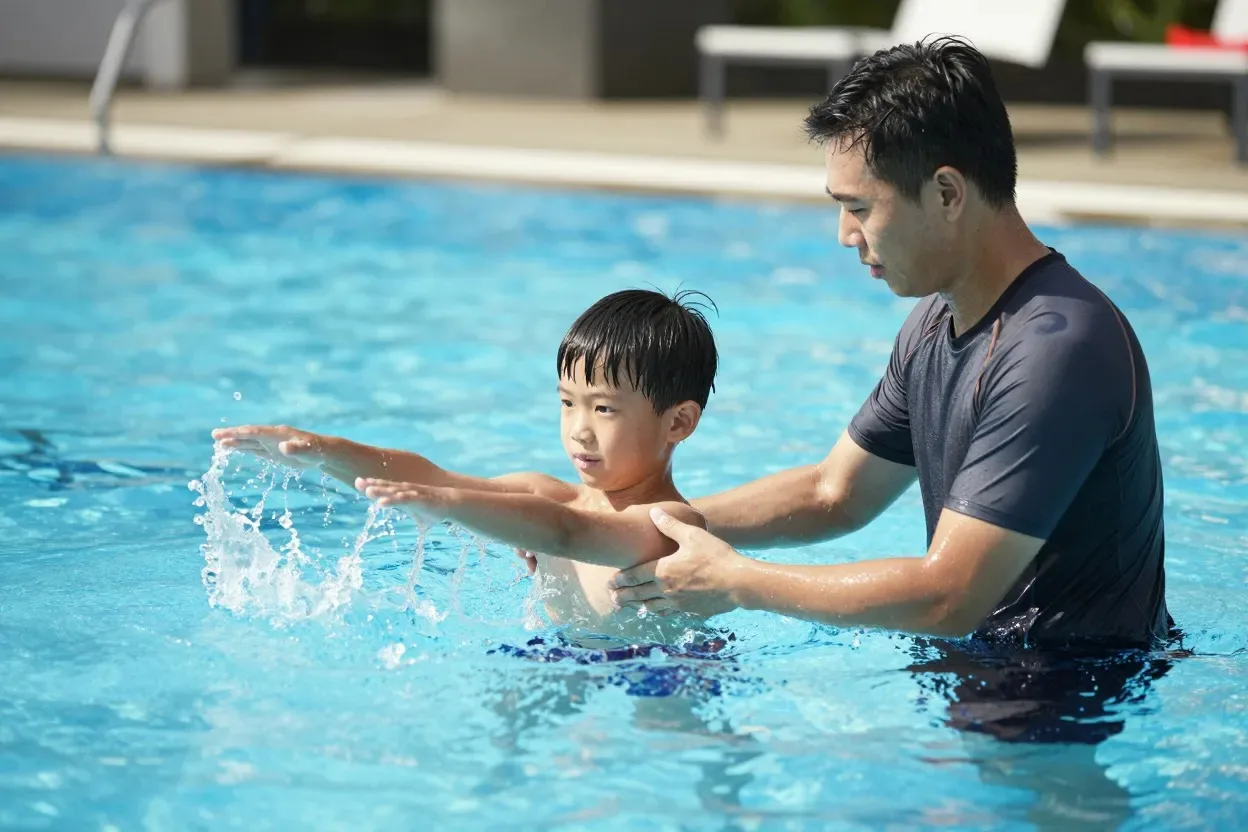
The opposite mistake is less common but still worth flagging: stacking too many sessions into a short window, especially for younger or more anxious children, can tip into fatigue rather than progress. Kids under five in particular need unstructured play and rest alongside structured lessons. Signs a child is getting too much water time include reluctance to go to lessons they previously enjoyed, physical tiredness that shows up as sloppier technique rather than better technique, and skin or ear irritation from excessive chlorine exposure.
The goal isn’t maximum time in the pool — it’s the right amount of well-taught, well-spaced time in the pool.
How Ace Dolphin Finds the Right Cadence for Each Child
This is where a generic answer stops being useful, because the right frequency genuinely depends on the individual child — which is exactly why Ace Dolphin tracks progress the way it does. Every child’s sessions are logged through the Tatsuki Japanese precision tracking system, which records stroke mechanics, breath control, and safety-skill milestones session by session. That data makes it easy to see, objectively, whether a child is retaining skills between lessons or losing ground — and to adjust the recommended frequency accordingly rather than defaulting every family to the same fixed schedule.
Combined with the school’s SwimSafer 2.0 curriculum and its “Calm & Chill” coaching philosophy, this means a shy or hesitant child isn’t pushed into more sessions than they can emotionally handle, while a confident, ready child isn’t held back by an arbitrary once-a-week default. Coaches at all six locations — Tampines, Pasir Ris, Yio Chu Kang, Bishan, Punggol, and Sengkang — regularly recommend adjusting frequency mid-term when a child’s tracked progress calls for it.
Using the September Holidays to Reset the Schedule
Singapore’s September school holidays (4–13 September this year) are a natural checkpoint to review whether your child’s current lesson frequency is actually working. A short stretch of two or three sessions across the break — without the usual gap between a Saturday class and the following weekend — often reveals more about a child’s true skill level than an entire term of once-weekly lessons, simply because there’s no time for skills to fade between sessions.
Parents who use this window well typically come out of it with a clearer sense of whether their child needs to move from once to twice weekly for Term 4, or whether their existing schedule is genuinely sufficient. It’s a low-pressure way to test a change in cadence before committing to it for the rest of the year.
Conclusion
There’s no single correct number of swimming lessons per week — the right cadence depends on your child’s age, current stage, and how they handle the water emotionally. What matters most is consistency: enough repetition that skills compound instead of resetting, without overloading a young or anxious child. Ace Dolphin’s coaches use session-by-session tracking through the Tatsuki methodology to recommend a schedule that fits your child specifically, not a one-size-fits-all default. If you’re unsure whether your child’s current kids swimming lessons are frequent enough — or too frequent — reach out at admin@acedolphin.com or +65 9105 5244, or visit acedolphin.com to arrange a free trial lesson and get a read on where your child actually stands.