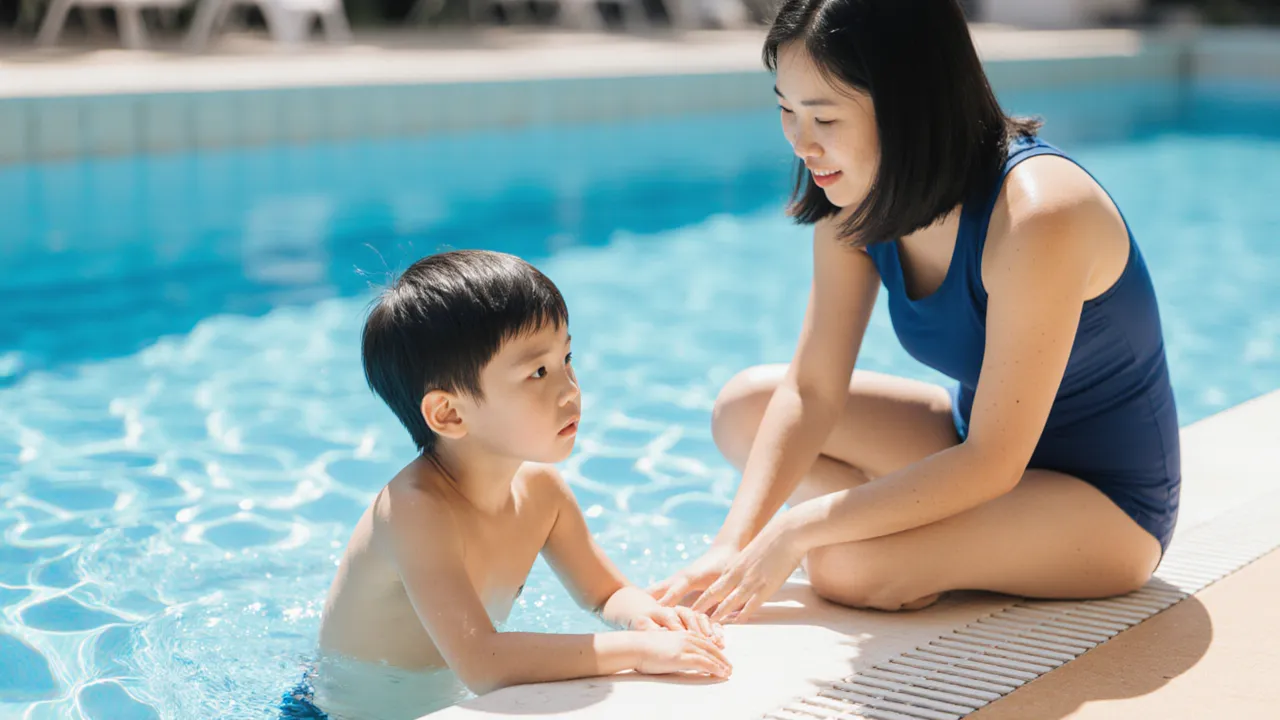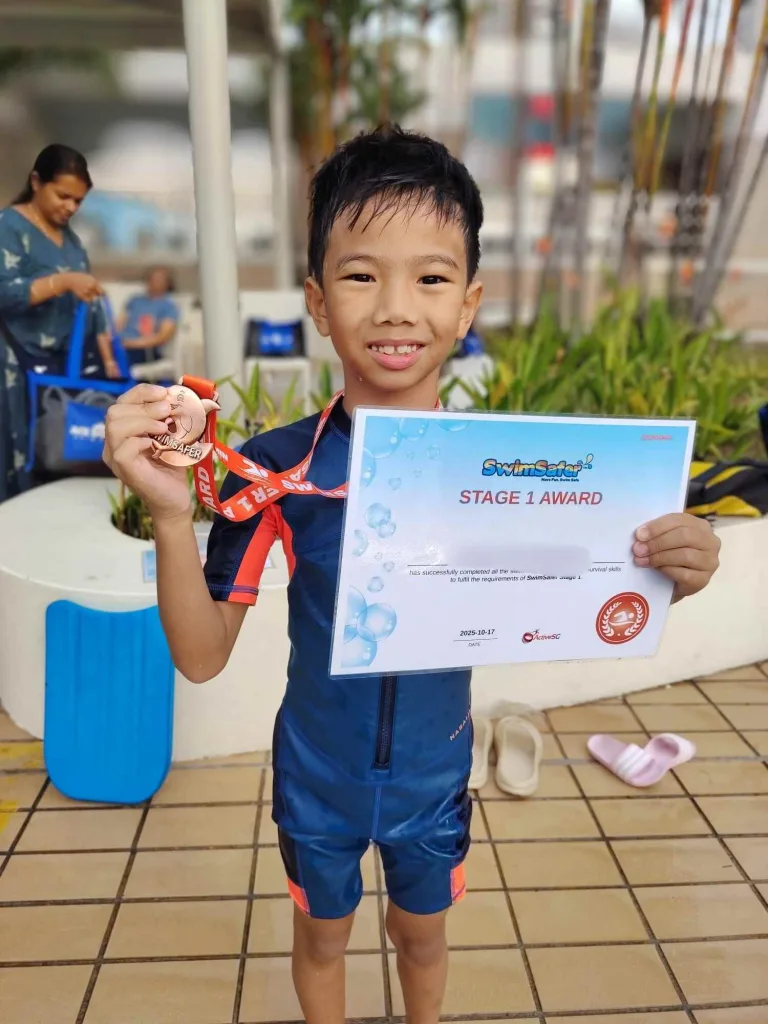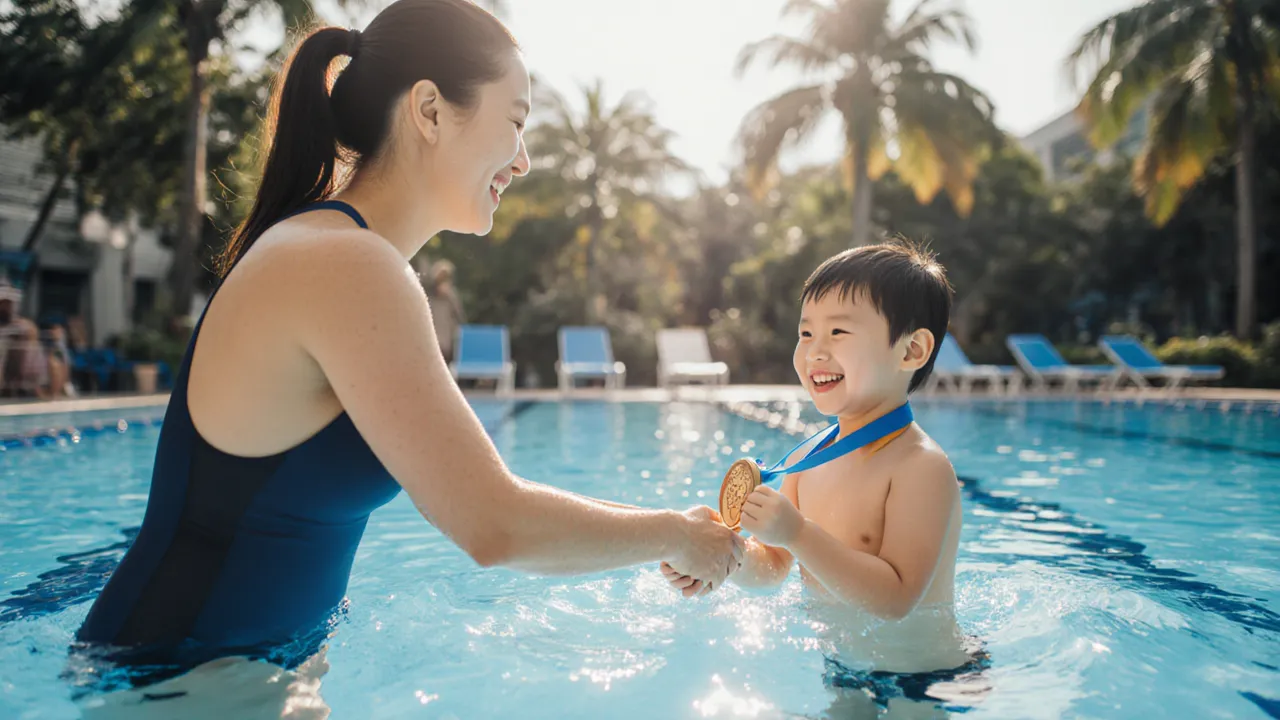
Every few weeks, a parent asks the same question at pool-side pickup: “Is he ready for the next stage yet?” It’s a fair thing to wonder, nobody wants their child stuck repeating the same stage out of caution, and nobody wants them pushed into water skills they can’t yet handle. The good news is that readiness isn’t a guess. SwimSafer 2.0 sets out clear, observable benchmarks for every stage, and an experienced coach can usually tell within a few sessions whether a child is coasting or genuinely ready to move on. Here’s what those signs actually look like.
Age Doesn’t Decide Readiness. Skill Does
It’s tempting to think of SwimSafer stages the way we think of school levels: complete a year, move up a grade. But SwimSafer doesn’t work on a calendar. A confident 5-year-old and a more cautious 8-year-old can both be sitting at Stage 2, and that’s entirely normal. Sport Singapore built the six-stage framework, Stage 1 through the Bronze, Silver, and Gold levels, around demonstrated competency, not birthdays.
This matters because parents sometimes compare their child to a sibling or classmate and worry when the pace differs. A child who spends 16 lessons on Stage 2 instead of 8 isn’t behind, they may simply need more repetition before their body and confidence catch up to the skill. Pushing a child through on a timeline rather than a benchmark is exactly how kids end up with technically-passed certificates and genuinely shaky water safety. At Ace Dolphin, coaches trained under both NROC and Tatsuki Japan certification frameworks are taught to resist that shortcut, a child only tests for the next stage when the assessment criteria say they’re ready, never because a term is ending.
The Technical Signs Coaches Actually Look For
Each SwimSafer stage has specific, testable milestones, and readiness shows up long before the actual assessment day. If your child is in Stage 1, the signs are things like holding a 5-second front float (the “mushroom” or “jellyfish” position) and recovering to standing without panic, plus moving 5 metres on their back using alternating or simultaneous arm and leg movements, done calmly, not as a one-off fluke.
By Stage 2, you’re looking for unassisted water entries, consistent sculling, and a real 25-metre continuous swim, not a stop-start effort with breaks at the wall. Stage 3 raises the bar further: your child should be managing a 50-metre continuous swim split between front crawl and backstroke, and starting to grasp the basic personal survival concepts that get introduced at this level, including fitting a personal flotation device (PFD) correctly while clothed.
The pattern across every stage is the same: readiness means the skill is repeatable, not rare. A child who nails a float once in five tries isn’t ready. A child who does it calmly, four times out of five, on a day when they’re tired or distracted, almost certainly is.
Confidence Is a Bigger Signal Than Strength
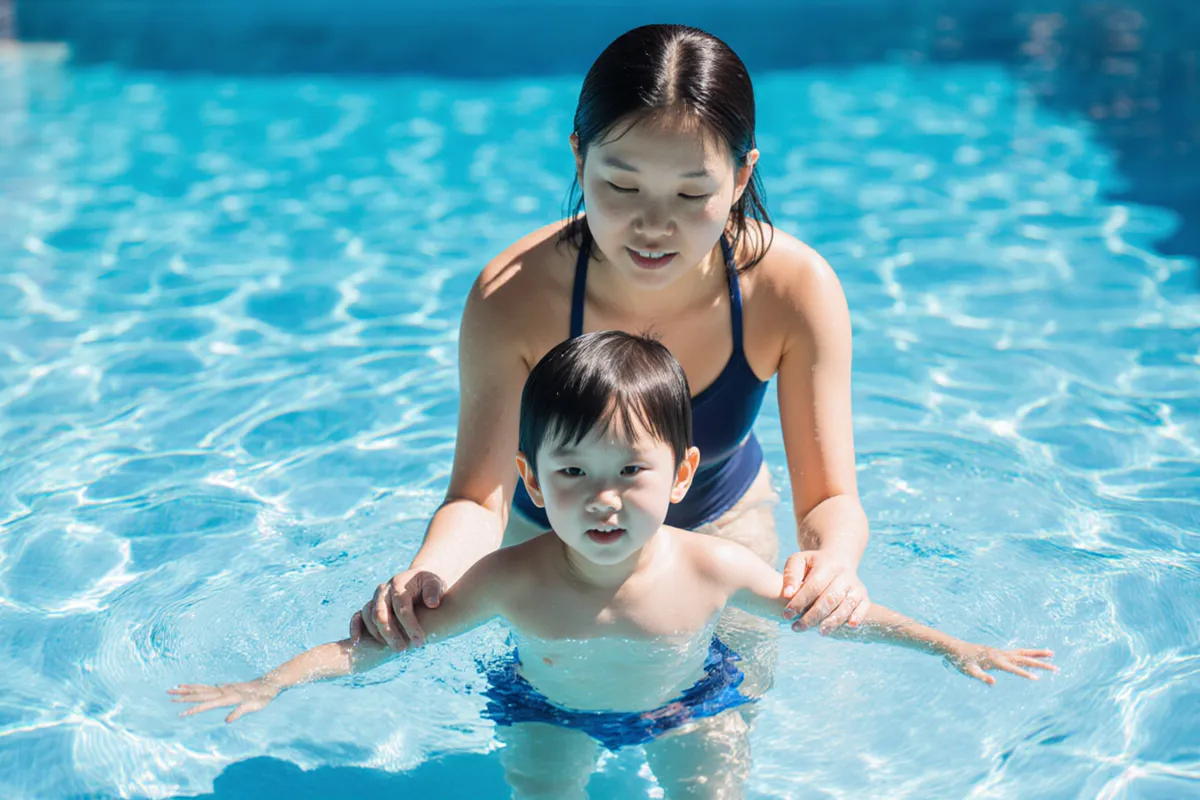
Here’s what surprises a lot of parents: the biggest predictor of SwimSafer readiness usually isn’t muscle strength or stroke technique. It’s whether the child has stopped thinking about the skill and started just doing it. A child gripping the pool edge white-knuckled while performing a “correct” float is not the same as a child floating loosely because their body has learned to trust the water.
This is where Ace Dolphin’s water-phobia experience shapes how progression decisions get made. Coaches watch for the moment a previously anxious child stops asking “do I have to?” before an exercise and instead just does it. That shift from compliance to genuine comfort is often the clearer readiness marker than the skill itself. Rushing a technically-capable but still-anxious child to the next stage tends to backfire: the new stage introduces harder water (often deeper, sometimes involving jumps or submersion), and an unresolved fear resurfaces at the worst possible time.
Watch for These Behavioural Cues at Home and Poolside
Alongside the technical benchmarks, a few everyday signs tend to show up when a child is genuinely ready to progress:
- They ask to go underwater or try something slightly harder, rather than needing to be coaxed into it
- Getting water on their face or in their ears no longer triggers a strong reaction
- They can hold a breath and blow bubbles rhythmically, without gasping when they surface
- They recover their own balance in the water after a stumble, rather than immediately reaching for the coach or the wall
- Lesson-to-lesson, their skills are consistent, not “good one week, back to square one the next”
None of these alone confirms readiness, but seeing several together, alongside the stage’s technical criteria, is usually a strong indicator that a formal assessment is worth attempting.
Why Objective Tracking Beats Guesswork
Because SwimSafer stages get progressively more demanding. Stage 4 introduces timed strokes and dive entries, Stage 5 (Silver) layers in deep-water entries and simulated rescue sequences, and Stage 6 (Gold) caps things off with roughly 400 metres across six strokes plus clothed survival skills, the cost of misjudging readiness rises with every level. A child rushed into Silver-stage deep-water work before they’re truly ready isn’t just going to fail the assessment; they may develop a new fear that undoes months of progress.
This is where a structured tracking system earns its keep. Ace Dolphin pairs the national SwimSafer curriculum with Japan’s Tatsuki methodology, which is built around precise, incremental skill-tracking rather than broad-strokes impressions of “doing well.” Every lesson is measured against specific technique markers, so a coach isn’t relying on memory or gut feel to decide if a child has genuinely locked in a skill, the data across 12 weeks makes the answer obvious. It’s also why Ace Dolphin uses its own proprietary swim bands and medals system: each milestone a child hits gets marked and celebrated in a tangible way, which gives both the child and the parent a visible, honest record of progress rather than a vague sense of “doing fine.”
What to Do If Your Child Seems Stuck
If your child has been at the same stage for what feels like a long stretch, resist the urge to see it as a problem to fix quickly. First, ask the coach specifically which criteria haven’t been met yet. a good instructor should be able to name the exact skill, not just say “needs more practice.” Often it’s one particular element (breath control on the back float, or confidence with unassisted entries) rather than an across-the-board struggle.
Second, consider whether the lesson format suits your child. A child who’s shy in a group of six may need the more targeted attention of private coaching to close a specific gap, even temporarily. And third, be honest with yourself about pace: in Singapore’s tropical climate, pool time is available year-round, and it’s easy to feel like progress should be constant. But steady, well-founded progression at Stage 2 is worth far more than a rushed pass that leaves gaps at Stage 4 or 5, when the stakes, and the water, get deeper.
Conclusion
Readiness to move up a SwimSafer level isn’t about ticking a calendar box, it’s a combination of repeatable technical skill, genuine (not forced) confidence, and consistency across sessions rather than one good day. The clearest signal isn’t a single perfect float or lap; it’s a child who has stopped bracing for the challenge and started meeting it calmly.
At Ace Dolphin, this is exactly why progression decisions lean on the precision tracking built into the Tatsuki-SwimSafer curriculum, rather than guesswork or a fixed timetable, every child moves at the pace their own skill data supports, celebrated along the way with milestone bands and medals. If you’re wondering whether your child is ready for their next SwimSafer stage, or whether a change in lesson format might help them get there faster, reach out to admin@acedolphin.com or +65 9105 5244, or visit acedolphin.com to arrange an assessment at one of our six ActiveSG locations.