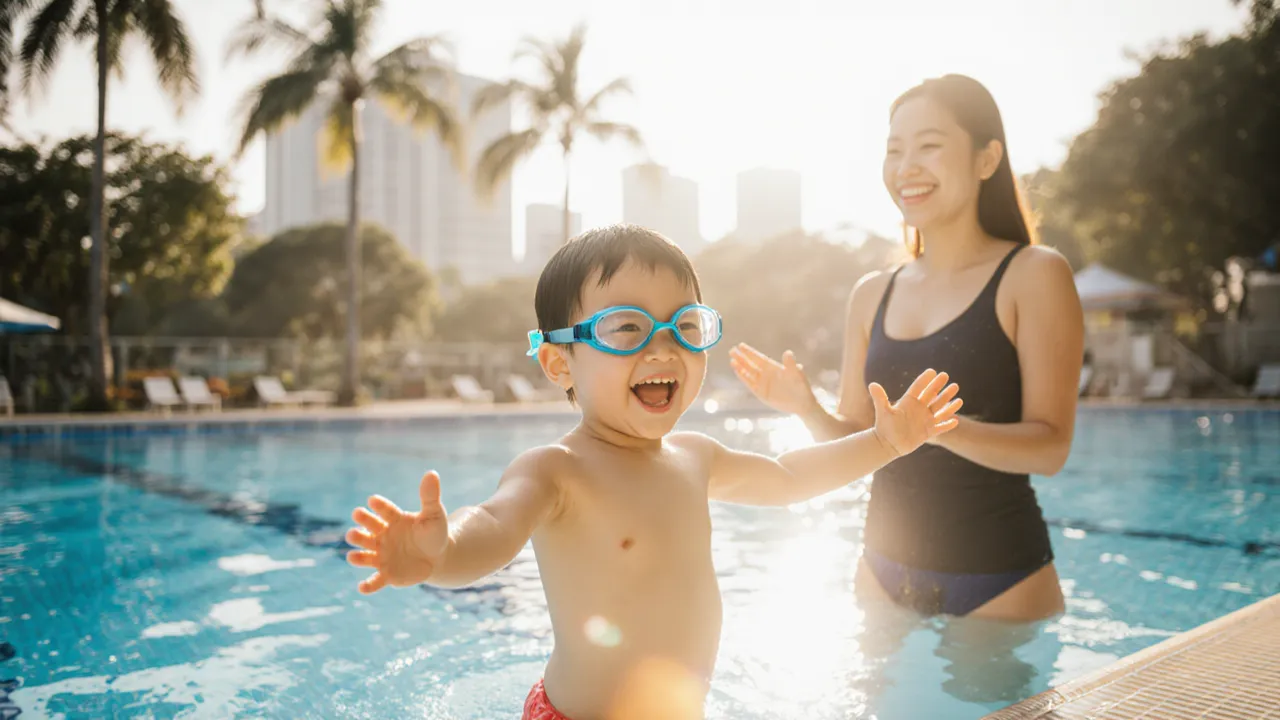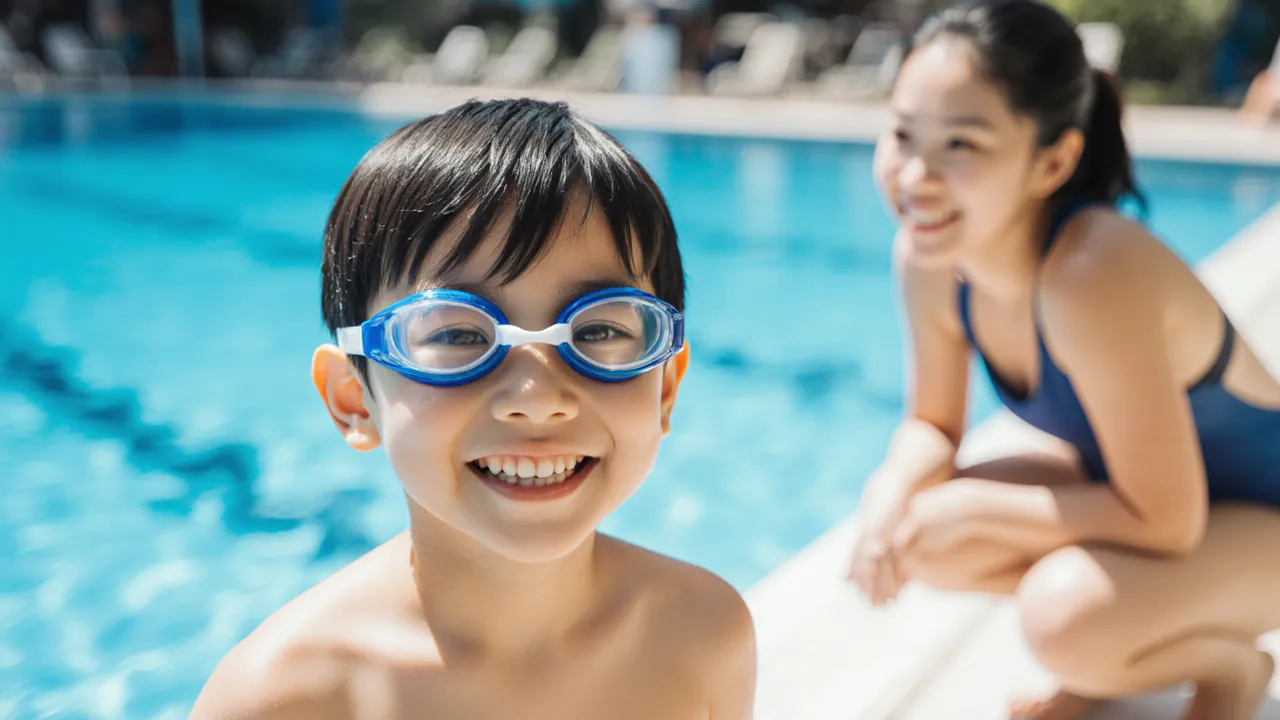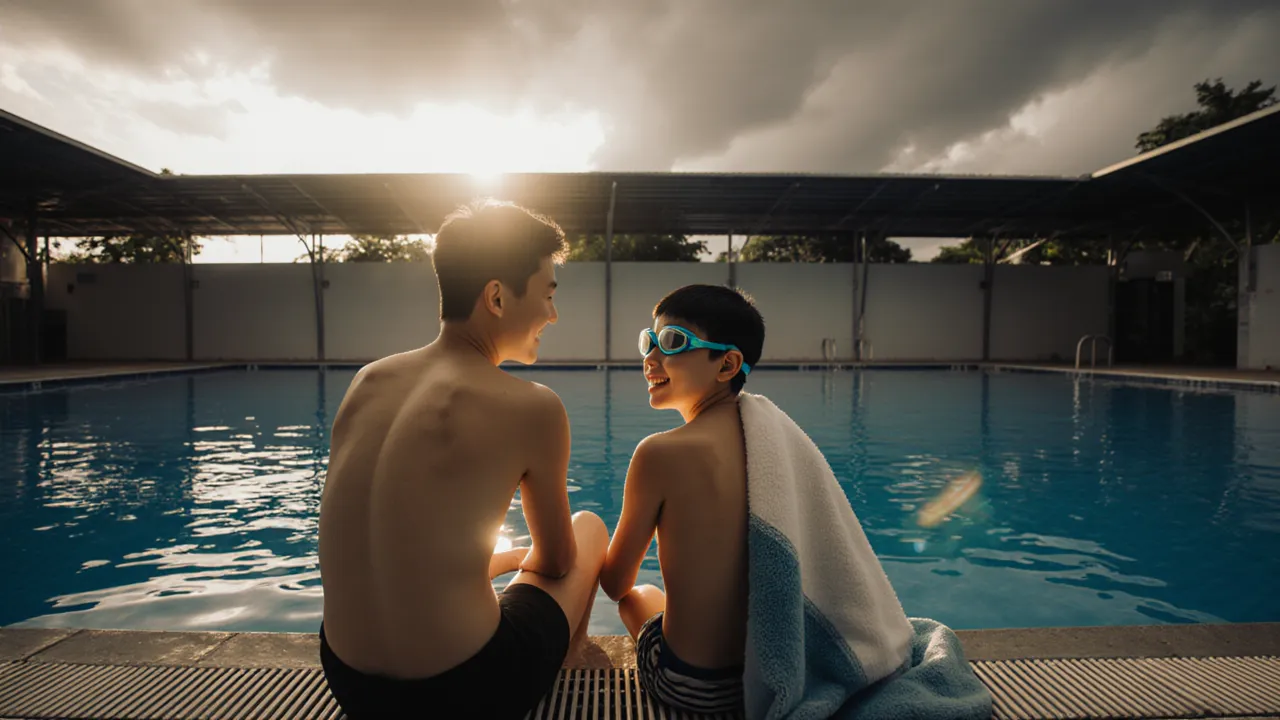
It is 4:50pm. Your child is already in swim gear, the car is packed, and the sky over the estate has turned the colour of wet slate. Then the WhatsApp message lands: the pool has been cleared for lightning. If you live in Singapore, this scene is not an exception. It is October to December, the inter-monsoon season, and afternoon thunderstorms are simply part of the calendar.
The good news is that at Ace Dolphin a lightning alert never means a lost lesson, because our wet weather programme takes over from the in-pool class. This guide explains why pools close, how long you can expect to wait, how to check before you leave home, and what to do with a child who is disappointed (or secretly relieved).
Why ActiveSG pools clear the water for lightning
Singapore sits near the equator and has one of the highest lightning activity rates in the world. The Meteorological Service Singapore notes an average of 167 thunderstorm days a year, and lightning can strike some distance away from the storm itself, sometimes even when it is not raining over your head. Water conducts electricity, and a pool full of children is the last place anyone wants to be when a strike is possible.
That is why the call to clear the pool has nothing to do with a swim school being cautious or cancelling for convenience. The decision belongs to the venue. Sport Singapore has said publicly that it uses real-time data from the National Environment Agency’s Lightning Information Service to decide whether ActiveSG pools close. When the alert is active, lifeguards clear the water, and coaches and children move to shelter. If you want the wider picture of how our venues operate, our ActiveSG pool guide for swim parents covers fees, rules, and what to expect on a normal day.
How long does a lightning closure last?
The working rule most Singapore pools follow is to wait about 30 minutes after the last thunder is heard before the water reopens. MSS gives the same advice for outdoor activities generally. Crucially, the clock restarts if thunder is heard again, so a storm that seems to be fading can easily eat an entire lesson slot.
In practice, this means a thirty- or forty-five-minute lesson that starts during a storm will usually not happen in the pool. Whether the water reopens is the venue’s call on the day, not the coach’s, and no amount of begging from an eager seven-year-old will change it. That is exactly why we plan for it, as the next section explains.
How to check before you leave home
A storm icon on your weather app does not mean your lesson is off. Equally, a clear sky above your block does not mean the pool is open: lightning detection covers a wider area than what you can see from your window. Here is a simple routine that saves a lot of wasted trips:
- Check your class group first. Updates for your lesson go out there, including any move to the wet weather programme or an indoor pool. If the weather looks bad and you have heard nothing, the lesson is still on.
- Look at NEA’s lightning data. The myENV app shows lightning information, and the weather hotline is 6542 7788. Treat it as a guide to what the pool is likely to do, not a substitute for the venue’s decision.
- If lightning risk is on, call the pool and ask if it is still open. A two-minute call is faster than a wasted trip, and the pool staff know the situation on the ground better than any app.
- If you are already nearby, wait for the message. Turning around too early is the most common mistake we see, because storms often clear faster than expected.
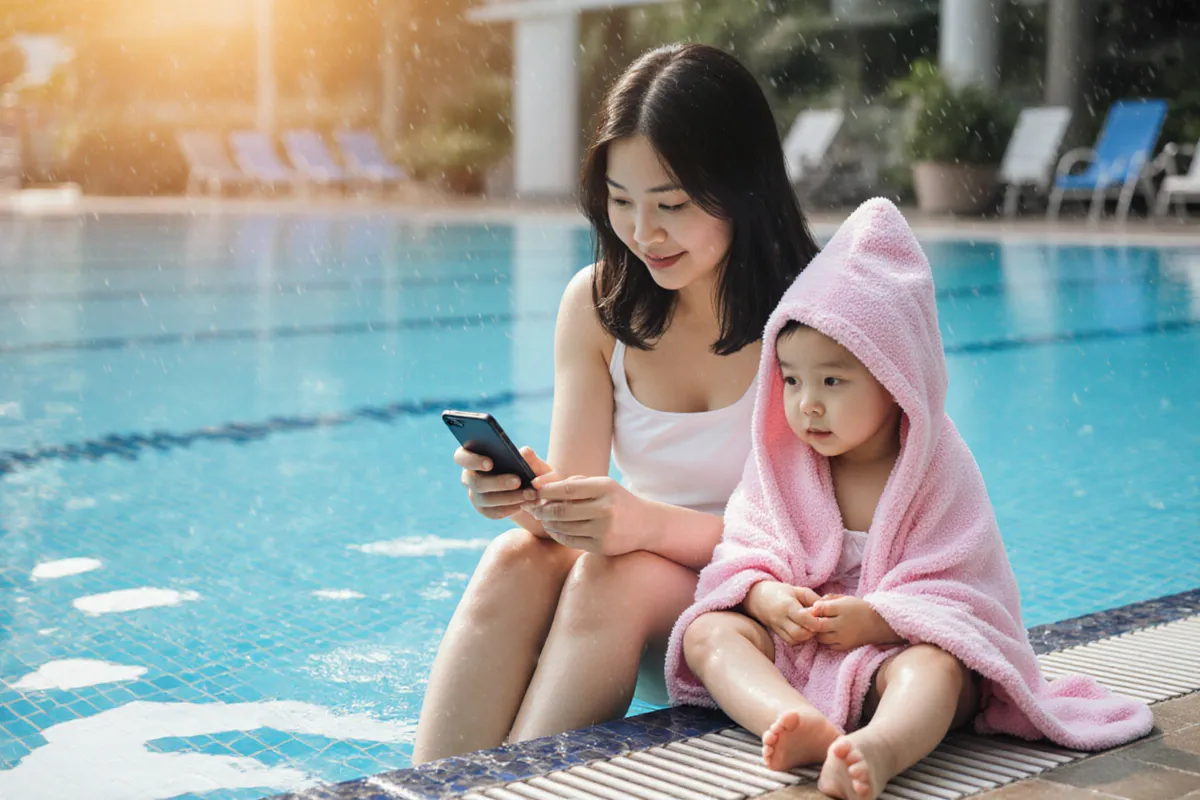
If you are already at the pool when the alert goes off, stay under cover with your child. Our coaches stay with the class and keep children calm, and this is also the moment when a worried child most needs a parent who is relaxed about the whole thing.
What happens to your lesson when lightning risk is on
At Ace Dolphin, our classes do not cancel because of lightning. When lightning risk is on, we run our wet weather programme instead of the in-pool lesson, so no class is wasted and your child never loses a session to the weather.
Some of our venues, such as Our Tampines Hub, have a separate indoor pool, so lessons simply continue in the indoor pool while the outdoor pool is cleared. Where there is no indoor pool, the wet weather programme takes the place of the in-pool lesson. Either way, you do not need to rearrange your week. Call the pool first if you want to know whether it is open, then check your class group for the plan for your class.
What if your child does miss a lesson?
Because our classes carry on in wet weather, a storm should not cost your child a lesson. If a lesson is missed for another reason, for most children one or two lost lessons make no visible difference. Skill retention in children aged 3 to 7 holds up better than parents expect, particularly when the previous lesson ended on a success. What does matter is a long gap, because water confidence is a feeling as much as a skill, and it can fade.
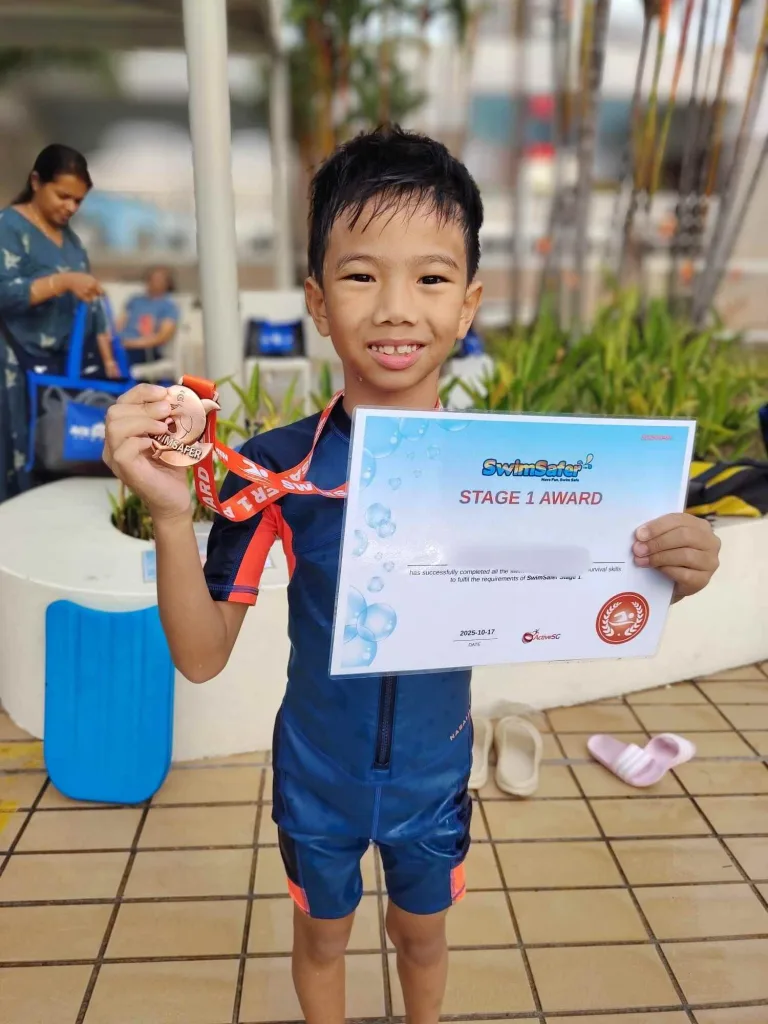
The exception is a child who is still nervous about the water. For an anxious child, a missed lesson can feel like a reprieve, and the next one can feel like starting from zero. Our coaches, who take a calm, no-pressure approach to overcoming fear of water, usually restart with a short, easy win rather than picking up where the last lesson stopped. If your child is in the middle of a SwimSafer 2.0 stage, a few weeks of delay does not affect eligibility, though it may shift the date you can book the assessment.
Making the most of a rained-out afternoon
A stormy afternoon is a good time to build water-safety habits. Children learn a lot about water safety away from the water, and a stormy day is a good excuse to do it.
Use the time for dry-land practice
Ask your child to show you what they learned in their last lesson: arm movements for freestyle, kicking on the sofa, or blowing bubbles in a bowl of water. It sounds silly, but rehearsing the motions keeps the pattern fresh, and it gives you a chance to praise effort rather than outcome.
Talk about why the pool closed
Children who understand why a rule exists are much more likely to follow it. Explain that lightning can reach people in or near water, and that the lifeguards and coaches are keeping everyone safe. This is also a gentle way to introduce the broader idea that water safety is something we practise year-round, not just in lessons. It pairs well with the rules your child is learning for SwimSafer 2.0.
Plan the next lesson
Keep the mood positive, whatever the weather. Tell your child what you will do next time and let them pack their own bag. Children who get to make small choices, like which towel to bring, are less likely to dread going back.
What to look for in a swim school during storm season
How a school handles bad weather tells you a lot about how it handles everything else. Before you enrol, it is fair to ask three questions: who decides when a lesson is cancelled, how quickly do they tell parents, and is there a wet weather plan, such as an indoor pool, so the lesson still happens? The answers should be clear and written down, not vague promises.
It is also worth asking about the coaches. A calm, experienced coach makes a stormy day easier for a nervous child, and you can meet ours on the coaches page. We run lessons across five ActiveSG pools: Our Tampines Hub, Pasir Ris, Yio Chu Kang, Bishan and Sengkang, with a sixth at Punggol opening soon, so a closure at one pool does not mean the whole network is affected. If you are also weighing up the year-end break, our guide to school holiday swimming lessons covers how to plan around the weather.
Conclusion
Lightning closures are an unavoidable part of swimming in Singapore, and they say far more about the pool operator’s commitment to safety than about your child’s progress. Call the pool if you are unsure, check your class group for the plan, and remember that at Ace Dolphin the lesson still goes ahead through our wet weather programme. Consistency over a term is what builds a confident swimmer.
At Ace Dolphin, we have been teaching children across Singapore for more than 15 years, and a rain delay is something we plan for, with a wet weather programme and indoor pool lessons where the venue has one. If you would like to know how our wet weather programme works, or want to find a kids swimming lesson that suits your schedule, drop us a line at admin@acedolphin.com or call +65 9105 5244. You can also read what other families say on our testimonials page.
Opening soon at Punggol: our new Punggol pool is opening soon, and pre-registration is now open. Find out more and pre-register on our Punggol page.