The June school holidays arrive and, suddenly, the question that’s been quietly sitting on your to-do list jumps to the front: Should I finally sign my child up for swimming lessons?
For many Singapore parents, the answer is yes, and the school holidays are genuinely one of the best windows to do it. Six weeks free of homework pressure, school runs, and fixed routines means your child can actually focus on learning something new. But the holidays also bring packed pools, waitlists, and a dizzying number of programmes to choose from.
This guide cuts through the noise. Whether your child has never been in a pool before or is already halfway through their SwimSafer stages, here’s what you need to know before booking lessons this holiday season.
Why School Holidays Are Ideal for Learning to Swim
There’s a reason swim schools see their highest enrolment during June and December. It’s not just marketing. From a learning science perspective, the school holidays offer something term time rarely does: frequency.
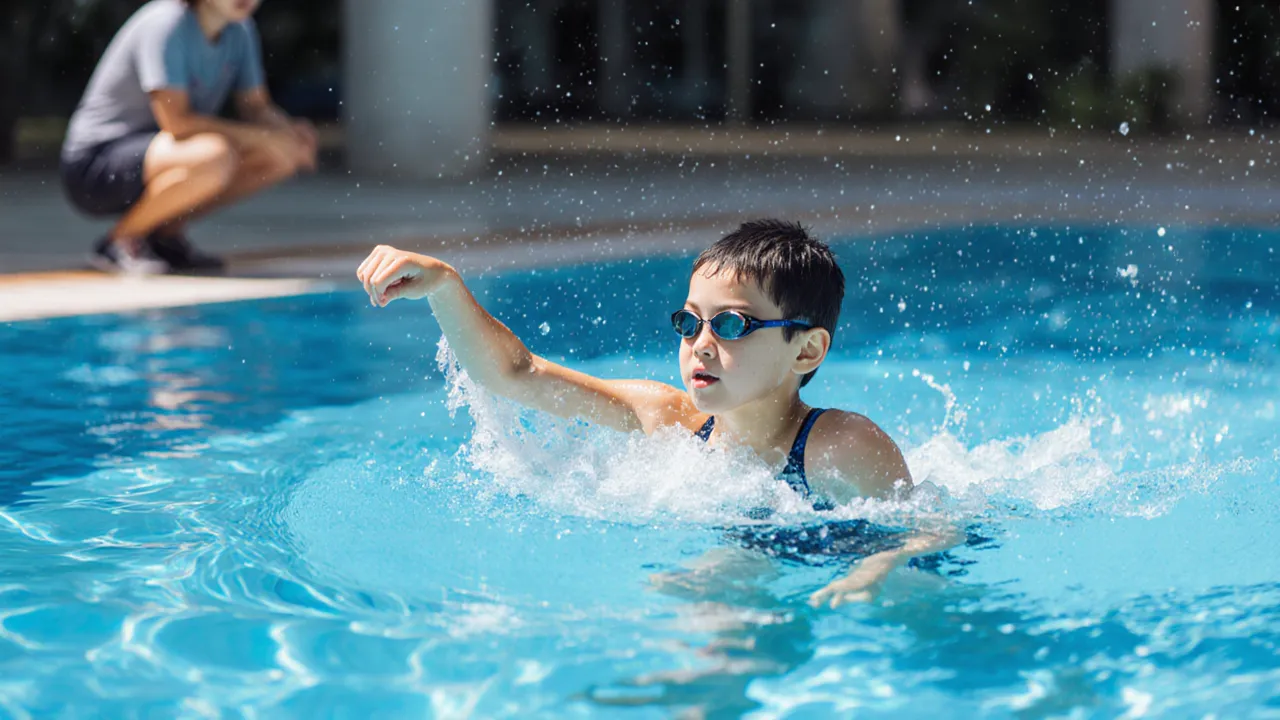
Swimming is a motor skill, which means it improves fastest with repetition over a short period, not one hour a week spread across months. A child who attends lessons three or four times during a single holiday week will often progress more in those sessions than in an entire term of weekly classes. The body has time to build muscle memory while the mind is relaxed and receptive.
Singapore’s year-round tropical heat also matters here. Pool time feels natural and enjoyable when it’s 32°C outside, and a child who genuinely enjoys their lessons learns faster than one who’s there reluctantly.
There’s another practical advantage: no competing commitments. During term time, swimming lessons compete with homework, tuition, co-curriculars, and general exhaustion by Friday afternoon. During the holidays, swimming is the activity. That singular focus pays dividends in how quickly children progress.
What to Expect From a Holiday Swimming Programme
If you’ve never enrolled your child in a holiday swim programme before, the format is a little different from regular term classes.
More sessions per week. Most holiday programmes run three to five sessions per week rather than the usual one. This intensity is the point. It’s designed to accelerate progress in a short window.
A structured curriculum, not just splash time. Reputable swim schools follow a defined progression, not just free play in the water. For schools running Singapore’s national framework, each lesson maps to a specific SwimSafer 2.0 competency, water entry, floating, kicking technique, breathing, and so on. Parents should see clear learning objectives for each stage.
Smaller class sizes. Good holiday programmes keep ratios tight. Aim for no more than six to eight children per instructor for group classes. Smaller if your child is a beginner or has any anxiety around water.
A mix of familiarity and challenge. The first session or two of any programme is really about settling in. Expect your child to test the environment, the coach, and the water before they begin to relax. This is completely normal. By the third or fourth session, most children find their rhythm.
One thing to set realistic expectations on: significant progress takes more than one holiday. A child who starts from zero in June will likely be comfortable in the water and building basic strokes by end of term, but full independence and SwimSafer stage completion is usually a longer journey. Holidays are excellent accelerators, not magic shortcuts.
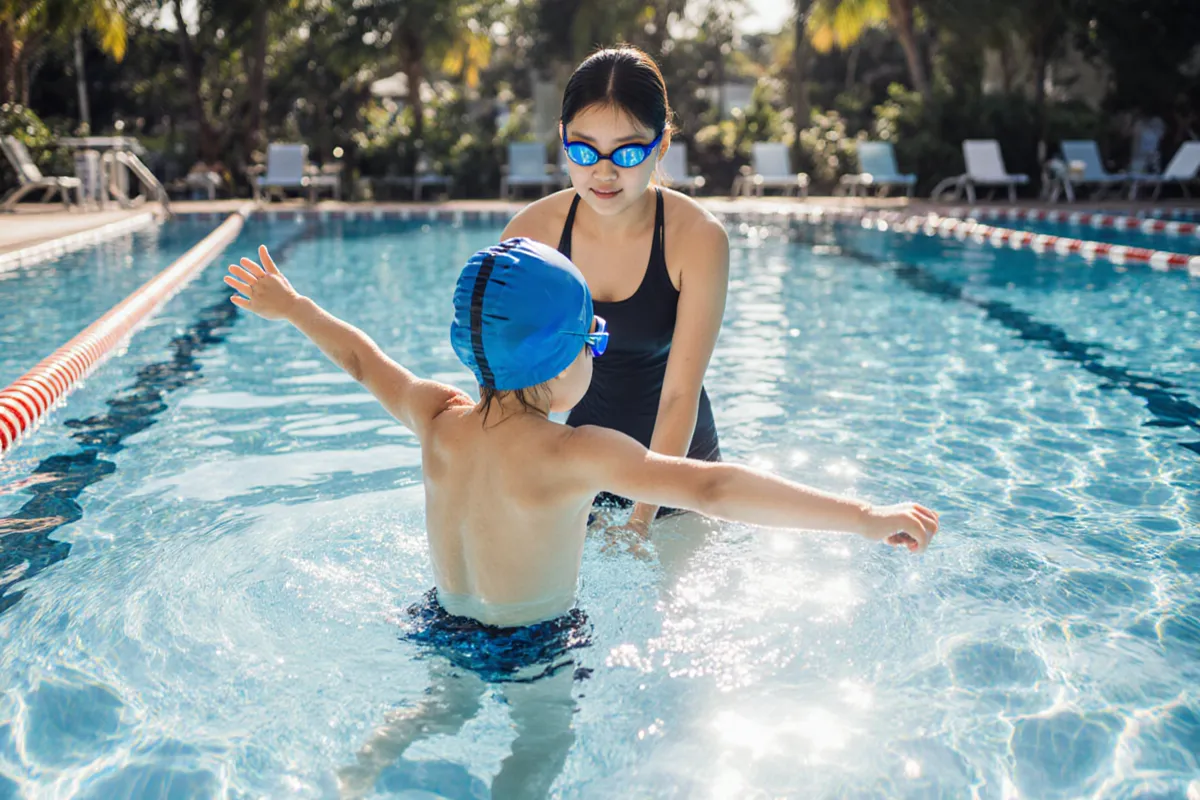
Group Classes or Intensive Private Coaching. Which Is Right for Your Child?
This is the question parents ask most often, and the answer depends on a few things:
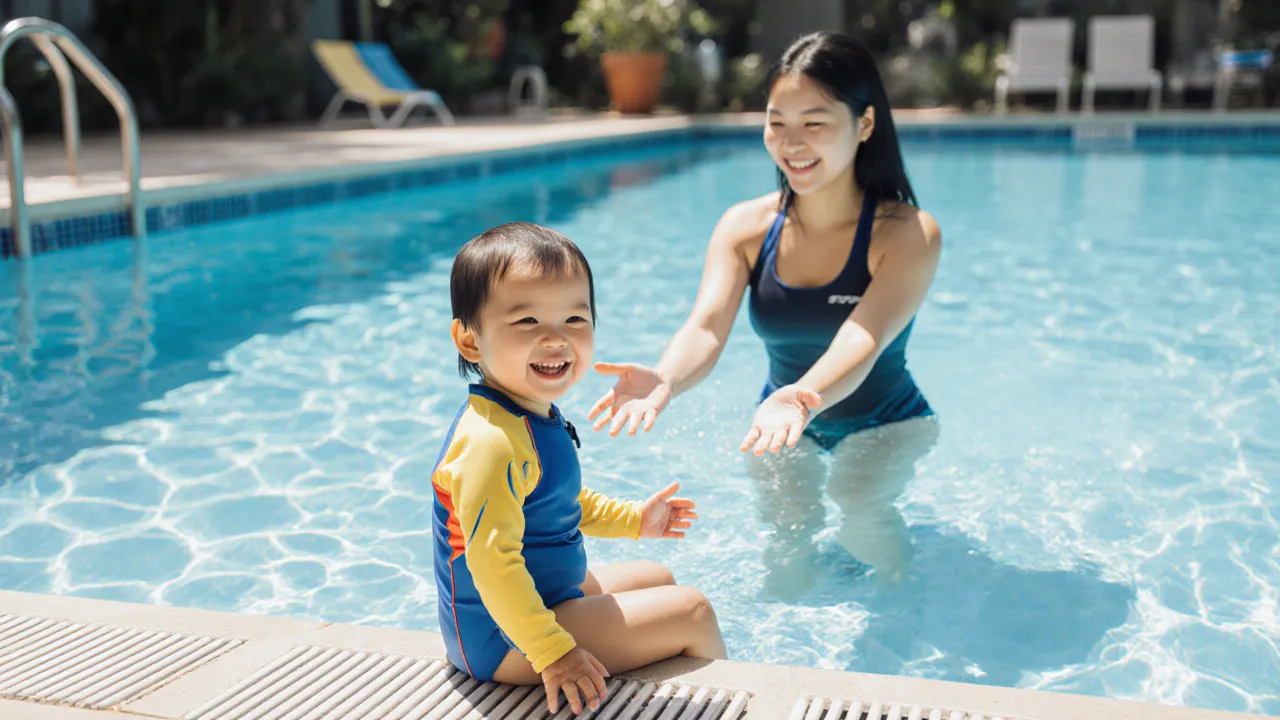
Your child’s starting point. If your child has never been in a pool, a small group class at beginner level is usually the gentler starting point. They’ll progress alongside peers, which normalises the experience and reduces the pressure any single child might feel. For children who are already swimming but want to accelerate through SwimSafer stages, group classes with peers at the same level work well.
Your child’s temperament. Some children thrive on group energy. They watch what others do, pick it up faster, and enjoy the social element. Others are easily distracted or need one-to-one attention to feel safe and focused. Anxious or water-phobic children almost always do better in private or semi-private formats, where the coach can move entirely at the child’s pace.
Your goals for the holiday. If you want to use the holiday as a foundation before committing to a full term programme, a group class is perfectly suited. If you want to see stage-level progress or prepare for a specific SwimSafer assessment, private coaching gives you more targeted results in less time.
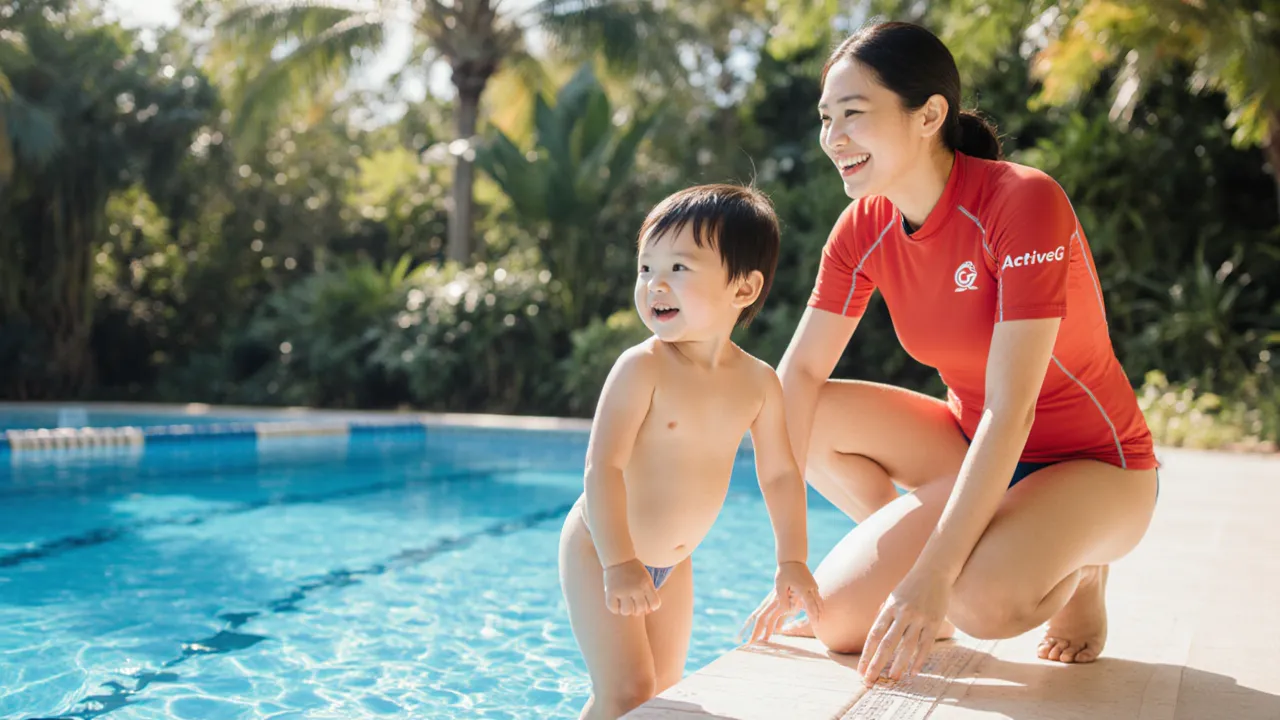
At Ace Dolphin Swim School, both formats are available across six ActiveSG locations, group classes run on a 12-week progressive grading cycle, while private coaching can be tailored to fit exactly where your child is and where you want them to be. For children who’ve previously plateaued elsewhere or who are coming in with water anxiety, the private track has produced some of the school’s most dramatic transformations.
SwimSafer 2.0: Understanding How the Holidays Fit In
If your child is school-age and you haven’t yet heard of SwimSafer 2.0, it’s worth a few minutes of your time.
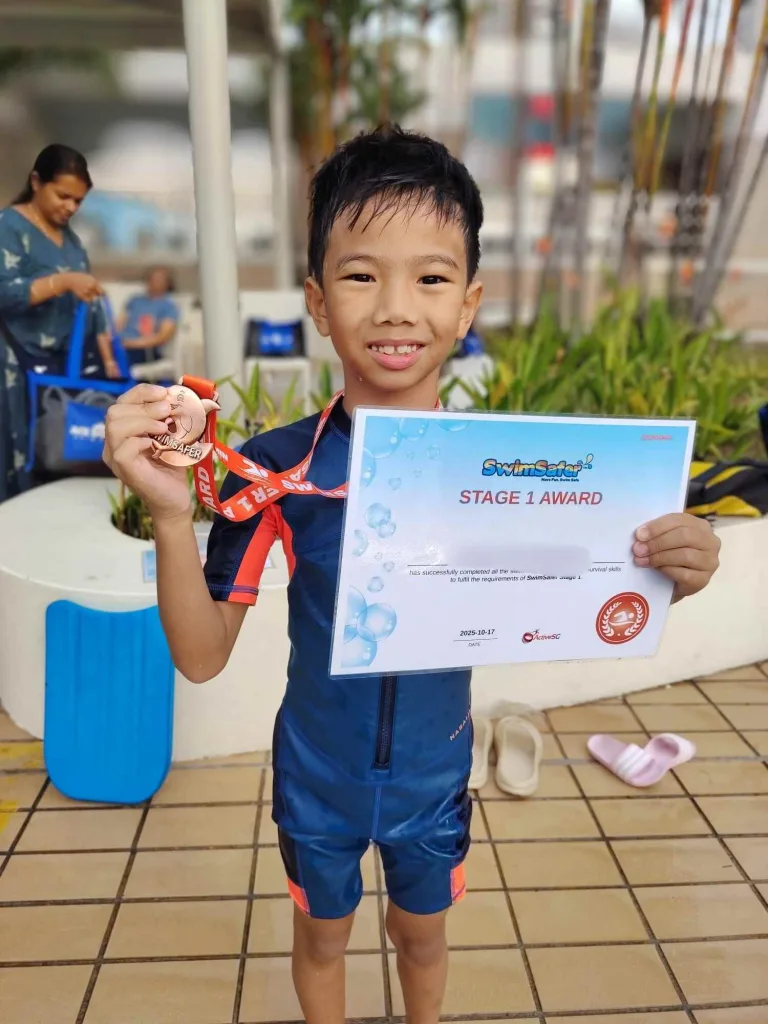
SwimSafer 2.0 is Singapore’s national water safety framework, administered by Sport Singapore. It covers six progressive stages, from basic water familiarisation all the way through to open-water survival skills, and it’s integrated into the national school curriculum. Children who complete SwimSafer as part of their school programme have a certification that follows them.
The stages aren’t arbitrary. Each one builds genuine, real-world water safety skills: knowing how to enter the water safely, float without support, tread water, swim continuous strokes, and respond in an emergency. The framework is designed so that a child who reaches Stage 5 or 6 is functionally water-safe, not just able to swim laps.
Here’s where the holidays become strategic: if your child is a few competencies short of the next SwimSafer stage, an intensive holiday programme can close that gap before the school term resumes. Many parents use the June break specifically to prepare their child for the next stage assessment, giving them confidence before school swimming sessions begin again.
Ace Dolphin’s curriculum merges SwimSafer 2.0 with the Tatsuki Japanese methodology, a precision-driven approach that focuses on stroke mechanics and consistent technique progression. The combination means children not only pass their stages, they develop genuinely beautiful swimming form. Both NROC-certified coaches and the Tatsuki framework emphasise measurable metrics at every lesson, so there’s no guesswork about where your child stands.
How to Prepare Your Child for Holiday Swimming Lessons
A little preparation goes a long way, especially for younger children or first-timers.
Visit the pool beforehand. If possible, take your child to the actual pool where lessons will happen, not to swim, just to look. Familiarity with the environment removes one unknown from the first lesson, which makes settling in easier.
Talk about what will happen, not just what swimming is. Rather than “you’re going to learn to swim,” try “your coach will hold you while you kick your legs” or “you’ll practice floating on your back.” Concrete descriptions reduce anxiety because children know what to expect.
Don’t skip the pre-lesson snack, but time it right. Aim for a light snack 90 minutes before the lesson. Too close and you risk a stomach ache mid-session; too long and a hungry child won’t focus.
Gear check. Singapore’s ActiveSG pools require swimwear (no shorts or loose-fitting trunks for lessons), a towel, and goggles. Some children get on better without goggles initially, check with your school whether they’re mandatory for the first few sessions.
Manage your own anxiety. Children are excellent at reading parental stress. If you’re nervous about your child’s first lesson, try not to hover at the pool edge or offer constant reassurance. it signals to your child that there’s something to be worried about. Trust the coach, step back a little, and let the session unfold.
What to Look for in a Holiday Swim School
With dozens of options across Singapore, it’s worth spending fifteen minutes evaluating before booking.
The basics: NROC-certified coaches, proper student-to-teacher ratios, a structured curriculum with clear stage progression, and a school that can articulate what your child will achieve by the end of the programme, not just “improved water confidence.”
Beyond the basics: ask specifically about their approach to water-anxious children. A good school will have a clear methodology, not “we go slowly” but an actual process for building trust and confidence. Ask how they communicate progress to parents, and whether you’ll see any feedback after each session or just a summary at the end.
Pool location matters more than parents often realise. A pool that’s a 45-minute commute will become unsustainable by week two of an intensive programme. Ace Dolphin’s six ActiveSG locations, Tampines, Pasir Ris, Yio Chu Kang, Bishan, Punggol, and Sengkang, were chosen specifically to be accessible to families across the island. If you’re in the east or north-east, there’s almost certainly a pool near you.
Conclusion
The school holidays aren’t just down time. For children who are ready to learn, they’re some of the best learning time of the year. Swimming, in particular, benefits enormously from the repetition and focus that a holiday programme allows.
Whether your child is taking their first tentative steps into the water or pushing toward their next SwimSafer stage, a well-chosen holiday programme can deliver meaningful, lasting progress. The key is picking a school with certified coaches, a structured curriculum, and the patience to meet your child where they are.
Ace Dolphin Swim School has been helping Singapore families do exactly that for over 15 years, with 8,000+ graduates across six ActiveSG locations and a reputation built on calm, patient coaching that turns reluctant swimmers into confident ones.
If you’d like to find a programme that fits your child’s level and your holiday schedule, reach out at admin@acedolphin.com or call +65 9105 5244. You can also explore class options at acedolphin.com.