Your neighbour’s child just graduated to the next SwimSafer level. Your colleague’s daughter overcame her fear of the water in eight weeks. Meanwhile, your child has been at their current swim school for two terms and still won’t put their face in.
It’s not your child. It’s probably the school.
Choosing a swim school in Singapore feels straightforward, location, price, schedule, done. But the parents who’ve seen the biggest transformations in their kids tend to ask very different questions. Not “how much per month?” but “how do your coaches handle a child who refuses to submerge?”
This guide covers what actually matters when picking swimming lessons for your child in Singapore, the factors that predict real progress, not just a nice-looking class schedule.
Start With the SwimSafer Question
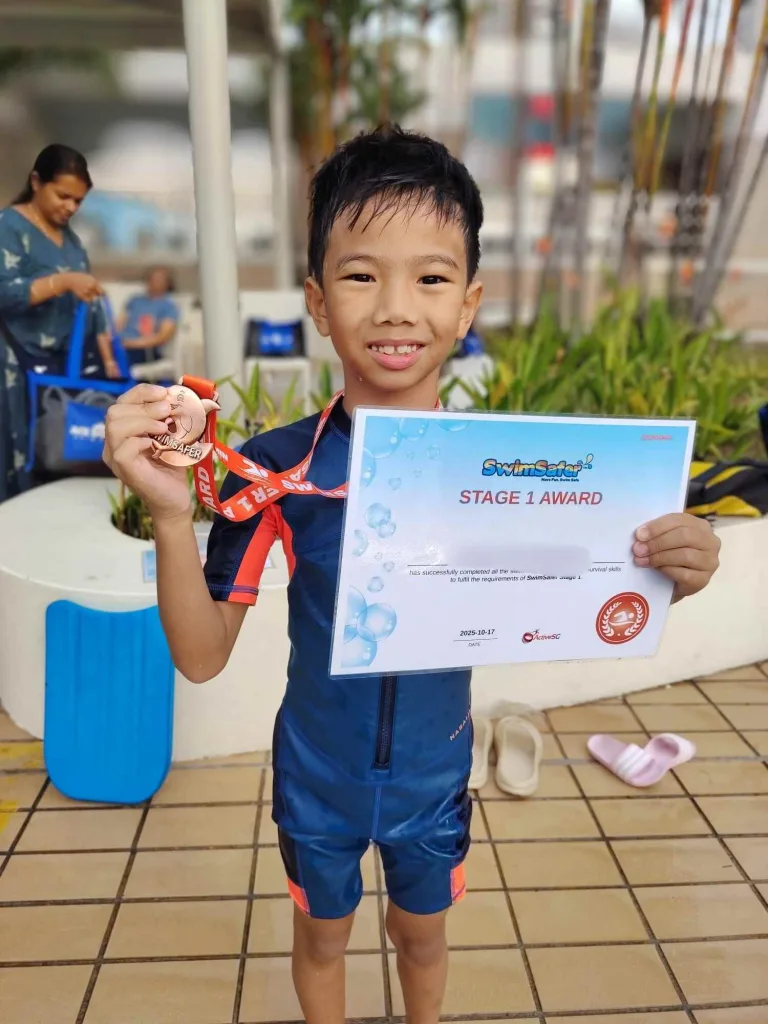
SwimSafer 2.0 is Singapore’s national water safety programme, and any reputable swim school should be building towards it. But the question isn’t just “do you follow SwimSafer?”. It’s how.
SwimSafer has six progressive stages, from basic water familiarisation all the way to confident open-water skills. A good school doesn’t just teach the syllabus; it uses it as a map. Parents should be able to see exactly which stage their child is at, what they’re working towards, and roughly how long it should take.
Some schools run SwimSafer as an annual assessment, tick the boxes, sit the test. Others treat each stage as a genuine milestone that a child earns through mastery. The difference in outcome is significant.
What to ask
- “Which SwimSafer stage will my child be assessed at?”
- “How do you track progress between assessments?”
- “How long does it typically take to move between stages?”
If the answers are vague, that tells you something about how seriously they take the programme.
The Nervous Child Test
This is the most revealing question you can ask a swim school, and almost no parent thinks to ask it.
Tell them your child is nervous about the water. Even if they aren’t. Then listen to how they respond.
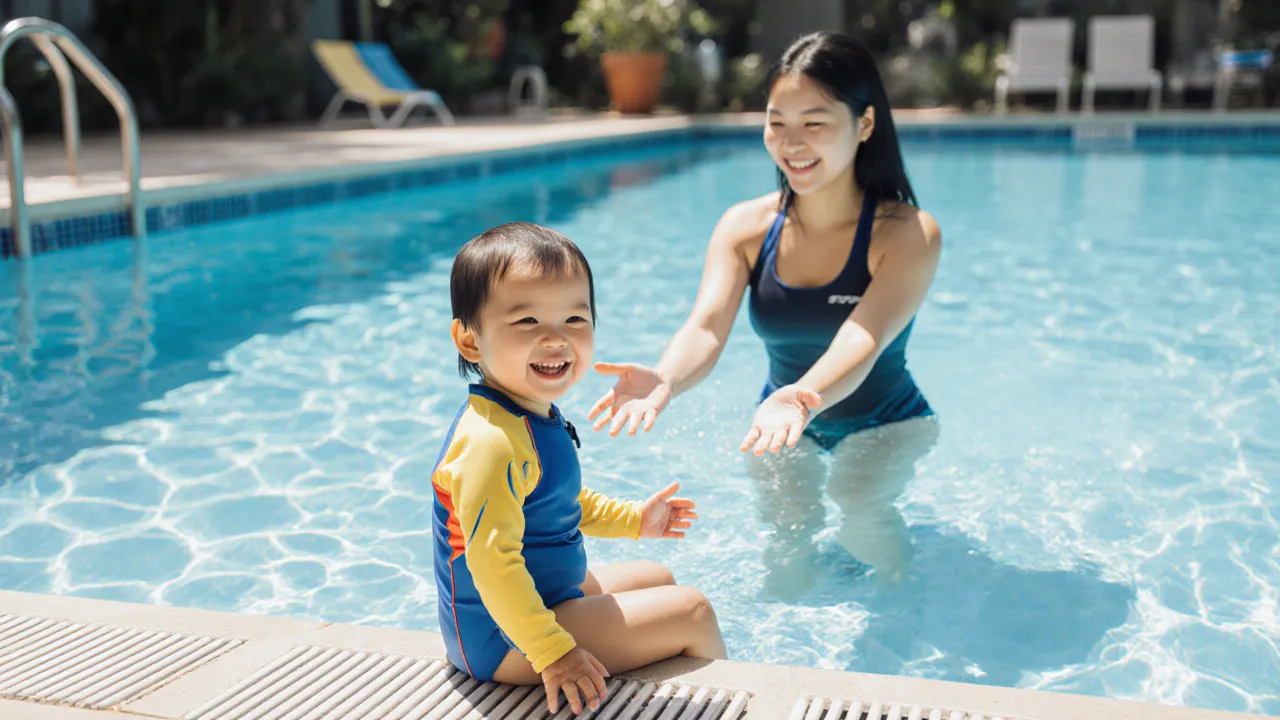
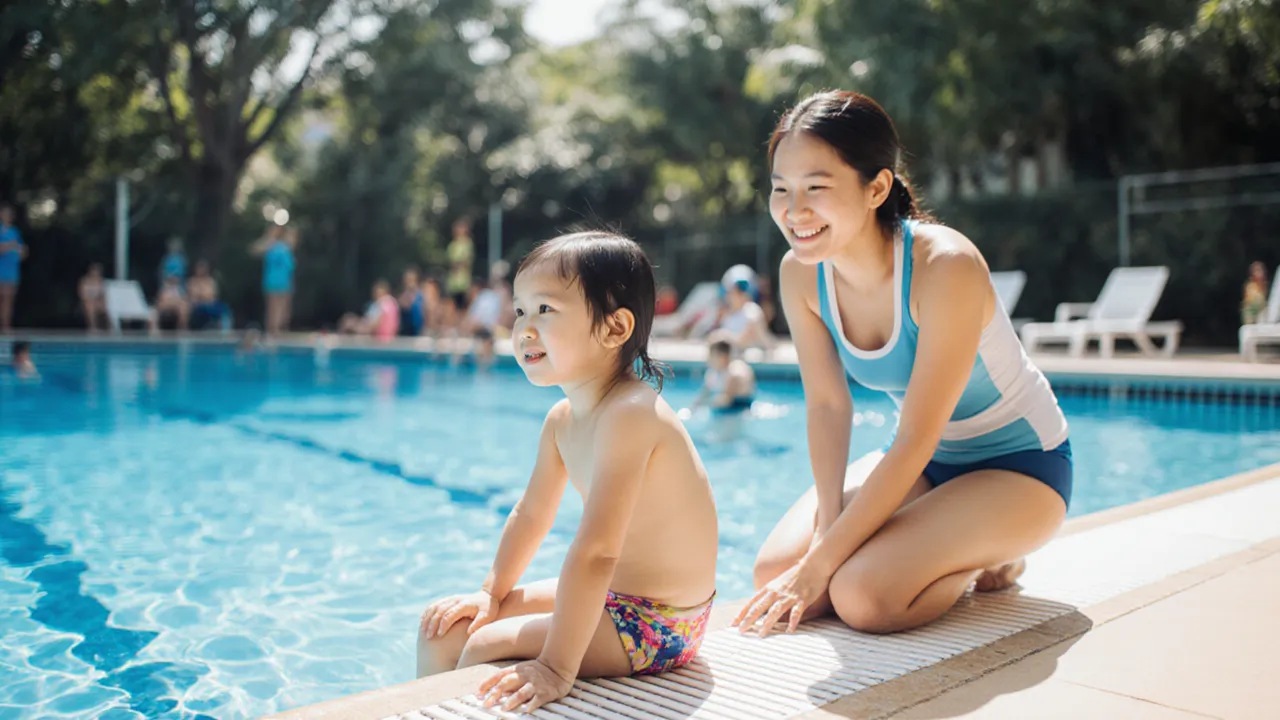
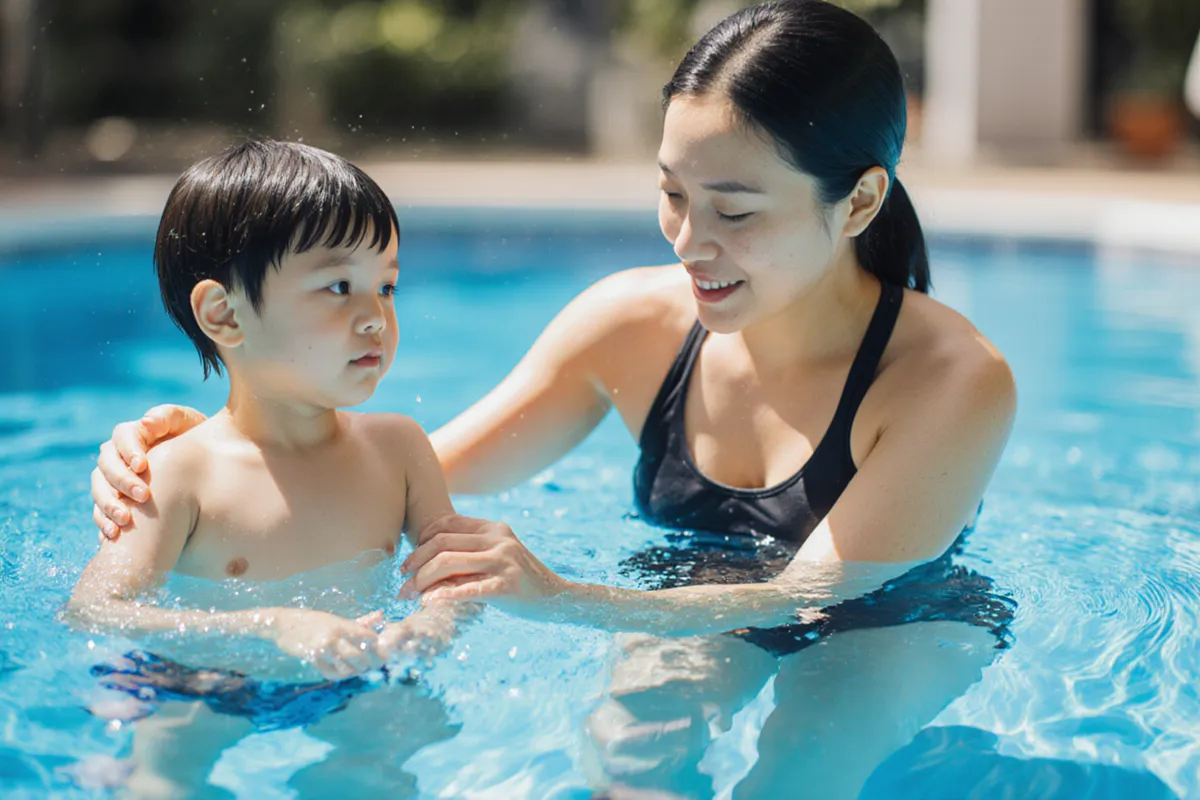
A school that takes this seriously will describe their specific approach: gradual exposure, no forced submersion, coaches trained in emotional reassurance, keeping the first few sessions at the pool edge before going deeper. They’ll talk about patience as a teaching philosophy, not just a nice-to-have.
A school that brushes it off, or tells you “all kids get used to it eventually,” is waving a red flag.
Water phobia in children is more common than most parents realise. A 2023 survey found that roughly one in four primary school-age children in Singapore display moderate to high anxiety around pool activities. The schools that know how to handle this tend to have very different outcomes, not just for anxious kids, but for all children. A coach who can work with a terrified six-year-old has, by necessity, developed extraordinary patience, emotional intelligence, and the ability to meet each child exactly where they are.
At Ace Dolphin Swim School, this is built into the coaching philosophy, what they call their “Calm & Chill” approach. No forced progression, no stressed-out children, no “just try it” pressure. Coaches build rapport first, skills second. It’s why the school has become the go-to for parents who’ve already tried other schools and seen no movement.
Class Size: The Number That Actually Matters
Most parents ask about class size. Fewer ask the follow-up question: “What is the coach-to-student ratio, and does that change at different levels?”
A class of six with one instructor is very different from a class of six with two. And a beginner class of four is not the same as an intermediate class of four, beginners need far more individual hands-on guidance.
The general rule: beginners benefit most from small groups (ideally 6 or fewer per instructor) where they receive constant feedback and reassurance. More confident swimmers can handle slightly larger groups without losing learning quality.
What to look for
- Beginner classes: 1 instructor to 8 students maximum
- No “mixed level” classes where beginners share water time with children who are several stages ahead
- Clear policy on make-up lessons
Credentials That Actually Matter
The Singapore swim coaching landscape has a variety of certifications, and not all carry the same weight. Here’s a practical filter.
NROC (National Registry of Coaches). Singapore’s national coaching accreditation, run by Sport Singapore. Coaches listed in the NROC registry have met verified competency standards. This is the baseline you should require.
Singapore Aquatics affiliation. Schools affiliated with Singapore Aquatics are vetted for coaching quality. Not essential, but a good signal.
International methodology certifications. Some schools incorporate international teaching frameworks that bring additional structure and quality. Ace Dolphin combines SwimSafer 2.0 with the Tatsuki Japanese methodology (TJAP), which is known for precision stroke mechanics and fast, measurable progress. Children don’t just learn to swim, they develop technique that holds up under assessment.
What not to fixate on: years of operation alone. A school can have been open for 20 years and still run mediocre classes. Look at outcomes. How many children have graduated? What are the SwimSafer pass rates? Does the school have verifiable testimonials, especially from parents of children who started anxious or behind?
Location and Consistency: The Underrated Factor
Singapore’s ActiveSG pool network is excellent, and the best swim schools operate from it. This matters because public pools are properly maintained, well-staffed, and easily accessible by public transport and car across the island.
But consistency matters more than proximity. A school that’s a 15-minute drive away but runs at convenient times, weekend mornings, after school, school holiday intensives, will serve your child better than one that’s closer but has a schedule you can only partially commit to.
Swimming is a cumulative skill. Missing every third class because the timing is awkward sets children back more than most parents expect.
Ace Dolphin operates across six ActiveSG locations. Tampines (Our Tampines Hub), Pasir Ris, Yio Chu Kang, Bishan, Punggol, and Sengkang. Specifically so that families across Singapore can find a location that fits their actual routine.
What Keeps Children Motivated
A child who wants to come to swimming lessons is a child who makes faster progress. Motivation at this age is driven by visible milestones and a sense of achievement. Swimming is a skill with a long development arc, it takes months to become genuinely independent in the water. Without built-in celebration of smaller wins, children and parents can lose momentum.
Look for schools that have a structured recognition system beyond just “you passed your assessment.” Stickers and certificates sound trivial until you see a six-year-old light up because they earned their Level 3 band.
Ace Dolphin is the only swim school in Singapore with a proprietary swim band and custom medal system, a milestone reward framework that tracks progress in tangible, visible ways. Parents report that children actively look forward to earning their next band, which translates directly into engagement and effort during lessons.
Questions to Ask Before You Commit
- What SwimSafer stage will my child start at, and how is that assessed?
- What is your coach-to-student ratio for beginner classes?
- How do your coaches handle children who are anxious or reluctant to submerge?
- What is your make-up lesson policy?
- How do you track and communicate progress to parents?
- What certifications do your coaches hold?
- Can I observe a trial class before enrolling?
Conclusion
Singapore has no shortage of swim schools, and most will teach your child to swim eventually. But “eventually” isn’t good enough when you’re watching your child dread every Saturday morning class, or sitting on the pool deck watching them make no visible progress term after term.
The best swim schools aren’t just better at swimming instruction. They’re better at understanding children. They have coaches who can read when a child needs to be pushed and when they need to be met where they are. They have systems that create visible progress and genuine motivation. They treat SwimSafer not as a hurdle to clear but as a framework for real water safety.
If you’re re-evaluating your current school, or choosing for the first time, Ace Dolphin Swim School is worth a conversation. With 15 years of experience across Singapore, 8,000+ graduates, and a methodology built specifically for children who need patience as much as technique, they’re the school parents tend to find after they’ve already tried somewhere else.
Reach out at admin@acedolphin.com or +65 9105 5244, or visit acedolphin.com to find your nearest location and check class availability.